Showing posts with label worldview. Show all posts

12 June 2017

An ambassador's prayer

As a citizen in Your kingdom
an ambassador at Your gates
may I manifest Your Son
with word and deed
a faithful representative of Your throne
committed to justice, beauty, and righteousness
cloaked in a garment of humility, gentleness, and peace
eager to listen
slow to speak
and when I do open my mouth
may my words
breathe Your grace and truth. 

09 November 2016

Reflections on the Dawn of a New Presidency

The people have elected Donald J. Trump as the 45th president of the United States of America. For over 200 years, our constitutional republic has persisted and we have made it through yet another election.

I want to offer a few reflections on the dawn of the 2016 election to my Christian brothers and sisters. Perhaps your candidate won. Perhaps your candidate lost. Perhaps you didn't even cast a vote. Regardless, how now shall we live?

First, 1 Peter 2:16-17 reminds us, "Live as people who are free, not using your freedom as a cover-up for evil, but living as servants of God. Honor everyone. Love the brotherhood. Fear God. Honor the emperor." Friends, our freedom lies not in our worldly citizenship, but flows from Christ's finished work. Live as people who are free. Yet in that, serve others and, as Peter reminds us, 'honor the emperor." Treat elected officials with honor, even if you did not vote for them.

Second, our sovereign is already on the throne. God was, is, and always will be head over all. God is not surprised by these election results. Nothing falls outside of His plan. As Dietrich Bonhoeffer wrote, "Besides Jesus, nothing has any significance. He alone matters."

Third, pray for the government. Not just today, but as often as you think about it. "First of all, then, I urge that supplications, prayers, intercessions, and thanksgivings be made for all people, for kings and all who are in high positions, that we may lead a peaceful and quiet life, godly and dignified in every way." -1 Timothy 2:1-2

Fourth, you will meet people who are scared about the election results. There are those who believe that this election signals doomsday, the apocalypse, or the coming of anti-Christ. In light of that, they are frightened. Love them well. As the verse from 1 Peter says above, "live as servants of God." One of the best ways to do that is to love the people around you--friends, neighbors, coworkers.

Fifth, Christians, we remain salt and light. Matthew 5:13-14 reads, "You are the salt of the earth, but if salt has lost its taste, how shall its saltiness be restored? It is no longer good for anything except to be thrown out and trampled under people's feet. You're the light of the world. A city set on a hill cannot be hidden. Nor do people light a lamp and put it under a basket, but on a stand, and it gives light to all the house. In the same way, let your light shine before others, so that they may see your good works and give glory to your Father who is in heaven." We need to continue to boldly proclaim the truth of the Kingdom of God. When those truths are hard, we cannot be unafraid to say them. We need to be those who live with joy and beauty as citizens of God's kingdom. We are ambassadors for Christ. When people look upon us they see what Jesus is supposed to be.

Sixth, be more concerned about God's reputation than your own. Too often, as Christians, we conform ourselves to the surrounding culture or are afraid to speak truth when truth is necessary. In 1 Corinthians 4 Paul basically said, "I don't give a whit what other people think of me. I don't even care what I think of me. What matters is what God says." Don't worry so much about how the world views you; give more attention to how God views you.

Seventh, Micah 6:8 tells us to "do justice, love mercy, and walk humbly with our God." There is still work to be done. Become advocates for the unborn, the downtrodden, and the marginalized in society. Love your neighbor.

Finally, "whether you eat, or whether you drink, or whatever you do, do all to the glory of God."-1 Corinthians 10:31

17 May 2016

Should Christians vote for Donald Trump? A response to Todd Starnes

A dear friend emailed this morning and asked my thoughts about an opinion article on Fox News by Todd Starnes entitled Should Christians vote for Donald Trump? On the counsel of another dear friend, I have intentionally backed off on my #NeverTrump rhetoric, though I still hold to that viewpoint--I've just not been as public about my opinions. In response to my friend's brief question this morning, I ended up writing a 1500+ word essay about Starnes's opinion piece and some of my current thoughts. For those interested, here's what I wrote, adapted slightly.

Thanks for linking to this article. My answer will probably be much longer than you bargained for, but I had an hour to think on my way up to Rice Lake this morning.

[Another friend] and I have had some long conversations over the issue of “never Trump”. About a week or two ago, he and I spoke for over a half-hour about this issue. His primary concern was that I was getting too focused on the #nevertrump idea. He was right and so I have intentionally backed off on posting much stuff about Trump, though I do keep up on what is happening politically. 

I would also want to say that who we vote for isn’t a jar one issue. Believers on different sides of this issue can be thoughtful and perhaps come to different conclusions. It is not something I am willing to divide with people over and, in confession, some of the things I have said about it have been divisive.

So, to the article. I have many thoughts about it, which I will try to communicate clearly, though I will also probably follow some rabbit trails.

First, the article was posted on Fox News, which for several months has been very pro-Trump.  It is not necessarily a bad thing for them to take a position, but I think it is important to recognize that this pro-Trump piece is coming from what has seemingly become a pro-Trump organization. The Drudge Report, another conservative bastion, has also been very pro-Trump. On the other hand, several other conservative sources have been generally opposed to Trump such as the Daily Wire, the Federalist or National Review. So, there are different opinions amongst conservatives on whether or not casting a vote for Trump is a good idea. 

Starnes stresses his concern that evangelicals will stay home on election day. There will be some who stay home; there always are. However, many of the people that I know that are #neverTrump still plan to vote, certainly in elections other than the presidency (e.g., congress), but even in the presidency but perhaps for a third party candidate.  The author asks whether our only option is to throw in the towel, and I don’t think that is what any of us would say that we are doing. Citing Samuel Rodriguez, he wrote “it is silly to not talk of voting for either candidate, every single Christian should vote.” Perhaps. I know some Christians who would say that we don’t need to vote. I believe I should and so I will, but I also don’t feel limited to voting for one of the two candidates currently in the front running.  

The author also cited Charles Spurgeon who famously said “of two evils, choose none.” I think those are wise words from probably one of the most respected gospel preachers in history. We need to pay attention to Spurgeon’s idea here, even if we disagree with it.

Franklin Graham is cited in this article, who also tells us to vote, reminding us to vote for the candidate who best supports biblical values and then goes on to say, “in some races, you may need to hold your nose and choose.”  I wonder which biblical values he is speaking of? A commitment to life? At best Trump has been an inconsistent supporter of the pro-life movement. Building a wall to keep out foreigners? That seems to be less grounded in a biblical worldview, at least as far as I read it. Or targeting family members of terrorists. Also, from my vantage, not really a gospel-centric value.

But what about biblical character? Is Graham concerned about those biblical values or just the ones that fit the conservative-Republican agenda? For me, character matters, even if it seemingly hasn’t to some conservative commentators.

Interestingly, when he arrives at the question of “should Christians vote for Trump?” he speaks of an “all star panel,” though the entire panel is made up of those who are in support of voting for Trump. What about Russell Moore? Or Charlie Sykes? Or Ben Sasse? When a person seeks to put together a panel like this, it is unfair to stack the deck without any dissenting voices, in my opinion.

I agree with Richard Land (one of the all-star panel) who said that it is up to each Christian to decide who to vote for, but I disagree that we cannot consider a third party vote. Will it be successful? Probably not, but it will be a principled response.

Rodriguez said that he is voting “life, family ethos, religious liberty, limited government.” I admit those are important issues, but I don’t think that Trump has consistently supported them. For example, does Trump's support for religious liberty extend to Muslims or just Christians whom he is trying to woo to his campaign.

Huckabee? Ugh.  I have been a fan of Mike Huckabee for a long time. I have a signed copy of one of his books on my shelf at home. But…but. First, the choice to include him on this panel when he is a “potential running mate” certainly is biased in favor Trump. If he thinks he might be chosen as a potential running mate, why would he speak against Trump? He wouldn’t. Huckabee described Trump as open to dialog. I haven’t really seen it, frankly. I’ve seen him attack the character of those who oppose him.

Further down in the article, the author asked this question, “what’s a good Christian to do?” (Interesting question, choosing to include the word good--who is good except God?). He then goes back to Graham who says “pray.” Indeed. Graham indicated that part of their “decision America” campaign is not to support a candidate, though earlier comments he made in this article would hint that he means Trump. I agree with Franklin about the necessity of prayer, while I still disagree about Trump.

Even though the author’s bias shines through the article, the final two paragraphs are frankly uncalled for. He wrote, “Donald Trump could walk the aisle at a Billy Graham crusade, while waving a King James Bible and singing ‘amazing grace’ and it still wouldn’t be enough to convince the holier than thou club.

“And for all you folks quoting Spurgeon—I would offer this rebuttal: not to vote is to vote.”

This conclusion is simply unnecessary. To refer to #neverTrump people as “holier than thou” is mean-spirited and does not help the case he is trying to make. I told [our friend] recently that the best indicator of future behavior is past behavior. Not only does Trump have a history of concerning characterological and political viewpoints prior to the election, many of them have continued through the campaign cycle. 

Regarding the statement “not to vote is to vote”: I’m getting tired of hearing it, frankly because it isn’t true. I understand what the author (and anyone else who has said it) is trying to communicate, but there is a difference between a principled decision to not vote and actually casting a vote for Hillary. The phrase is offered to shame those who, like me, are choosing to abstain from voting for either one of them. 

Romans 1:29-32 says, “They were filled with all manner of unrighteousness, evil, covetousness, malice. They are full of envy, murder, strife, deceit, maliciousness. They are gossips, slanderers, haters of God, insolent, haughty, boastful, inventors of evil, disobedient to parents, foolish, faithless, heartless, ruthless. Though they know God's righteous decree that those who practice such things deserve to die, they not only do them but give approval to those who practice them.” As Christians, I think we need to give heed to what Paul is saying here. Trump has shown himself to be malicious, slandering, insolent, haughty, boastful, an inventor of evil, and ruthless at least. I full admit that I have done these things and more. But Paul is pretty strongly criticizing those who “give approval to those who practice these things.” When we cast a vote affirming a candidate, we are giving approval, even if we say we are just choosing the better of two evils (a point I am not convinced to be true). For me, I will not be a party to that.

One of the statements that has repeatedly come up for those who are planning to vote for Trump is to state that he isn’t perfect, but that we are all sinners. I fully acknowledge the truth of that statement. Reluctant Trump supporters also rightly point out that we will never elect a perfect president. Again, I agree. But as I was driving today I was struck by this fact—I am not comfortable casting my vote for someone I am not comfortable calling my president.  Although I disagreed with Mitt Romney on a number of things in 2012, I was still comfortable enough to accept him as my president, as the one who would represent me and my nation before the world, that he earned my vote. I cannot say the same about Hillary and I cannot say the same about Trump. 

02 August 2015

Becoming a Both/And Christian

Over the years, one of the topics that I have given the most thought to has been the balance of truth and love. In my experience, most Christians don't do it well. On the one hand, there are those who are crusaders for truth. They know their Bibles well--at least parts of it.  They are prophetic voices, speaking with conviction and clarity about issues facing the church and the world--abortion, sanctity of marriage, and religious freedom, to name a few. The church, the world, needs these prophets.

But too often, they fail to recognize that the Bible tells us that we should let everything we do be done in love (1 Corinthians 16:14). They use their words as weapons. Their primary goal is to win the argument, not love the person. And in so doing, they become clanging cymbals.

On the other hand, there are those who fail to take a stand for seemingly hard biblical truths. They know their Bibles well--at least parts of it. They assume that to be loving, they should not speak difficult truths to people and so they say nothing. Their desire is to bring comfort and hope to a hurting world. They promote a feet on the ground ministry of mercy, binding up wounds and feeding the hungry. 

But too often, in their desire to be loving, they promote a soft, convictionless tolerance. They are content when the church conforms to culture, so long as they don't take hard stands.

But, the church needs more both/and Christians. We need the truth crusaders to continue to speak prophetically, but who recognize that words can harm. They need to act with gentleness and respect. They need to understand that a failure to control the tongue can ultimately harm the cause of Christ.

We need the other group to understand that failure to speak is ultimately a failure to love. They need to know that truth matters in real, tangible ways in the lives of every person they seek to love. They need to learn that a failure to use the tongue can ultimately harm the cause of Christ.

We need both/and Christians. Truth and love. Prophets and priests. We need Christians to do what is right (stand for truth), to do so with mercy, all with a spirit of godly humility.

No, O people, the Lord has told you what is good,
    and this is what he requires of you:
to do what is right, to love mercy,
    and to walk humbly with your God.

-Micah 6:8 (NLT)

07 May 2015

Book Review: Restoring All Things

Too often, Christians get a bad wrap. The media has a way of presenting Christians as bigoted and hateful, standing against anything of value. But is that true? Perhaps, the truth is that Christians have been at the forefront of positive cultural and social change for the last 2000 years. In their book Restoring All Things: God's Audacious Plan to Save the World through Everyday People (Baker Books, 2015), Warren Cole Smith and John Stonestreet use the medium of story to explore just what Christians are actually about.

The media chatter would have us believe that Christians are anti-science, anti-woman, anti-education, anti-progress, anti-, anti-, anti-.  The list goes on and on. Indeed, there have been a number of excellent worldview and apologetics books helping to equip Christians to respond to these challenges to the Christian faith. These books are often reactive. More recently, it seems that there have been more books that I would call proactive apologetics texts, books that seek to highlight the positives of Christianity. Rodney Stark's The Victory of Reason (2006) and the newer book Joy for the World (2014) by Greg Forster are proactive. In the same way, Smith and Stonestreet's book provide a positive case for the biblical worldview in all things.

In the introduction, they provide a useful framework for thinking about God's redemptive work in all the world by asking four questions: 1) what is good in our culture that we can promote, protect, and celebrate? 2) What is missing in our culture that we can creatively contribute? 3) What is evil in our culture that we can stop? and 4) What is broken in our culture that we can restore?  Then, through the remainder of the book, through the medium of stories, they examine the positive apologetic for the Christian worldview. They explore how Christians are at the forefront of combating sex trafficking, promoting racial reconciliation, and honoring human dignity on the deepest level. In fact, if there was one message that leaped off of the pages for me, it was the authors stalwart attention to the fact that Christians have a high view of the dignity of all people.

All in all, this was a great book. If you are interested in learning more about the positive role Christians play in fostering culture and loving people, this is a great place to begin.

I received a complimentary copy of this book from Baker Books in exchange for this review. I have provided my opinion and I was not required to write a positive review of this book. 

02 April 2015

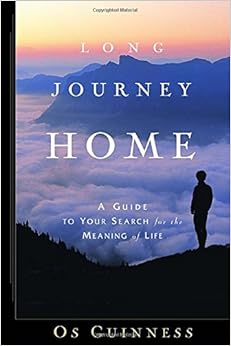
Book Review: Long Journey Home

Long Journey Home: A Guide to Your Search for the Meaning of Life (2001) by Os Guinness is a commendable book on understanding worldview. In this book, Guinness patiently crafts an argument for understanding worldview and following them to their logical conclusions in the tradition of his mentor, Francis Schaeffer.

Guinness is encouraged by seekers after truth. Too many in modern society have set aside the pursuit of truth in "an unexamined age," distracted by things of little consequence. But throughout the ages, there are seekers after truth.  He provides examples of how people have sought after meaning throughout the ages, but particularly during modernity and post-modernity. For example, he touches upon the stories of those like Foucault, Huxley, and Bertrand Russell. He carefully works to demonstrate how their worldviews essentially come to places of now satisfactory answers. He continues by showing that seekers cannot be satisfied just with seeking, but with eventually coming to the knowledge of the truth, based in evidence, which leads to commitment.

I would gladly put this book into the hands of any believer or nonbeliever. It is well-written, well-conceptualized, and non-coercively leads the reader to examine their own pursuit of meaning to its logical end (what Schaeffer called taking the roof off). If you suspect that ideas have consequences, this is the book for you.

10 March 2015

Why Can't All Religions Achieve Peace?

I recently saw this picture appear on my Facebook feed. It reads, "if all religions teach peace then why can't all religions achieve peace?" I have a few thoughts to share.

First, all religions do not teach peace. It is a mischaracterization to state that they do and unfortunately, perpetuates the tendency to view all religions as basically the same. For example, Islam is derived from the Arabic word meaning submission. Not only are Muslims to submit to Allah, they are to subdue (sometimes violently) others until all are under the rule of Islam. 

Second, a sufficient worldview will provide an explanation for why things are the way they are. For example, Christians believe that the world was created good, peaceful. However, due to free will, humans chose to act against the created order, thus disturbing created peace. Christians call this interruption in the created order "sin" and believe that it affects everything. 

The nontheist or materialist (i.e., someone who believes the world and all that is within it came about by natural processes) is not excused from explaining what went wrong. Too often, those representing that camp offer up questions without providing sufficient answers from their own worldview. For example, one question I would ask the materialist is how peace is defined in a materialistic worldview. Is it even a meaningful construct and if so, how does one arrive at a moral construct such as peace? If I am to accept materialism or Darwinian evolution as a valid worldview, then it is the strong that survive. Through whatever means necessary, the stronger will override the weaker and that often will entail the exact opposite of what is commonly thought of as "peace."

Third, we need to consider what is the solution to these problems from the perspective of the various worldviews. As I indicated above, under Islam, the solution to the world's problems is through submission--often coerced--to Allah. For the Muslim, once Shariah law is properly in place, society will function better. For some materialists, their solutions are offered through better science and understanding, but to what end? Research physicians seeking a cure for cancer and a dictator seeking to destroy a race he deems to be inferior are both operating from materialist assumptions. If you believe one of them is wrong, how do you make that determination from an objective point of view? One's personal distaste is insufficient ground for moral oughtness.

Christians believe that the world was created good and that because of sin, shalom--which not only means peace, but also includes human prospering and completeness--was fractured deeply. The only way individual, societal, and universal shalom may be restored is through a Restorer. Christians believe that restorer is ultimately found in the person of Jesus Christ. Christ came to redeem the lost and ultimately will restore heaven and earth to its original goodness. Peace will be restored.

Fourth, we must not ignore what has happened in history. A common assertion made by those who would tear down religion is that religious systems are at the root of most major world conflicts. For example, last month, President Obama equated Islamic extremism with the Christian response during the Crusades, which demonstrated a poor understanding of history. The Crusades were an attempt to push back Islamic expansion and jihad--it was first defensive, not offensive. However, it would be unfair to minimize any atrocities conducted by Christians during that time. Christians are called by Jesus to love their neighbors and when they do not act that way, it acts against their worldview rather than consistently with their worldview as might be the case with Islam or, frankly, with nontheistic materialism.

If one explores the history of thought, Christians have been at the forefront of developments in technology, science, education, human rights, and many other things. Christians are called to steward the created order in a way that promotes love for God and love for neighbor. Admittedly, there have been things done in the name of Christ that were inconsistent with the Christian worldview, but it is unfair to minimize the many positive contributions by Christians.

When considering historical facts regarding peace, we cannot ignore the 20th century. The number of people killed by those operating from an atheistic worldview far exceed the atrocities done in the name of Christ. Hitler, Stalin, Pol Pot, Margaret Sanger are just the tip of the iceberg.

In sum, when considering the statement about why religions don't achieve peace, ask yourself: 1) Does my worldview explain why there is a lack of peace and how we can achieve it?, 2) In my worldview, is peace even a meaningful construct?, 3) what does a balanced view of history tell me about promotion of peace?, and 4) what am I personally doing today to promote shalom?

For further reference, consider reading:
Why You Think the Way You Do by Glenn Sunshine
The Victory of Reason by Rodney Stark

01 November 2014

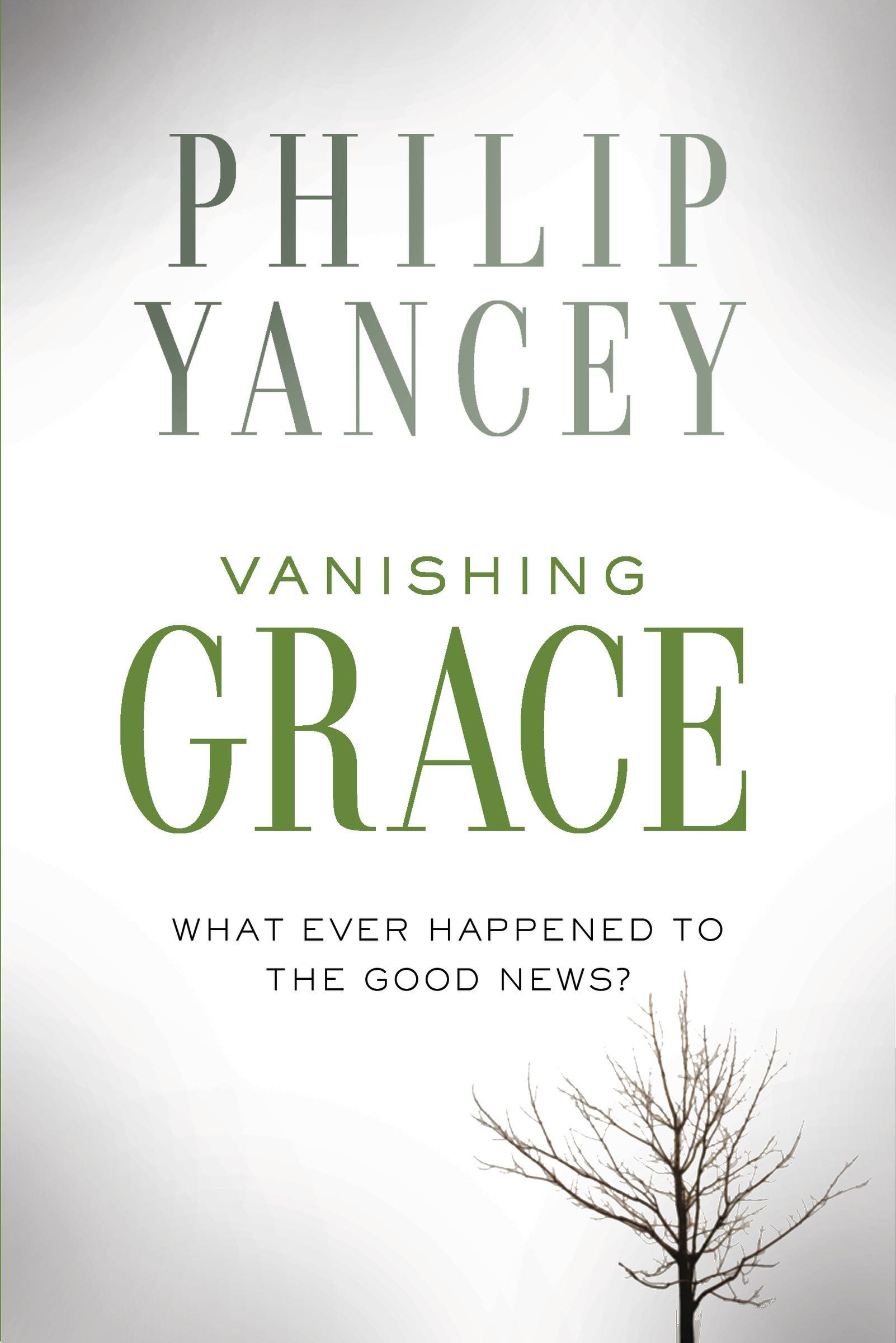
Book Review: Vanishing Grace

According to the dustjacket, Philip Yancey is a successful Christian author. He has written 13 Gold Medallion Awards, won the ECPAs book of the year twice, and 4 of his books have sold over 1 million copies. I've had the pleasure of reading several of his books and his reputation is well earned. Vanishing Grace: What Ever Happened to the Good News (2014, Zondervan) is his latest offering.

In the introduction, Yancey pointed out that this is actually a volume of 4 mini-books around a central theme: a world athirst, grace dispensers, is it really good news?, and Faith and culture. In the first section, he explores questions about why evangelicals have increasingly been viewed with derision in society. It seems to me he rightly points out that too often Christians want to propose answers before listening for questions. He writes, "to communicate to post-Christians, I must first listen to their stories for clues to how they view the world and how they view people like me" (p. 21). He showed that Christians are viewed as judgmental, confusing, guilt dispensers and he calls us back to love, grace, and humility. People are thirsty. We must dispense living water.

In the second section he explores three specific groups whom he identifies as grace dispensers--pilgrims, activists, and artists--those he appears to identify as having the most potential impact upon secular culture. He calls us to walk with others on their journeys, to be agents of change in our culture, and to show the world the beauty of Christ through creative, artistic means.

In the third section, perhaps my favorite, Yancey explores the influences that Christians have had on human flourishing and the culture at large. As he notes, "the way of life set out in the Bible is intended for our own good" (p. 163). Christian missionaries have had a greater influence upon societies than anything. I appreciated Yancey's insight into the common rebuttal about European countries like Denmark where Christian commitment is low but society seems to work well. He writes, "to be fair, let's admit that the region was populated by warring and pillaging Vikings until the Christian gospel came along. The gospel transforms culture by permeating it like yeast, and long after the people abandon belief, the tend to live by habits of the soul. Once salted and yeasted, society is difficult to un-salt and un-yeast" (p. 169).

In the final section, Faith and Culture, he dives more deeply into how Christians may be involved in the surrounding culture. He offers suggestions about how Christians may engage with politics and other cultural influences. In the final chapter, Holy Subversion, he revisits the concepts of pilgrim, activist, and artist.

I really liked this book. As a certified Centurion, I frequently enjoy books about how we can influence the culture around us and this book is no different. As I read, there were whispers of Abraham Kuyper, Francis Schaeffer, and Chuck Colson and reflections of books from the Centurion program including Glenn Sunshine's Why You Think the Way You Do, Neal Plantinga's Not the Way Things Are Supposed to Be, Rodney Stark's The Victory of Reason, and most notably Colson's How Now Shall We Live? Yet, for those familiar with these authors, Yancey approaches these issues from a different vantage. It is as though he is looking at the same issues, twenty degrees to the left.

In sum, I would happily recommend this book. Yancey is an engaging, thoughtful writer and consistent with his typical style, he winsomely takes on issues that matter.

I received a complementary copy of this book free from the Book Look Bloggers program and Zondervan publishers. I was not required to write a positive review of this book.

27 October 2014

Book Review: God at Work

A friend of mine sent me a video of Tim Keller talking about the doctrine of vocation, which brought back to mind Gene Veith's God at Work (2002, Crossway), an engaging, accessible summary of the doctrine of vocation, particularly through the lens of the Reformation tradition. Veith, a Lutheran scholar, draws particularly on the writings of Luther himself, a source we all benefit from.

Veith sets out to examine what is meant by vocation or calling. Too often, it seems, we are limited to thinking of our jobs as our vocation, though we all have a variety of vocations. For example, I hold the vocation of neuropsychologist, but I also hold vocations of husband, son, father, citizen, deacon. Veith explores how we live out our callings in each of the roles God has called us to.  I particularly appreciated his chapters on "your calling as a citizen" and "bearing the cross in vocation." In the first case, understanding how we live as citizens of two kingdoms, how we submit to the governing authorities, and how we resist when necessary were all good and useful topics.  His application of Luther's Theology of the Cross to vocation was also beneficial.

I would happily recommend this book to those interested in learning what does it mean to live as a Christian in the world.

20 August 2014

Foundational Ideas in One Paragraph

Every one of us has ideas about how the world works. Our underlying presuppositions, even if we are unaware of them, affect how we view and interact with the world (worldview matters). As a Christian, several ideas inform how I view the world. Christianity is unique in the centrality of relationship. God is Trinity--a perfect relationship that has existed for all eternity and, as Christ followers, we exist to be in relationship with others as well (Relationality). We don't do this perfectly because we are flawed. We err in keeping God's law, we err in relating well.  However, through the finished work of Christ, we are also saints--image bearers of our perfect King. We sin, but possess value (flawed saints). Because we are imperfect, but saved by a perfect God, we pursue humility. We admit that we don't have all the answers. We listen attentively to try to understand. Even in the face of disagreement, we act from a perspective of sacrificial love and service (self-denial/humility). Nevertheless, I believe that truth is objective, and much of it is discoverable. I have no doubt that I am wrong about many things, but being wrong assumes that there is a right and wrong.  Humbly pursuing that truth is a noble endeavor (absolute truth). One of the truths that most deeply affects my worldview is that I am a great sinner and God is a great Savior. Apart from his saving grace, I am hopeless (grace/forgiveness). However, the gospel is much bigger than me individually. When sin entered the world, it affected--infected--everything. There is nothing in the universe not touched by sin (the fall affected everything). At the same time, the gospel is more powerful than my salvation, though it is not less than that. The good news of the Kingdom, brought by Jesus Christ, is that He is in the process of restoring all things, restoring shalom, and in that, there is great hope (the gospel affected everything).

11 August 2014

Foundational Ideas: Worldview Matters


Since returning from the School of Spiritual Direction and on the heels of the Centurions program, I have been pondering my framework of belief. In other words, what is my worldview. Over the next few days, I hope to share what I consider to be several ideas that are currently foundational to how I think about the world.

 Perhaps the most important place to start a multipart discussion like is with a review of worldview and how it matters to what we do. I like to think of worldview as our operating system. It often runs in the background and colors, or informs, how we see the world and what assumptions we make about the world.

Every person on the planet has a worldview. Each of us holds viewpoints about where we came from, what is wrong in the world, what can be done to fix it, and where we should go from here. For people who hold to a more secular worldview, they may believe that the universe began with an explosion from nothing to what we now know of as the existing universe. For a communist, what is wrong in the world may be related to an unequal distribution of wealth and that the rich oppress the poor. For the Christian believer, Christ’s death and resurrection is what was done to address the problem. 

In essence, we all hold to basic assumptions about the way the world works. I have found great benefit in seeking to understand my worldview and the worldview of those I come into contact with.  I also hope that you will see that my worldview, which I would consider to be an orthodox Christian worldview, informs the rest of my ideas that matter.

If you want to learn more about worldview, the people that have most influenced my thinking include Francis Schaeffer, Greg Koukl, and Chuck Colson. Each of these men were very much committed to the idea that Christianity was not just for individual salvation, but Christianity was for all of life and culture. 

Recommended Resources: 
Stand To Reason
Breakpoint
The Francis Schaeffer Trilogy 
Total Truth by Nancy Pearcy  
How Now Shall We Live by Chuck Colson and Nancy Pearcey