God has chosen for us
the hard road.
Bumpy and uneven,
steep and dark.
Parts washed out by life's difficulty.
As we walk
bodies litter the ditches.
People broken
and bleeding
and alone.
We ask,
"Why this hard road, Lord?
Why not the easy way,
Bright and level,
...and uncomplicated?"
"Because, my children,
I too am on this path.
My heart is for the broken
and alone.
If you seek me,
you will find me here, in the darkness.
"The kingdom path is not around
but through suffering.
So grab a lamp
and bring light
to the dark path.

Showing posts with label suffering. Show all posts
Showing posts with label suffering. Show all posts
26 February 2017

13 August 2016
the intermingling of tragedy and beauty
We moderns
have been trained to decouple tragedy and beauty. We view suffering and worship
as incompatible truths. Mourning and loss may come to us, but when we
experience the discomfort of sorrow, we seek escape as quickly as possible.
With comfort upon comfort available to us, in the United States anyway, we flee
from hardship. We are unapologetic escapists consuming alcohol, pornography,
food, or exercise to numb our pain. We use whatever means available to help us
to “feel better”.
The Bible
paints a different picture. Mourning is a given reality of life and when we
read God’s Words, we see real people dealing with honest emotion. When writing
lament, the psalmists leaned into their pain and brought it before the Restorer
Himself. In the first chapter of Job after hearing of the loss of his children,
servants, and livestock, Job shaved his head, tore his robes, fell to the
ground, and worshipped. Too often, we
escape.
Early in Mel
Gibson’s movie Braveheart, we see “the gift of a thistle.” We see beauty
in tragedy. A young boy stands alone looking upon the rocky graves of his
father and brother. Trying to be strong, his body shakes, almost imperceptibly,
as shovels full of dirt fall upon the only family that he knows.
A young
Murron turns back and pulls away from her mother. She breaks the stalk of a
single purple thistle, a perfect image of beauty intermingled with pain, and
walks to William. Her innocence and beauty carrying light to a lost boy.
Their eyes
meet as she hands him the flower. For a moment, he looks upon the flower and
then back to her. Tears fill his eyes, but he holds her gaze, and her his. A
simple gesture bringing beauty to sorrow, bringing connection to loneliness.
Not a word
was exchanged in the scene, but James Horner’s music speaks clearer than any
tongue. It is the music that makes this scene transcendent. It is the music
that helps me to see the beauty of tragedy. Many of us are too far-sighted to
see God’s beautiful work in the midst of sorrow.
20 July 2016
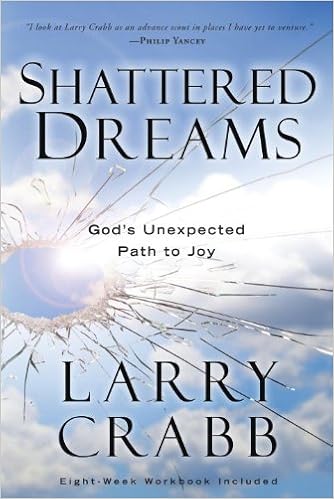
Crabb Conversations: Shattered Dreams
For the last few years, I have been blessed to be on the radio to talk about one of my favorite authors, Larry Crabb with a couple of guys I really love, Mark Halvorsen and Rob Gillette. This week, we finished up our discussion of Crabb's book Shattered Dreams. Going back, it took us a year. Below, I have included links to all of the discussions. Please, whether you have listened to Shattered Dreams or not, give them a listen.
Chapter 1-August
Chapter 2-September
Chapters 3-4-October
Chapters 5-7-November
Chapters 8-9-December
Chapters 10-11-January
Chapters 12-13-February
Chapters 14-16-April
Chapter 17-May
Chapters 18-19-June
Chapters 20-21-July
Chapter 1-August
Chapter 2-September
Chapters 3-4-October
Chapters 5-7-November
Chapters 8-9-December
Chapters 10-11-January
Chapters 12-13-February
Chapters 14-16-April
Chapter 17-May
Chapters 18-19-June
Chapters 20-21-July
28 June 2015
Joining others in protest and prayer
 In our compassion, we don't like to see people suffer. And so our instincts are aimed at preventing and alleviating suffering. No doubt that is a good impulse. But if we really want to reach out to others who are suffering, we should be careful not to be like Job's friends, not to do our "helping" with the presumption that we can fix things, get rid of them, or make them "better." We may look at our suffering friends and imagine how they could have better marriages better-behaved children, better mental and emotional health. But when we rush in to fix suffering, we need to keep in mind several things.
First, no matter how insightful we may be, we don't really understand the full nature of our friends' problems. Second, our friends may not want our advice. Third, the ironic fact of the matter is that more often than not, people do not suffer less when they are committed to following God, but more. When these people go through suffering, their lives are often transformed, deepened, marked with beauty and holiness, in remarkable ways that could never have been anticipated before the suffering.
So, instead of continuing to focus on preventing suffering--which we simply won't be very successful at anyway--perhaps we should begin entering the suffering, participating insofar as we are able--entering the mystery and looking around for God. In other words, we need to quit feeling sorry for people who suffer and instead look up to them, learn from them and--if they will let us--join them in protest and prayer. Pity can be nearsighted and condescending; shared suffering can be dignifying and life changing. As we look at Job's suffering and praying and worshiping, we see that he has already blazed a trail of courage and integrity for us to follow.
From Eugene Peterson's introduction to Job in The Message.
12 May 2015
Book Review: A Grace Disguised
Suffering and loss are inevitable, but I don’t know if I
understood that when I was younger. My wife’s breast cancer and the trials of
adoption have pressed suffering upon me in ways that I have never felt before.
Shortly after Heather was diagnosed with cancer, I tried to find books of
comfort, writings to help explain what was going on in my life. The Psalms took
on a new richness for me, but other books varied.
In the last few years, I haven’t read many books dealing
with suffering or loss, but as I was looking over my bookshelf at home, I
happened across a little book by Jerry Sittser, A Grace Disguised: How the
Soul Grows Through Loss. I had previously read another of Sittser’s books
and I enjoyed it, but I wasn’t prepared for this book.
A Grace Disguised is, in a word, stunning. Based in his own
experience of profound loss—his mother, wife, and daughter were all killed by a
drunk driver—Sittser explores loss of a gut-wrenching level. When I began
reading, I told my wife that with each page, I was on the verge of tears. The
book opens like this: “Catastrophic loss wreaks destruction like a massive
flood. It is unrelenting, unforgiving, and uncontrollable, brutally erosive to
body, mind, and spirit.” The author
never shied away from the many ways in which this loss affected him.
Though every page carried its own value, his chapter on forgiveness
is phenomenal. My master’s thesis dealt with forgiveness and oh that I had this
book then. From here on out, when anyone is looking for readings about
forgiveness, this will be the book I recommend. Sittser’s understanding of
forgiveness, crafted not in an ivory tower, but in the fires of loss.
A Grace Disguised is one of the most beautiful, painful, and
engaging books I have ever read. I read a lot of books and this is a book that
will get my highest endorsement. If you
are someone who has experienced tragedy, loss, or suffering, I cannot recommend
another book as strongly as I recommend A Grace Disguised.
21 July 2014
A Day of Lament
 Have you ever had one of those days? A day where it seems that nothing goes right, where bad news piles on top of bad news? Today has been one of those days. A day of lament.
For those unfamiliar with the language of lament, the Bible is full of cries of pain and sorrow. Too often, it seems that the "Christian" message we hear is one of happiness, comfort, and ease. That's not the Bible. Many of the Psalms speak of pain, yet worship in its midst. Jeremiah, the weeping prophet, penned the book, Lamentations. May we learn from these authors that we can worship in the midst of pain. CS Lewis once wrote, "God whispers to us in our pleasures, speaks in our conscience, but shouts in our pains: it is his megaphone to rouse a deaf world."
May you read this psalm of lament and worship.
O Lord, I cannot catch my breath
Sorrow crashes like waves upon me
I draw a ragged breath, and I am pulled back under
I cannot find the surface
O Lord, where are you?
I seek you in my distress
and yet all I hear is silence
I do not know where you are
I look around me and what do I see?
Pain upon pain,
Sorrow upon sorrow,
Hurt people hurting people
Yet, O Lord, in you I will place my trust
Let me not weary of recalling your steadfast love and faithfulness
You are a God full of mercy and compassion
who promises to wipe every tear
See Psalm 13, Psalm 22, and Psalm 88 for a few more examples. If you want to know more about lament, I would also recommend Michael Card's excellent book A Sacred Sorrow.
20 April 2014
Book Review: A Sacred Sorrow

I had previously read Fragile Stone by Michael Card which was about the emotional life of Peter. Between that book and his music, I knew of his capacity to write with illumination. This book was no different.
A Sacred Sorrow is in many regards, the anti-prosperity theology book. Contrary to books like Joel Osteen Your Best Life Now, I believe Card's topic is ultimately more hopeful because it captures the whole of human experience. Contrary to happy-clappy Christianity, Card recognizes that God goes with us through the full spectrum of human emotions. A Christianity that promotes only happiness and success all of the time is disingenuous at best.
Card explores the prominent theme of lament through the Bible, focusing specifically on a few characters. He traces the laments of Job, David, and Jeremiah all of whom spoke and wrote about the more difficult sides of life in a fallen world. He then proceeds to show how Jesus--God in the flesh, himself a man of sorrows--has entered our lament and has echoed the previous laments.
I suspect this book will be different from many Christian books that people want to read. Yet it is important to read. It seems to me that Christianity, in America at least, has lost the capacity to worship in the midst of sorrow, anguish and pain. This book may help you to rediscover how God goes with us in those seasons as well.
07 December 2013
Book Review: Tale of the Toboggans

That background brings me to this book, Tale of the Toboggans. I don't even know how I came to it, except that it was a free offering on Kindle. I just said the other day that it is unlikely that I will ever read all of the free Kindle books I have downloaded, but I am so glad that I opened this one. This book is an autobiographical account of Christian Schmidt's battle with a rare form of cancer, rhabdomyosarcoma.
Quite plainly, this is one of the most moving, engaging books I have had the pleasure to read. Schmidt's descriptions of the treatment process and the ensuing physical, mental, and spiritual struggles is all too right. I find myself torn. On the one hand, there are few books I have read that I think are more important for my wife to read and yet, I am not sure what she might encounter. I have no doubt that this book will generate emotions she has not had for a long time. Schmidt is brutally honest, which is a thing of rare beauty. What was even more beautiful to me was the increasing thirst to bring glory to God through his battle.
Here are the people to whom I would recommend this book. Those with cancer. Those who know someone with cancer. Those who experience the pain of longing in some area of their life. Those who want to understand what cancer is like. Those with a heart. Those without one.
This book is nothing short of remarkable. The Kindle price is 99 cents, which is much lower than its value. Take advantage before the price goes up.
22 January 2013
Worship in the Midst of Grief
Then Job arose and tore his robe and shaved his head and fell on the ground and worshiped.-Job 1:20
This morning, I began reading the book of Job again. If you are unfamiliar with the story, Satan kills all of Job's children, his livestock, and his crops, leaving him with essentially nothing. I have read this book many times, but this morning I was struck by Job 1:20. Assuredly, part of Job's response is what I would expect. He tore his robe and shaved his head. In other words, he was experiencing a deep grief and sadness. I cannot fathom the pain he must have experienced in that moment.
But without even stopping to catch his breath, the writer said that Job "fell on the ground and worshiped." He worshiped. He ascribed worth to the God of the universe. In modern society, we tend to associate worship with happiness, with good times, but the Bible presents a much more full-orbed view of worship. God's people worship in all circumstances--sadness, grief, happiness, fear. In all circumstances, they give glory to God.
Do you find that it is easier to worship God when you are feeling happy? What does it look like to worship God in the midst of trial.
This morning, I began reading the book of Job again. If you are unfamiliar with the story, Satan kills all of Job's children, his livestock, and his crops, leaving him with essentially nothing. I have read this book many times, but this morning I was struck by Job 1:20. Assuredly, part of Job's response is what I would expect. He tore his robe and shaved his head. In other words, he was experiencing a deep grief and sadness. I cannot fathom the pain he must have experienced in that moment.
But without even stopping to catch his breath, the writer said that Job "fell on the ground and worshiped." He worshiped. He ascribed worth to the God of the universe. In modern society, we tend to associate worship with happiness, with good times, but the Bible presents a much more full-orbed view of worship. God's people worship in all circumstances--sadness, grief, happiness, fear. In all circumstances, they give glory to God.
Do you find that it is easier to worship God when you are feeling happy? What does it look like to worship God in the midst of trial.
15 December 2012
Whatever happened to anticipation?
Yesterday, even before the tragedy in Connecticut, I had begun to wonder whatever happened to anticipation? It used to be that the month leading up to Christmas, the Advent season, was celebrated the expectation of a Savior. Many individuals and many churches continue to celebrate Advent, though unfortunately, this seems to be a tradition disappearing from more evangelical churches. Even those who continue to celebrate have sometimes muddled it. We have lost our sense of anticipation. We are not a people accustomed to waiting, to longing.
We now have an immediate fix for every want. Two hundred years ago, one might wait months to hear a good word from someone and so words were chosen with care. They may go years, even decades, without seeing one another. This absence created a longing for reunion. Now, we have smart phones, Facebook, and email for immediate, constant connection. This immediacy has brought with it an unfortunate deadening of our affections for one another. Words are written carelessly, the sense of longing is absent.
Think too about movies. I remember as a child the anticipation of the holiday season. We would plan out our schedules with the chance to watch Charlie Brown's Christmas or Rudolph the Red Nosed Reindeer. Now, movies are available on demand. We can watch whatever we want, whenever we want it and so they become less exciting.
We can get whatever food we want whenever we want it. We can access any sexual predilection on the Internet at the click of a mouse. Thanks to websites like Amazon, we can obtain nearly any good we would like. And so we have no sense of eager waiting for God's good gifts.
The Jews of Old understood the anticipation of the Savior. From the time of the fall, from the time of the exodus, from the time of King David, from the time of the prophets, from the time of the silent years, they longed for a Savior. After the fall, the world existed in a state of sin. No man made religion, no ritualistic rule keeping, no moral self improvement, no self-esteem programs, nothing could deliver the world from the sin that pervades every corner. And so they waited for the Promised One.
Two thousand years ago, that promise was fulfilled. Jesus Christ came to earth, born of a virgin, so that he could do what nothing or no one else could. He came to cleanse the world from the expansiveness of sin. No doubt, the people of Connecticut are longing for deliverance. Every day, in every corner of the world, people long for release from suffering. The answer to the pain wrought by sin is the Savior, the suffering Savior, who bore the sins of the whole world that whoever believes in him will be delivered.
During this season, take time to step back from the constant distractions and immediate fixes and ask God to return to you a sense of anticipation of the only true Deliverer
We now have an immediate fix for every want. Two hundred years ago, one might wait months to hear a good word from someone and so words were chosen with care. They may go years, even decades, without seeing one another. This absence created a longing for reunion. Now, we have smart phones, Facebook, and email for immediate, constant connection. This immediacy has brought with it an unfortunate deadening of our affections for one another. Words are written carelessly, the sense of longing is absent.
Think too about movies. I remember as a child the anticipation of the holiday season. We would plan out our schedules with the chance to watch Charlie Brown's Christmas or Rudolph the Red Nosed Reindeer. Now, movies are available on demand. We can watch whatever we want, whenever we want it and so they become less exciting.
We can get whatever food we want whenever we want it. We can access any sexual predilection on the Internet at the click of a mouse. Thanks to websites like Amazon, we can obtain nearly any good we would like. And so we have no sense of eager waiting for God's good gifts.
The Jews of Old understood the anticipation of the Savior. From the time of the fall, from the time of the exodus, from the time of King David, from the time of the prophets, from the time of the silent years, they longed for a Savior. After the fall, the world existed in a state of sin. No man made religion, no ritualistic rule keeping, no moral self improvement, no self-esteem programs, nothing could deliver the world from the sin that pervades every corner. And so they waited for the Promised One.
Two thousand years ago, that promise was fulfilled. Jesus Christ came to earth, born of a virgin, so that he could do what nothing or no one else could. He came to cleanse the world from the expansiveness of sin. No doubt, the people of Connecticut are longing for deliverance. Every day, in every corner of the world, people long for release from suffering. The answer to the pain wrought by sin is the Savior, the suffering Savior, who bore the sins of the whole world that whoever believes in him will be delivered.
During this season, take time to step back from the constant distractions and immediate fixes and ask God to return to you a sense of anticipation of the only true Deliverer
14 December 2012
The beginning and the end of Habakkuk
Friends, take some time and reflect on Habakkuk today and pray for the murdered children of Connecticut today...and the rest of the children that are murdered throughout the world everyday that slip past our consciences. God, give us hearts that cry out to you for comfort in the midst of iniquity and that rejoice in your sovereignty in all things.
Habakkuk's Complaint
O LORD, how long shall I cry for help,
and you will not hear?
Or cry to you “Violence!”
and you will not save?
Why do you make me see iniquity,
and why do you idly look at wrong?
Destruction and violence are before me;
strife and contention arise.
So the law is paralyzed,
and justice never goes forth.
For the wicked surround the righteous;
so justice goes forth perverted.
-Habakkuk 1:2-4
Habakkuk rejoices in the Lord
Though the fig tree should not blossom,
nor fruit be on the vines,
the produce of the olive fail
and the fields yield no food,
the flock be cut off from the fold
and there be no herd in the stalls,
yet I will rejoice in the LORD;
I will take joy in the God of my salvation.
GOD, the Lord, is my strength;
he makes my feet like the deer's;
he makes me tread on my high places.
To the choirmaster: with stringed instruments.
-Habakkuk 3:17-19
Habakkuk's Complaint
O LORD, how long shall I cry for help,
and you will not hear?
Or cry to you “Violence!”
and you will not save?
Why do you make me see iniquity,
and why do you idly look at wrong?
Destruction and violence are before me;
strife and contention arise.
So the law is paralyzed,
and justice never goes forth.
For the wicked surround the righteous;
so justice goes forth perverted.
-Habakkuk 1:2-4
Habakkuk rejoices in the Lord
Though the fig tree should not blossom,
nor fruit be on the vines,
the produce of the olive fail
and the fields yield no food,
the flock be cut off from the fold
and there be no herd in the stalls,
yet I will rejoice in the LORD;
I will take joy in the God of my salvation.
GOD, the Lord, is my strength;
he makes my feet like the deer's;
he makes me tread on my high places.
To the choirmaster: with stringed instruments.
-Habakkuk 3:17-19
07 April 2012
Saturday--The In Between Day
Last year, at the annual meeting for the American Academy of Christian Counselors, John Ortberg shared a message about the Saturday between Good Friday and Easter. I would commend the whole thing to you, but I want to point out a few tidbits.
++++++++++++++++++++++++++++
This isn't Sunday. This isn't Friday. This is Saturday. The day after this but the day before that. The day
after a prayer gets prayed but before it gets answered. The day after a soul gets crushed way down but
before it gets at all lifted up. It's this kind of strange day, this Saturday. It's the in-between day. Not
Friday. Not Sunday. In between despair and joy. In between utter confusion and blinding clarity. In
between bad news and good news. In between darkness and light. In between hate and love. In between
death and life. It's the in-between day.
It's kind of odd because so much is happening on Sunday. So much is happening on Friday. Nothing
happens on Saturday. At the heart of the Jesus story, at the heart of human history are these three days:
Friday, Saturday, Sunday. The first day and the third day are so packed with action, event, emotion,
drama, detail, we could literally talk for a year and not scratch the surface. Some of the brightest people in
the history of world devote their lives to those two days. They are literally the two most studied, written
about days in human history.
Then there's Saturday. Even in the Bible (outside this one little detail about guards being posted to watch
the tomb), we're told nothing about anything happening on Saturday. On Good Friday our sins get paid
for. On Easter Sunday our hope is brought to life. Saturday is the day with no name, the day when nothing
happened.
+++++++++++++++++++++++++++++
Saturday is the day your dream died. You wake up and you're still alive. You have to go on, but you don't
know how. Worse, you don't know why. It brings up this odd question, this strange story: Why is there a
Saturday? Why is there a Saturday? It doesn't further the storyline. If Jesus is going to be crucified then
resurrected, why not get on with it? Just die on the cross then boom, resurrection. Why is it just those two
events but over three days? There is a reason. There is a reason for Saturday.
+++++++++++++++++++++++++++++
There is this structure according to the Scriptures. This is how life goes, these stories. It's a three-day
story. On the first day there is trouble, and on the third day there is deliverance. On the third day there is
good news. On the second day, there is what? Nothing. Trouble. Deliverance will come on the third day,
but it comes from God. God is the One who brings it. We can't make it happen. We can't force it. It's this
odd second day of trouble.
Now here's the problem with third-day stories. In a third-day story, you don't know it's a third-day story
until what day? Until it's the third day. When it's Friday, even when it's Saturday, as long as you know…
deliverance is never going to come. It may be a one-day story trouble, and that trouble may last the rest of
your life. It may just go on and on. The trouble with a third-day story is you don't know it's a third-day
story when you're in the middle of it. That is the bad thing about Saturday.
+++++++++++++++++++++++++++++
Despair or denial, or there is this third option: You can wait. That's a killer, isn't it? Wait on the Lord. Not
just wait around. On the Lord. Now this has nothing to do with passivity. It means whatever I do while it's
Saturday, I do with Him. I learn to work with Him even when He feels far away. I rest with Him. I try to
learn from Him. I ask questions of Him. I complain to Him. If I cannot connect with Him in any other
way, I complain to Him.
++++++++++++++++++++++++++++
So whatever your pain, whatever your rejection, whatever dream has died, whatever longing has not been
fulfilled, whatever your failure, whatever your regret, whatever your shame, whatever your
disappointment, it is not the end. It's only Saturday and deliverance is coming. So don't you give up. Don't
you despair. Don't you waver. Don't give in. Don't quit. Don't tank. Whatever you do, don't miss next
week because next week [Sunday] is the climax of the whole deal. You hold on to Jesus.
I would commend the whole thing to you. Spend the 20 minutes and read the whole thing here.
Here is a link to the video, if you would prefer.
++++++++++++++++++++++++++++
This isn't Sunday. This isn't Friday. This is Saturday. The day after this but the day before that. The day
after a prayer gets prayed but before it gets answered. The day after a soul gets crushed way down but
before it gets at all lifted up. It's this kind of strange day, this Saturday. It's the in-between day. Not
Friday. Not Sunday. In between despair and joy. In between utter confusion and blinding clarity. In
between bad news and good news. In between darkness and light. In between hate and love. In between
death and life. It's the in-between day.
It's kind of odd because so much is happening on Sunday. So much is happening on Friday. Nothing
happens on Saturday. At the heart of the Jesus story, at the heart of human history are these three days:
Friday, Saturday, Sunday. The first day and the third day are so packed with action, event, emotion,
drama, detail, we could literally talk for a year and not scratch the surface. Some of the brightest people in
the history of world devote their lives to those two days. They are literally the two most studied, written
about days in human history.
Then there's Saturday. Even in the Bible (outside this one little detail about guards being posted to watch
the tomb), we're told nothing about anything happening on Saturday. On Good Friday our sins get paid
for. On Easter Sunday our hope is brought to life. Saturday is the day with no name, the day when nothing
happened.
+++++++++++++++++++++++++++++
Saturday is the day your dream died. You wake up and you're still alive. You have to go on, but you don't
know how. Worse, you don't know why. It brings up this odd question, this strange story: Why is there a
Saturday? Why is there a Saturday? It doesn't further the storyline. If Jesus is going to be crucified then
resurrected, why not get on with it? Just die on the cross then boom, resurrection. Why is it just those two
events but over three days? There is a reason. There is a reason for Saturday.
+++++++++++++++++++++++++++++
There is this structure according to the Scriptures. This is how life goes, these stories. It's a three-day
story. On the first day there is trouble, and on the third day there is deliverance. On the third day there is
good news. On the second day, there is what? Nothing. Trouble. Deliverance will come on the third day,
but it comes from God. God is the One who brings it. We can't make it happen. We can't force it. It's this
odd second day of trouble.
Now here's the problem with third-day stories. In a third-day story, you don't know it's a third-day story
until what day? Until it's the third day. When it's Friday, even when it's Saturday, as long as you know…
deliverance is never going to come. It may be a one-day story trouble, and that trouble may last the rest of
your life. It may just go on and on. The trouble with a third-day story is you don't know it's a third-day
story when you're in the middle of it. That is the bad thing about Saturday.
+++++++++++++++++++++++++++++
Despair or denial, or there is this third option: You can wait. That's a killer, isn't it? Wait on the Lord. Not
just wait around. On the Lord. Now this has nothing to do with passivity. It means whatever I do while it's
Saturday, I do with Him. I learn to work with Him even when He feels far away. I rest with Him. I try to
learn from Him. I ask questions of Him. I complain to Him. If I cannot connect with Him in any other
way, I complain to Him.
++++++++++++++++++++++++++++
So whatever your pain, whatever your rejection, whatever dream has died, whatever longing has not been
fulfilled, whatever your failure, whatever your regret, whatever your shame, whatever your
disappointment, it is not the end. It's only Saturday and deliverance is coming. So don't you give up. Don't
you despair. Don't you waver. Don't give in. Don't quit. Don't tank. Whatever you do, don't miss next
week because next week [Sunday] is the climax of the whole deal. You hold on to Jesus.
I would commend the whole thing to you. Spend the 20 minutes and read the whole thing here.
Here is a link to the video, if you would prefer.
Subscribe to:
Posts (Atom)