Last night, one of the young men I know was admirably describing how a friend of his only reads the Bible. In fact, it sounds as if he wears this as a badge of honor. Apparently in their discussion, his friend commented that although his dad likes to read books, he only reads the Bible.
On several occasions, I have heard people (almost exclusively young men) say that they only read the Bible and that it is the only book for which they have any use. But that led me to wonder, is it wise to pride oneself on only reading Scripture?
On the positive side, it is only the Bible which is infallible. Through the history of the church, Christians have shaped their lives by the Bible. And we should. The Bible contains the words of God, what He deemed important for us to know. So perhaps these young men who read only the Bible are right, we have no need for other books. Or are they?
Let me suggest a few reasons why such a view may be shortsighted. First, through common grace, God has given many men and women the ability to write about God's creation. He has endowed scientists, and mathematicians, and poets, and historians to observe the world and write about the world around us. In many cases, these books address issues that the Bible never specifically does. I've heard people respond by saying, "well the Bible gives me everything I need for life and godliness", but in actuality, the passage says "His divine power [not the Bible specifically] has granted to us all things that pertain to life and godliness" (2 Peter 1:3). Perhaps Peter was referring to Holy Scriptures, but I do not think he was referring to only Scriptures.
Second, we have the privilege of access to 2000 years of church history. Over the millenia, godly men and women have wrestled with many of the same issues that today's Christians wrestle with. The wealth of knowledge available to us is abundant. There is much we can learn from others who have gone before. In a similar way that one might ask a wise elder questions about the Bible, we can ask those questions of generations of men and women, both dead and alive.
Third, reading extra-biblical sources allows us to sharpen our thinking. Too many people today lack the capacity for critical thinking. One of the reasons is that they don't read and so are not required to deal with a sustained argument. One of the most important ways one develops logic and critical thinking skills is through exposure to the written word.
Finally, such an approach often suggests pride. It implies that a young man, often without having lived much real life, possesses the wisdom and knowledge to interpret Scripture correctly. To be sure, I believe that everyone should swim in the pages of Scripture, but the assumption that I can figure it all out on my own can be dangerous. In many cases, we benefit substantially from the guidance of others.
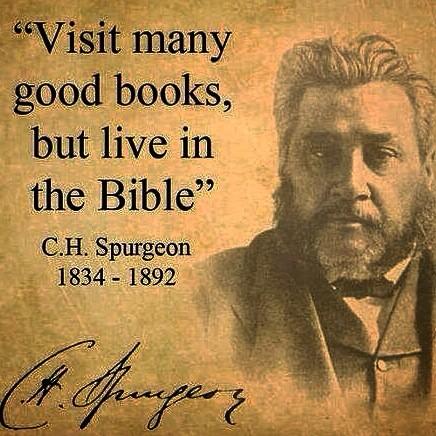
In sum, I agree with Spurgeon who said, "visit many good books, but live in the Bible." Make the Bible your home. Eat the Word. Drink it deeply. Read it over and over and over again until it becomes a part of your DNA. I would even say that if you aren't really a reader and only have 15 minutes a day, spend them in the Bible. On the other hand, if you get the chance, go visit other books. It just may enrich your understanding of the world and the Bible itself.
Showing posts with label Bible study. Show all posts
21 January 2016
03 January 2015
Book Review: God's Story in 66 Verses
God's Story in 66 Verses (2015) by Stan Guthrie is a useful little book. When I first read the subtitle, "understanding the entire Bible by focusing on just one verse in each book", it seemed like an ambitious, or perhaps misguided goal. How could someone take a book as expansive as Genesis and boil it down to a single verse? Thankfully, at the outset Guthrie acknowledges this potential hiccup. Rather, he identifies a verse that seems to capture the main theme and then expands on the general themes from there.
In essence, 66 Verses is a great Bible primer. Each book of the Bible is given a 3-4 page overview. Beyond that, there is little supplementary material (apart from a 3 page introduction), which is not unwelcome. The way that Guthrie presents each book allows one to follow the biblical narrative of God pursuing sinners through all 66 books.
I can envision this as a great introduction to the Bible for those who may be unfamiliar. However, I think it has utility beyond beginners. The book also has relevance to those who have too long focused on scriptural trees while missing the divine forest.
I received a free copy of this book from Thomas Nelson publishers and Book Look Bloggers book review in exchange for my review. I was not required to submit a positive review; the impressions here are my own.
In essence, 66 Verses is a great Bible primer. Each book of the Bible is given a 3-4 page overview. Beyond that, there is little supplementary material (apart from a 3 page introduction), which is not unwelcome. The way that Guthrie presents each book allows one to follow the biblical narrative of God pursuing sinners through all 66 books.
I can envision this as a great introduction to the Bible for those who may be unfamiliar. However, I think it has utility beyond beginners. The book also has relevance to those who have too long focused on scriptural trees while missing the divine forest.
I received a free copy of this book from Thomas Nelson publishers and Book Look Bloggers book review in exchange for my review. I was not required to submit a positive review; the impressions here are my own.
21 January 2014
Choose Your Weapon
A few years ago, I was looking to purchase a new deer rifle. I went into one store and the salesman presented me with a single shot rifle, telling me how his father had killed more deer with that gun than I would ever kill in my lifetime. He was deadly accurate with it. Part of the reason why he was so accurate was that he knew every inch of his gun well. He knew exactly what to expect when he used it.
As a practiced shooter, he could probably use some else's gun well too, but not as well as he could use his own. His single shot was an extension of his body and so it made sense for him not to use a new gun every time he went hunting.
I suspect this familiarity applies to other implements as well. Swordsman get to know the weight and balance of their own swords. Golfers use their own clubs because they know how they will perform. Chefs prefer certain knives because they know exactly how they will perform. Though they may be accomplished with these instruments in general, their precision comes from their own objects becoming a part of them.
I believe this lesson applies to Bible as well. The more we familiarize ourselves with one translation, even one Bible, the more it becomes a part of us. Granted, we will certainly be able to navigate other Bibles and translations better than we had before, but our ability to make a Bible our own rests in engaging with the same text again and again.
I know that many people switch translations year by year. No doubt this offers fresh perspective on God's word, but I suspect it limits the ability to truly own the text and write it deeply on our hearts. This is Grant Horner's Bible. Horner has been using the exact same Bible for 25 years. Do you think he knows it well? In this audio clip, John Piper also makes a plea for finding a translation and sticking with it.
My encouragement is to get a good Bible, written on real paper, in a standard translation (ESV, NIV, NASB) and read it until it becomes a part of you.
As a practiced shooter, he could probably use some else's gun well too, but not as well as he could use his own. His single shot was an extension of his body and so it made sense for him not to use a new gun every time he went hunting.
I suspect this familiarity applies to other implements as well. Swordsman get to know the weight and balance of their own swords. Golfers use their own clubs because they know how they will perform. Chefs prefer certain knives because they know exactly how they will perform. Though they may be accomplished with these instruments in general, their precision comes from their own objects becoming a part of them.
I believe this lesson applies to Bible as well. The more we familiarize ourselves with one translation, even one Bible, the more it becomes a part of us. Granted, we will certainly be able to navigate other Bibles and translations better than we had before, but our ability to make a Bible our own rests in engaging with the same text again and again.
I know that many people switch translations year by year. No doubt this offers fresh perspective on God's word, but I suspect it limits the ability to truly own the text and write it deeply on our hearts. This is Grant Horner's Bible. Horner has been using the exact same Bible for 25 years. Do you think he knows it well? In this audio clip, John Piper also makes a plea for finding a translation and sticking with it.My encouragement is to get a good Bible, written on real paper, in a standard translation (ESV, NIV, NASB) and read it until it becomes a part of you.
26 December 2013
Another reading plan: 365 chapters
If you are wanting a great overview of Scripture, consider this plan from Ken Boa. It takes you through 365 key chapters in the Bible. Granted, you will miss quite a bit of material, though this will give you a grand flyover of the Bible.
23 December 2013
These are a few of my favorite things for Bible Study
On New Year's Eve, I will have a list of my favorite books of the year, but I thought I would put together a list of some other favorites of mine. Well, one's a book.
Legacy ESV Bible
I like Bibles. I have several of them. Over the last few months, I have been fighting against buying a Gospel Transformation Bible, also by Crossway, because it looks pretty cool. But my Legacy Bible has replaced my ESV Study Bible as my daily reading Bible. Why? It's a thing of beauty. No study notes. Crisp white pages. Single column format. Large margins for notes I want to write. Mine is in Tru-Tone, but leather would be even better.
Your Bible is a sword, choose one that you can handle with elegance.
If you are looking for a reading plan to go with it, try this one.
Moleskine Journal
The large ruled notebook from Moleskine with the soft cover is a great accompaniment to the Bible. You can write notes, thoughts, ideas. Interact with the text. Write your prayers. (Here's a tip--Moleskine's are pricey, go to Walmart and buy a knockoff.)
Pigma Microns
You need pens to go with your journal and your Bible. Pigma Microns come in a variety of sizes. They are archival ink (they won't fade) and with small enough tips, they won't bleed through. In my Bible, I use the .01 for underlining and the .005 for writing notes in the margins.
The 5 + 1 plan
I have recently started using YouVersion to listen to 5 Psalms and 1 chapter of Proverbs per day. It takes about 10-15 minutes. If you do this faithfully, you can get through the Psalms and Proverbs in 1 month.
Devotional
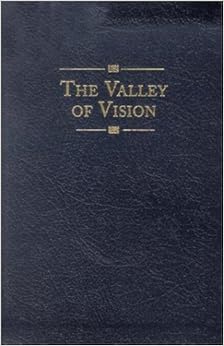
Let's finish out the list with a devotional. This isn't a devotional per se, at least not what you typically think of as a devotional. It is a book of Puritan prayers called the Valley of Vision. Read the prayers and meditate on the beauty of God.
Legacy ESV Bible
I like Bibles. I have several of them. Over the last few months, I have been fighting against buying a Gospel Transformation Bible, also by Crossway, because it looks pretty cool. But my Legacy Bible has replaced my ESV Study Bible as my daily reading Bible. Why? It's a thing of beauty. No study notes. Crisp white pages. Single column format. Large margins for notes I want to write. Mine is in Tru-Tone, but leather would be even better.Your Bible is a sword, choose one that you can handle with elegance.
If you are looking for a reading plan to go with it, try this one.
Moleskine Journal
The large ruled notebook from Moleskine with the soft cover is a great accompaniment to the Bible. You can write notes, thoughts, ideas. Interact with the text. Write your prayers. (Here's a tip--Moleskine's are pricey, go to Walmart and buy a knockoff.)
Pigma Microns
You need pens to go with your journal and your Bible. Pigma Microns come in a variety of sizes. They are archival ink (they won't fade) and with small enough tips, they won't bleed through. In my Bible, I use the .01 for underlining and the .005 for writing notes in the margins.
The 5 + 1 plan
I have recently started using YouVersion to listen to 5 Psalms and 1 chapter of Proverbs per day. It takes about 10-15 minutes. If you do this faithfully, you can get through the Psalms and Proverbs in 1 month.
Devotional
Let's finish out the list with a devotional. This isn't a devotional per se, at least not what you typically think of as a devotional. It is a book of Puritan prayers called the Valley of Vision. Read the prayers and meditate on the beauty of God.
15 December 2013
Bible Reading Plans
One of the most important habits I have developed in my life is regular Bible study. Every December, I try to put out a list of what I think are good Bible reading plans. I have done a variety of these plans over the years--MacArthur, Horner, Meditative Plan, and How to Master the English Bible. The plan I have been following now is (roughly) the one I created listed near the bottom of the list.

The One Year Bible--This is a fine option. You know exactly what to read each day. You need a special Bible though and it isn't organized like a regular Bible, a distinctive drawback, as far as I am concerned.
M'Cheyne--You will be reading sections from 4 different places each day and if you follow it, you will go through the Old Testament once and the New Testament and Psalms twice.
John MacArthur approach--MacArthur's method is to read through the Old Testament straight through, a few chapters a day, and then start over again when you reach the end. The New Testament is handled a little differently. You break each book into sections of chapters (4-6) and read each section once a day for a whole month. So, for example, you would read Romans 1-5 every day for a month. Then the next month you might read Romans 6-11 and finally, in the third month, you would read Romans 12-16.
Meditative plan--This is a great plan from my good friend Eric Johnson, a Christian psychologist and one of the godliest men I know. This plan encourages meditating more deeply upon God's word.
Grant Horner approach--When I first encountered this plan, I was deeply influenced by it. You read a lot of Bible and over time.
Horner Lite--I adjusted the Horner plan so that you would be reading from five places per day. This allows slightly more meditative reading. The sections include: 1) History--Genesis through Esther, 2) Wisdom--Job through Song of Solomon, 3) Prophecy--Isaiah through Malachi, 4) Gospels + Acts, and 5) the Epistles--Romans through Revelation. You would approach this in the same way you approached the Horner plan. When you finish a section, you start it over. It will take about a year and a half to get through the first section. You will get through the wisdom literature and prophetic literature about 1.5 times in the year. You will get through the gospels and acts just over 3 times. You would get through the epistles about 2.5 times.
How to master the English Bible--This is based on a book by James Gray (1851-1935). I read the book. I am amazed that Gray was able to publish a whole book about this plan, because the program boils down to pick a book of the Bible, read it through, repeat 20 times.
Another plan I created--I still think this is a good plan that gets you reading in a number of different places. Check it out and see how it combines a few other approaches.
I would also happily recommend just picking up a Bible and reading through, cover to cover. This is particularly pleasurable with a "Reader's Bible."
Tolle Lege--take up and read. It will change your life.
The One Year Bible--This is a fine option. You know exactly what to read each day. You need a special Bible though and it isn't organized like a regular Bible, a distinctive drawback, as far as I am concerned.
M'Cheyne--You will be reading sections from 4 different places each day and if you follow it, you will go through the Old Testament once and the New Testament and Psalms twice.
John MacArthur approach--MacArthur's method is to read through the Old Testament straight through, a few chapters a day, and then start over again when you reach the end. The New Testament is handled a little differently. You break each book into sections of chapters (4-6) and read each section once a day for a whole month. So, for example, you would read Romans 1-5 every day for a month. Then the next month you might read Romans 6-11 and finally, in the third month, you would read Romans 12-16.
Meditative plan--This is a great plan from my good friend Eric Johnson, a Christian psychologist and one of the godliest men I know. This plan encourages meditating more deeply upon God's word.
Grant Horner approach--When I first encountered this plan, I was deeply influenced by it. You read a lot of Bible and over time.
Horner Lite--I adjusted the Horner plan so that you would be reading from five places per day. This allows slightly more meditative reading. The sections include: 1) History--Genesis through Esther, 2) Wisdom--Job through Song of Solomon, 3) Prophecy--Isaiah through Malachi, 4) Gospels + Acts, and 5) the Epistles--Romans through Revelation. You would approach this in the same way you approached the Horner plan. When you finish a section, you start it over. It will take about a year and a half to get through the first section. You will get through the wisdom literature and prophetic literature about 1.5 times in the year. You will get through the gospels and acts just over 3 times. You would get through the epistles about 2.5 times.
How to master the English Bible--This is based on a book by James Gray (1851-1935). I read the book. I am amazed that Gray was able to publish a whole book about this plan, because the program boils down to pick a book of the Bible, read it through, repeat 20 times.
Another plan I created--I still think this is a good plan that gets you reading in a number of different places. Check it out and see how it combines a few other approaches.
I would also happily recommend just picking up a Bible and reading through, cover to cover. This is particularly pleasurable with a "Reader's Bible."
Tolle Lege--take up and read. It will change your life.
12 October 2013
Review: He Has Spoken
Earlier this year, I completed the Centurions Program through the Colson Center for Christian Worldview. During the year long training program, I was immersed in the study of worldview with a great class of people and under the direction of godly faculty. As a part of that program, I spent several weeks teaching one of the video curricula available through the Colson Center, specifically the one called Wide Angle and I closely reviewed two others.
A few weeks ago, I received a copy of their latest study curriculum, He Has Spoken: The Worldview of Scripture (2013). According to the cover from the DVD, John Stonestreet and TM Moore seek to answer the questions, "What regard is there for God's Word today? Do we rightly handle the Holy Scriptures? How ought we to respond to its authority?"
The materials consist of a 98 minute DVD and an associated study guide. If recollection serves me, the other Colson Center materials I have used are centered around the DVD with an associated discussion guide. I assumed this set would be the same way with the DVD being the primary driver. I soon discovered, however, that in the case of He Has Spoken, the DVD supports the study guide rather than vice versa. Once I realized this switch, I appreciated how well it was done. There are three basic sections.
Five Clips of John Stonestreet
On the DVD, although there are ten video clips, the first five videos include John Stonestreet addressing the following issues:
Stonestreet seeks to establish that the Bible is God's revealed word to His people through both the Old and New Testaments. He makes the point that as God's revealed word, it cannot be incidental to our lives and cannot be simply a book. He commented "It has to be the ground on which we stand."
I really appreciated how Stonestreet talked about what the Bible is not, because there is a lot of confusion about this not only outside of the church, but inside as well. He suggests that we cannot see the Bible simply as a book of fragmented nuggets, love letters, or a series of stories about heroes, but rather as one story that centers on Jesus. Consistent with the mission of the Colson Center, Scripture is not only true Truth, as Francis Schaeffer would say, but should shape our entire lives as Kingdom people. Consequently, we approach the scripture with humility, obedience, expectation, repentance, and in community.
Study Guide-TM Moore
The second part consists of a study guide prepared by theologian and Dean of the Centurion program, TM Moore. Having completed the Centurion Program, I know the quality of study materials that he writes. This study guide is no exception. It contains 35 separate lessons divided into five parts of seven lessons each. The five parts are:
Five Conversations--TM Moore and John Stonestreet
Finally, the conversations between Moore and Stonestreet were a real highlight for me. I have a deep respect for both of these men and to watch them interact about the materials was a blessing. I have had the chance to talk with them on a personal level and they are effective, clear communicators of the Word and Christian worldview. Essentially, in these conversations, Stonestreet would ask Moore about the materials and they would talk over them. In many regards, these conversations were also immensely practical to the Christian. They discuss issues such as how to choose a Bible without an obvious nod to one translation versus another. They suggest that you choose one you will read. After choosing a Bible, we must come to know what it says because Christians are involved in a war and this Word is our primary weapon. If we come to know the Word, we can start where people are and, using reason and the Word, we can share with them the love of God. However, they make the point that we must approach Scripture humbly, prayerfully, and with an eye to the grand story that it presents, being careful not to over-"metaphoricalize", a word I learned from Mr Stonestreet in the final conversation.
In summary, this is an excellent resource for the church. It could certainly be employed as an individual Bible study, but I believe it may be used even more effectively as a small group resource because, as we learned in this video, Scripture is meant to be studied communally. In my own church, we have made a concerted effort to help people get into the Word on a consistent basis. He Has Spoken would be of great use for Christians to deepen their own understanding of Scripture and understand its importance in their lives and in the culture. Ideally, many churches would avail themselves of this excellent set of materials which may help the Christian church reclaim their biblical literacy and subsequently improve their capacity to have an influence upon culture to the glory of God.
The Colson Center has allowed me to give away one copy of this DVD and study guide. If you are interested in being considered you can: 1) comment on this post, though I will need your email, 2) share this post on your Facebook page or Twitter (and let me know you did), or 3) retweet this post. I am sure these materials will be a blessing to you. I will do the drawing next Saturday, October 19th.
A few weeks ago, I received a copy of their latest study curriculum, He Has Spoken: The Worldview of Scripture (2013). According to the cover from the DVD, John Stonestreet and TM Moore seek to answer the questions, "What regard is there for God's Word today? Do we rightly handle the Holy Scriptures? How ought we to respond to its authority?"
The materials consist of a 98 minute DVD and an associated study guide. If recollection serves me, the other Colson Center materials I have used are centered around the DVD with an associated discussion guide. I assumed this set would be the same way with the DVD being the primary driver. I soon discovered, however, that in the case of He Has Spoken, the DVD supports the study guide rather than vice versa. Once I realized this switch, I appreciated how well it was done. There are three basic sections.
Five Clips of John Stonestreet
On the DVD, although there are ten video clips, the first five videos include John Stonestreet addressing the following issues:
- The Idea of Revelation: Clarifying the Proper Place of Scripture
- Being Biblical: How We Miss the Point of Scripture
- The Big Picture: Grasping the Purposes of Scripture
- Not Ashamed: Trusting the Power of the Scripture
- Under the Word: Assuming a Posture Worthy of the Scripture.
Stonestreet seeks to establish that the Bible is God's revealed word to His people through both the Old and New Testaments. He makes the point that as God's revealed word, it cannot be incidental to our lives and cannot be simply a book. He commented "It has to be the ground on which we stand."
I really appreciated how Stonestreet talked about what the Bible is not, because there is a lot of confusion about this not only outside of the church, but inside as well. He suggests that we cannot see the Bible simply as a book of fragmented nuggets, love letters, or a series of stories about heroes, but rather as one story that centers on Jesus. Consistent with the mission of the Colson Center, Scripture is not only true Truth, as Francis Schaeffer would say, but should shape our entire lives as Kingdom people. Consequently, we approach the scripture with humility, obedience, expectation, repentance, and in community.
Study Guide-TM Moore
The second part consists of a study guide prepared by theologian and Dean of the Centurion program, TM Moore. Having completed the Centurion Program, I know the quality of study materials that he writes. This study guide is no exception. It contains 35 separate lessons divided into five parts of seven lessons each. The five parts are:
- The Word Which is Able to Save
- Let God Be True
- Threads in the Tapestry of Truth
- The Sword of the Spirit
- Receiving God's Word
Five Conversations--TM Moore and John Stonestreet
Finally, the conversations between Moore and Stonestreet were a real highlight for me. I have a deep respect for both of these men and to watch them interact about the materials was a blessing. I have had the chance to talk with them on a personal level and they are effective, clear communicators of the Word and Christian worldview. Essentially, in these conversations, Stonestreet would ask Moore about the materials and they would talk over them. In many regards, these conversations were also immensely practical to the Christian. They discuss issues such as how to choose a Bible without an obvious nod to one translation versus another. They suggest that you choose one you will read. After choosing a Bible, we must come to know what it says because Christians are involved in a war and this Word is our primary weapon. If we come to know the Word, we can start where people are and, using reason and the Word, we can share with them the love of God. However, they make the point that we must approach Scripture humbly, prayerfully, and with an eye to the grand story that it presents, being careful not to over-"metaphoricalize", a word I learned from Mr Stonestreet in the final conversation.
In summary, this is an excellent resource for the church. It could certainly be employed as an individual Bible study, but I believe it may be used even more effectively as a small group resource because, as we learned in this video, Scripture is meant to be studied communally. In my own church, we have made a concerted effort to help people get into the Word on a consistent basis. He Has Spoken would be of great use for Christians to deepen their own understanding of Scripture and understand its importance in their lives and in the culture. Ideally, many churches would avail themselves of this excellent set of materials which may help the Christian church reclaim their biblical literacy and subsequently improve their capacity to have an influence upon culture to the glory of God.
The Colson Center has allowed me to give away one copy of this DVD and study guide. If you are interested in being considered you can: 1) comment on this post, though I will need your email, 2) share this post on your Facebook page or Twitter (and let me know you did), or 3) retweet this post. I am sure these materials will be a blessing to you. I will do the drawing next Saturday, October 19th.
23 July 2013
Grant Horner: A Feast for the Soul
For the last several years, I have been using the Grant Horner Bible Reading System. Here is Professor Horner talking about his program. I would encourage you to give it a go!
30 April 2013
Tolle Lege
Tolle Lege means "take up and read!" Augustine of Hippo heard these words at the time of his conversion and was compelled to open the Bible and read. Too many people, however, fail to "take up and read", critics and Christians alike.
I just finished listening to the four part White Horse Inn podcast on "Questions of Faith." The producer, Shane Rosenthal, went to college campuses to do man on the street interviews with students. I want to mention two of the themes I observed. First, most of the students were openly critical of the Bible. They criticized its accuracy, testimony, and general truthfulness. Second, most of them, when asked, had never read the Bible. Some admitted to reading isolated bits and pieces whereas others had no exposure to it at all. Some were exposed to men like Bart Ehrmann, but not to the Bible. So, they were making fairly bold criticisms of a a book, a religion, a Person that has utterly changed the world without ever having read the Bible.
If Jesus is who he claims, if the Bible records truth, if there are eternal consequences (even just potential consequences) for accepting the message, then wouldn't it seem that people would want to read the actual source before openly criticizing it or rejecting it out of hand?
Also, for my Christian brothers and sisters, this book contains God's revelation about who He is and who you are. We believe that the Bible is the clearest revelation of His nature and of His plan for humanity. If you are basing your life on this book, make sure you have read it.
So whether you are a believer or a Bible basher, Tolle Lege! Tolle Lege! Tolle Lege!
I just finished listening to the four part White Horse Inn podcast on "Questions of Faith." The producer, Shane Rosenthal, went to college campuses to do man on the street interviews with students. I want to mention two of the themes I observed. First, most of the students were openly critical of the Bible. They criticized its accuracy, testimony, and general truthfulness. Second, most of them, when asked, had never read the Bible. Some admitted to reading isolated bits and pieces whereas others had no exposure to it at all. Some were exposed to men like Bart Ehrmann, but not to the Bible. So, they were making fairly bold criticisms of a a book, a religion, a Person that has utterly changed the world without ever having read the Bible.
If Jesus is who he claims, if the Bible records truth, if there are eternal consequences (even just potential consequences) for accepting the message, then wouldn't it seem that people would want to read the actual source before openly criticizing it or rejecting it out of hand?
Also, for my Christian brothers and sisters, this book contains God's revelation about who He is and who you are. We believe that the Bible is the clearest revelation of His nature and of His plan for humanity. If you are basing your life on this book, make sure you have read it.
So whether you are a believer or a Bible basher, Tolle Lege! Tolle Lege! Tolle Lege!
06 September 2012
Majority of Christians don't read their Bibles daily
One of the spiritual disciplines I am most thankful for is that of daily Bible study. A few years ago, one of my pastors was talking about how much Bible study had a positive influence upon his life and so I decided to get more serious about it. I can truly say a daily time in the word is one of the greatest blessings in my life. The majority of churchgoers do not engage in this activity however. A recent study from Lifeway research has shown that only 19% of churchgoers read their Bibles daily (frankly, I am surprised it is that high). 40% of churchgoers read their Bibles a few times a month or less often.
I was recently listening to a question and answer session from Ligonier Ministries and R.C. Sproul was asked by someone in the audience, "do you think it is sufficient to read your Bible once or twice a week?" Without hesitation, he said, "No." He went on to explain the importance of feeding on the word of God on a daily, ongoing basis. I heartily agree with him.
For clarification, we do not read our Bibles to earn favor with God, but rather to learn more about the one whom we profess to love and worship. We cannot know God without knowing what He says about himself through His holy word. We do that by reading.
Here are some verses to consider.
I have not departed from the commandment of his lips;
I was recently listening to a question and answer session from Ligonier Ministries and R.C. Sproul was asked by someone in the audience, "do you think it is sufficient to read your Bible once or twice a week?" Without hesitation, he said, "No." He went on to explain the importance of feeding on the word of God on a daily, ongoing basis. I heartily agree with him.
For clarification, we do not read our Bibles to earn favor with God, but rather to learn more about the one whom we profess to love and worship. We cannot know God without knowing what He says about himself through His holy word. We do that by reading.
Here are some verses to consider.
I have not departed from the commandment of his lips;
I have treasured the words of his mouth more than my portion of food.-Job 23:12
But he answered, “It is written,
“‘Man shall not live by bread alone,
but by every word that comes from the mouth of God.’”-Matthew 4:4
“‘Man shall not live by bread alone,
but by every word that comes from the mouth of God.’”-Matthew 4:4
Blessed is the man
who walks not in the counsel of the wicked,
nor stands in the way of sinners,
nor sits in the seat of scoffers;
but his delight is in the law of the LORD,
and on his law he meditates day and night.-Psalm 1:1-2
who walks not in the counsel of the wicked,
nor stands in the way of sinners,
nor sits in the seat of scoffers;
but his delight is in the law of the LORD,
and on his law he meditates day and night.-Psalm 1:1-2
How can a young man keep his way pure?
By guarding it according to your word.
With my whole heart I seek you;
let me not wander from your commandments!
I have stored up your word in my heart,
that I might not sin against you.-Psalm 119:9-11
By guarding it according to your word.
With my whole heart I seek you;
let me not wander from your commandments!
I have stored up your word in my heart,
that I might not sin against you.-Psalm 119:9-11
(Actually, you should read all of Psalm 119--It might be a good place to start)
03 September 2012
Yet Another Bible Reading Plan
Blessed is the man
who walks not in the counsel of the wicked,
nor stands in the way of sinners,
nor sits in the seat of scoffers;
but his delight is in the law of the LORD,
and on his law he meditates day and night.
(Psalm 1:1-2 ESV)
I believe that reading the Bible is important for the Christian. It is the most effective way to know what God says. The past couple of years, I have reviewed several Bible reading plans. You can find the list of programs I reviewed here. Each of these programs has different strengths and weaknesses, but whatever gets you reading the word is a good program. When I started with serious Bible study, I began with the John MacArthur approach, which allowed me to cover large sections of scripture repeatedly. Over the past few years, however, I have switched to the Grant Horner plan, which involves reading chapters from 10 different places each day, which allows for understanding of passages in context.
This past year, I took a course in biblical hermeneutics. One of the points that Jeannine Brown made in her book Scripture as Communication (2007) was that many of the books of the Bible were written to be read as long letters rather than isolated chapters or verses. In order to truly get the understand what is being said, in order to get the context, it is useful to read large sections of books. Doing this also allows the reader to have a broader sense of the historical-redemptive context of the Bible rather than as a series of moral stories.
So, taking what I have liked about Grant Horner and John MacArthur specifically, I have decided to pull together my own program, which also recognizes the importance of reading large sections of scripture. Like the Horner program, it is important to read through at a moderately quick pace. About his program, Horner wrote, "GET THROUGH THE TEXT--no dawdling, back reading, looking up cross references." If his program is any indication, you will become quicker as you continue on.
Here is what I am proposing to try.
1) I broke the Bible into 5 sections: Old Testament, Psalms, Proverbs, Gospels+Acts, and New Testament letters.
2) Each day, you will read one chapter from psalms and one chapter from proverbs. These books are such that smaller units retain their meaning in isolation. When you get to the end of Psalms, go back to the beginning and start again. (You may wish to break 119 into several sections--it is 179 verses long). You can do the same thing with the Proverbs if you wish, or you can read the Proverb of the day (e.g., read Proverbs 1 on the 1st, etc.)
3) You will alternate between Old Testament, Gospels, and rest of New Testament as follows: First, you will read all of Genesis over a period of 1 week. Then you will switch to Matthew and read that over 4 days. Then you will read Romans over 2 days. Then you will switch back to the Old Testament and read Exodus over 5 days. You will continue switching Old Testament-Gospel-Other New Testament on and on.
I plan to read 1 chapter from Psalms, 1 chapter from Proverbs and roughly 6-8 chapters from the other books each day. This will lead to a maximum of 10 chapters per day, which is very doable if you don't bog down with deep study. You can do that later if you wish. Right now, you are trying to get through text. You can certainly alter the number of chapters that you would cover in each day to meet your time constraints.
Assuming approximately 6-8 chapters per book, it would take this many days for each book: Genesis-7, Exodus-5, Leviticus-4, Numbers-5, Deuteronomy-5, Joshua-3, Judges-3, Ruth-1, 1 Samuel-4, 2 Samuel-3, 1 Kings-3, 2 Kings-4, 1 Chronicles-4, 2 Chronicles-5, Ezra-2, Nehemiah-2, Esther-2, Job-6, Ecclesiastes-2, Song of Solomon-1, Isaiah-9, Jeremiah-7, Lamentations-1, Ezekiel-6, Daniel-2, Hosea-2, Joel-1, Amos-2, Obadiah/Jonah-1, Micah-1, Nahum/Habakkuk-1, Zephaniah/Haggai-1, Zechariah-2, Malachi-1, Matthew-4, Mark-2, Luke-3, John-3, Acts-4, Romans-2, 1 Corinthians-2, 2 Corinthians-2, Galatians-1, Ephesians-1, Philippians/Colossians-1, 1&2 Thessalonians-1, 1 Timothy-1, 2 Timothy/Titus/Philemon-1, Hebrews-2, 1 & 2 Peter-1, 1,2,3 John/Jude-1, Revelation-3.
If you read at the pace of 8-10 chapters per day, you will read through the OT passages about 1.5 times, the Psalms about 2.5 times, Proverbs 12 times, the Gospels 9 times, and the NT letters about 3.5 times in one year. Here is an example in scribd of what it would look like for a year.
If you choose to try this, or have more questions about how it is going for me, please let me know!
who walks not in the counsel of the wicked,
nor stands in the way of sinners,
nor sits in the seat of scoffers;
but his delight is in the law of the LORD,
and on his law he meditates day and night.
(Psalm 1:1-2 ESV)
I believe that reading the Bible is important for the Christian. It is the most effective way to know what God says. The past couple of years, I have reviewed several Bible reading plans. You can find the list of programs I reviewed here. Each of these programs has different strengths and weaknesses, but whatever gets you reading the word is a good program. When I started with serious Bible study, I began with the John MacArthur approach, which allowed me to cover large sections of scripture repeatedly. Over the past few years, however, I have switched to the Grant Horner plan, which involves reading chapters from 10 different places each day, which allows for understanding of passages in context.
This past year, I took a course in biblical hermeneutics. One of the points that Jeannine Brown made in her book Scripture as Communication (2007) was that many of the books of the Bible were written to be read as long letters rather than isolated chapters or verses. In order to truly get the understand what is being said, in order to get the context, it is useful to read large sections of books. Doing this also allows the reader to have a broader sense of the historical-redemptive context of the Bible rather than as a series of moral stories.
So, taking what I have liked about Grant Horner and John MacArthur specifically, I have decided to pull together my own program, which also recognizes the importance of reading large sections of scripture. Like the Horner program, it is important to read through at a moderately quick pace. About his program, Horner wrote, "GET THROUGH THE TEXT--no dawdling, back reading, looking up cross references." If his program is any indication, you will become quicker as you continue on.
Here is what I am proposing to try.
1) I broke the Bible into 5 sections: Old Testament, Psalms, Proverbs, Gospels+Acts, and New Testament letters.
2) Each day, you will read one chapter from psalms and one chapter from proverbs. These books are such that smaller units retain their meaning in isolation. When you get to the end of Psalms, go back to the beginning and start again. (You may wish to break 119 into several sections--it is 179 verses long). You can do the same thing with the Proverbs if you wish, or you can read the Proverb of the day (e.g., read Proverbs 1 on the 1st, etc.)
3) You will alternate between Old Testament, Gospels, and rest of New Testament as follows: First, you will read all of Genesis over a period of 1 week. Then you will switch to Matthew and read that over 4 days. Then you will read Romans over 2 days. Then you will switch back to the Old Testament and read Exodus over 5 days. You will continue switching Old Testament-Gospel-Other New Testament on and on.
I plan to read 1 chapter from Psalms, 1 chapter from Proverbs and roughly 6-8 chapters from the other books each day. This will lead to a maximum of 10 chapters per day, which is very doable if you don't bog down with deep study. You can do that later if you wish. Right now, you are trying to get through text. You can certainly alter the number of chapters that you would cover in each day to meet your time constraints.
Assuming approximately 6-8 chapters per book, it would take this many days for each book: Genesis-7, Exodus-5, Leviticus-4, Numbers-5, Deuteronomy-5, Joshua-3, Judges-3, Ruth-1, 1 Samuel-4, 2 Samuel-3, 1 Kings-3, 2 Kings-4, 1 Chronicles-4, 2 Chronicles-5, Ezra-2, Nehemiah-2, Esther-2, Job-6, Ecclesiastes-2, Song of Solomon-1, Isaiah-9, Jeremiah-7, Lamentations-1, Ezekiel-6, Daniel-2, Hosea-2, Joel-1, Amos-2, Obadiah/Jonah-1, Micah-1, Nahum/Habakkuk-1, Zephaniah/Haggai-1, Zechariah-2, Malachi-1, Matthew-4, Mark-2, Luke-3, John-3, Acts-4, Romans-2, 1 Corinthians-2, 2 Corinthians-2, Galatians-1, Ephesians-1, Philippians/Colossians-1, 1&2 Thessalonians-1, 1 Timothy-1, 2 Timothy/Titus/Philemon-1, Hebrews-2, 1 & 2 Peter-1, 1,2,3 John/Jude-1, Revelation-3.
If you read at the pace of 8-10 chapters per day, you will read through the OT passages about 1.5 times, the Psalms about 2.5 times, Proverbs 12 times, the Gospels 9 times, and the NT letters about 3.5 times in one year. Here is an example in scribd of what it would look like for a year.
If you choose to try this, or have more questions about how it is going for me, please let me know!
29 August 2012
Be Careful Little Eyes How You Study
I am big on Bible study. I think it is important, perhaps even essential to the Christian. I do think it is important to use caution in how you approach studying it, however. In part, there can be a danger in having an unbalanced view of God's word, or a tendency to know a few trees well, but miss the forest. Doug Wilson was correct today in his post "As Somebody Somewhere Said..."
Wilson writes, "The only way to learn the Bible the way you should is to read and reread it. This brings us back to the point made earlier: proper Bible study must be preceded by reading. After you are familiar with the context of Scripture, you will be able to build on your knowledge through more specialized study methods. But until you have that familiarity, such study methods should be scrupulously avoided. Until you have the proper foundation, do not memorize any Bible verses. This may seem odd to some of you and sacrilegious to others. Does not the Bible say, 'I have hidden your word in my heart that I might not sin against you' (Ps. 119:11).
"Yes, we are to store God's word in our hearts. Yes, it will keep us from sin. But we are not instructed to cram His Word into our hearts sideways or upside down. God's Word cannot be properly hidden in our hearts when it is misunderstood. And it cannot be understood apart from context."
If you have never read your Bible through (perhaps even a few times), you may want to set to work on that task before you sign up for the next round of memory madness or read the next Christian living book.
(EDIT: Based on an online conversation with my friend Amy, I think it may be more appropriate to stress both scripture memorization AND getting the grand story of scripture. So perhaps it is better to say "sign up for memory madness, but really seek to read through the whole Bible so you can see the big picture").
Wilson writes, "The only way to learn the Bible the way you should is to read and reread it. This brings us back to the point made earlier: proper Bible study must be preceded by reading. After you are familiar with the context of Scripture, you will be able to build on your knowledge through more specialized study methods. But until you have that familiarity, such study methods should be scrupulously avoided. Until you have the proper foundation, do not memorize any Bible verses. This may seem odd to some of you and sacrilegious to others. Does not the Bible say, 'I have hidden your word in my heart that I might not sin against you' (Ps. 119:11).
"Yes, we are to store God's word in our hearts. Yes, it will keep us from sin. But we are not instructed to cram His Word into our hearts sideways or upside down. God's Word cannot be properly hidden in our hearts when it is misunderstood. And it cannot be understood apart from context."
If you have never read your Bible through (perhaps even a few times), you may want to set to work on that task before you sign up for the next round of memory madness or read the next Christian living book.
(EDIT: Based on an online conversation with my friend Amy, I think it may be more appropriate to stress both scripture memorization AND getting the grand story of scripture. So perhaps it is better to say "sign up for memory madness, but really seek to read through the whole Bible so you can see the big picture").
02 July 2012
Sherlock Holmes and Bible Study
Eric McKiddie applies what he learned from Sherlock Holmes to Bible Study. This is really quite a fascinating read!.
15 May 2012
Praying the Scriptures
Scotty Smith writes about praying the Scriptures. He writes,
Praying the Scriptures requires us first to be in the Scriptures regularly, preferably daily. A “diligent use of the means of grace” doesn’t earn us anything, but it profits us in every way. We can’t hide the Word in our hearts if we’re not lingering in the Bible’s pages. Personally, the best time for me to meet with God in an unrushed, expectant way is early in the morning, but we’re all wired differently.
Jack Miller, my spiritual dad and professor at Westminster Theological Seminary, taught me the importance of reading through the whole Bible while at the same time having a smaller portion of Scripture read me. If we aren’t careful, we can read the Scriptures for information and inspiration while playing dodgeball with our calling to transformation. Having the Scriptures “read me” deepens my prayer life because it exposes my sin, reveals Jesus, and makes me hunger and thirst for more of the gospel.
As Martin Luther said, we need the gospel every day because we forget the gospel every day. There’s nothing like knowing our need for Jesus to cure us of gospel amnesia. Nothing will so enflame our hearts like a fresh experience of God’s grace for our current needs. Reading the Bible and having the Bible read me constantly convinces me of this: there’s nothing more than the gospel, there’s just more of the gospel.
Read the Scriptures every day and allow the Scriptures to read you.
I would commend the whole thing here.
Praying the Scriptures requires us first to be in the Scriptures regularly, preferably daily. A “diligent use of the means of grace” doesn’t earn us anything, but it profits us in every way. We can’t hide the Word in our hearts if we’re not lingering in the Bible’s pages. Personally, the best time for me to meet with God in an unrushed, expectant way is early in the morning, but we’re all wired differently.
Jack Miller, my spiritual dad and professor at Westminster Theological Seminary, taught me the importance of reading through the whole Bible while at the same time having a smaller portion of Scripture read me. If we aren’t careful, we can read the Scriptures for information and inspiration while playing dodgeball with our calling to transformation. Having the Scriptures “read me” deepens my prayer life because it exposes my sin, reveals Jesus, and makes me hunger and thirst for more of the gospel.
As Martin Luther said, we need the gospel every day because we forget the gospel every day. There’s nothing like knowing our need for Jesus to cure us of gospel amnesia. Nothing will so enflame our hearts like a fresh experience of God’s grace for our current needs. Reading the Bible and having the Bible read me constantly convinces me of this: there’s nothing more than the gospel, there’s just more of the gospel.
Read the Scriptures every day and allow the Scriptures to read you.
I would commend the whole thing here.
01 April 2012
Bible Geocoding
Yesterday, I was watching a lecture for my Biblical Interpretation class and the instructor showed us this website: www.openbible.info/geo
It is simply incredible. Using the already cool program Google Earth, the OpenBible folks have taken it upon themselves to code the locations of every place named in the Bible, by book and chapter, on Google Earth.
For example, in the picture at the right, I looked up Deuteronomy 34 and it mentions Mt Nebo, "Then Moses went up from the plains of Moab to Mount Nebo, to the top of Pisgah, which is opposite Jericho. And the LORD showed him all the land, Gilead as far as Dan."
With each chapter that you click on, it will show in one shot all the places mentioned in that chapter, so you may have to scroll in to see more clearly what you are looking for. However, you can get right down to the surface level in many cases. (It is important to point out that for this to work, you will need to install Google Earth on your computer).
This seems as though it would be an amazing resource for homeschoolers or even just people interested more in biblical geography.
It is simply incredible. Using the already cool program Google Earth, the OpenBible folks have taken it upon themselves to code the locations of every place named in the Bible, by book and chapter, on Google Earth. For example, in the picture at the right, I looked up Deuteronomy 34 and it mentions Mt Nebo, "Then Moses went up from the plains of Moab to Mount Nebo, to the top of Pisgah, which is opposite Jericho. And the LORD showed him all the land, Gilead as far as Dan."
With each chapter that you click on, it will show in one shot all the places mentioned in that chapter, so you may have to scroll in to see more clearly what you are looking for. However, you can get right down to the surface level in many cases. (It is important to point out that for this to work, you will need to install Google Earth on your computer).
This seems as though it would be an amazing resource for homeschoolers or even just people interested more in biblical geography.
14 February 2012
You need more than words
David Matthis offers advice to seminary students that is appropriate to all Christians. He writes,
And keep in mind that having a daily “quiet time” or “devotions,” without communing with Jesus, won’t keep your soul alive. Mere reading and studying won’t do it. By itself, new information about God—glorious as it is—won’t keep our hearts soft and our souls breathing. We need the person of Jesus himself whom we find in and through the Scriptures. Our souls long for a living connection with the living God-man. We were made for this.
We can never afford to settle for anything less than the words of the Bible, but extreme as it may seem, our souls need more than words, more than facts, more than studies and new head knowledge. We need the Word himself. Our souls need Jesus to survive. And for now, the devotional imbibing of the Scriptures is an essential place to find him.
Read the rest here.
And keep in mind that having a daily “quiet time” or “devotions,” without communing with Jesus, won’t keep your soul alive. Mere reading and studying won’t do it. By itself, new information about God—glorious as it is—won’t keep our hearts soft and our souls breathing. We need the person of Jesus himself whom we find in and through the Scriptures. Our souls long for a living connection with the living God-man. We were made for this.
We can never afford to settle for anything less than the words of the Bible, but extreme as it may seem, our souls need more than words, more than facts, more than studies and new head knowledge. We need the Word himself. Our souls need Jesus to survive. And for now, the devotional imbibing of the Scriptures is an essential place to find him.
Read the rest here.
26 December 2011
Bible Study plans-2012
Any day is a great day to start reading your Bible, but people often start a new plan in a new year. Last year, I spent several days highlighting the strengths and weaknesses of various programs. If you look at the sidebar over there ----------> and click on "Bible Study" it will take you to all of the programs that I recommended.
Here is a brief rundown.
The One Year Bible--This is a fine option. You know exactly what to read each day. You need a special Bible though and it isn't organized like a regular Bible, a distinctive drawback, as far as I am concerned.
M'Cheyne--You will be reading sections from 4 different places each day and if you follow it, you will go through the Old Testament once and the New Testament and Psalms twice.
John MacArthur approach--From what I have heard, John MacArthur knows the Bible as well or better than any man I have ever heard. His method is to read through the Old Testament straight through, a few chapters a day, and then start over again when you reach the end. The New Testament is handled a little differently. You break each book into sections of chapters (4-6) and read each section once a day for a whole month. So, for example, you would read Romans 1-5 every day for a month. Then the next month you might read Romans 6-11 and finally, in the third month, you would read Romans 12-16.
Meditative plan--This is a great plan from my good friend Eric Johnson, a Christian psychologist and a professor at the Southern Baptist Theological Seminary, which encourages meditating more deeply upon God's word.
Grant Horner approach--This is my Bible plan. I have been doing it since September 2009. In that time, I have read each book at least 3 times. Some sections I have read much more often. For example, I have read Proverbs 28 times, Acts and Romans 20 times, and the New Testament epistles 14 times each.
If you cannot find anything in the list I have provided, try here. Ligonier has another dozen approaches or so. Pick one and read. It will be time well invested.
I have stored up your word in my heart, that I might not sin against you.--Psalm 119:11
Here is a brief rundown.
The One Year Bible--This is a fine option. You know exactly what to read each day. You need a special Bible though and it isn't organized like a regular Bible, a distinctive drawback, as far as I am concerned.
M'Cheyne--You will be reading sections from 4 different places each day and if you follow it, you will go through the Old Testament once and the New Testament and Psalms twice.
John MacArthur approach--From what I have heard, John MacArthur knows the Bible as well or better than any man I have ever heard. His method is to read through the Old Testament straight through, a few chapters a day, and then start over again when you reach the end. The New Testament is handled a little differently. You break each book into sections of chapters (4-6) and read each section once a day for a whole month. So, for example, you would read Romans 1-5 every day for a month. Then the next month you might read Romans 6-11 and finally, in the third month, you would read Romans 12-16.
Meditative plan--This is a great plan from my good friend Eric Johnson, a Christian psychologist and a professor at the Southern Baptist Theological Seminary, which encourages meditating more deeply upon God's word.
Grant Horner approach--This is my Bible plan. I have been doing it since September 2009. In that time, I have read each book at least 3 times. Some sections I have read much more often. For example, I have read Proverbs 28 times, Acts and Romans 20 times, and the New Testament epistles 14 times each.
If you cannot find anything in the list I have provided, try here. Ligonier has another dozen approaches or so. Pick one and read. It will be time well invested.
I have stored up your word in my heart, that I might not sin against you.--Psalm 119:11
07 January 2011
Bible Reading Plans-OK, one more
I just saw this Bible reading plan posted today. It was put together by my friend, Eric Johnson. It is more meditative than most, a discipline I am working on.
Bible Reading Plans-Summary
As the past several days have shown, there are numerous plans available for someone looking to study God's word in more depth. Bible reading plans are not ends in themselves, but means to an end, which is to know God and His Word better. Much like a diet, you have to find what works best for you, but you still must do the work even if the approach may look different from person to person. For those of you not sufficiently overwhelmed by the options already offered, here are a few more options that appear to have some merit.
Discipleship Journal has a 1 year Bible reading plan that is accomplished in 25 days per month, allowing you additional days for catch up.
ESV Bible has several different options, including a chronological plan, which are also available in an RSS feed (i.e., they email your daily reading to you).
You Version has perhaps the coolest, and most comprehensive, list of plans available. They have over 50 customizable plans available.
Here are a few other bloggers who have reviewed the importance of Bible study and reviewed some plans over the past week.
Justin Taylor
Desiring God
T-Wax
How sweet are your words to my taste, sweeter than honey to my mouth!-Psalm 119:103
Discipleship Journal has a 1 year Bible reading plan that is accomplished in 25 days per month, allowing you additional days for catch up.
ESV Bible has several different options, including a chronological plan, which are also available in an RSS feed (i.e., they email your daily reading to you).
You Version has perhaps the coolest, and most comprehensive, list of plans available. They have over 50 customizable plans available.
Here are a few other bloggers who have reviewed the importance of Bible study and reviewed some plans over the past week.
Justin Taylor
Desiring God
T-Wax
How sweet are your words to my taste, sweeter than honey to my mouth!-Psalm 119:103
06 January 2011
Bible Reading Plans-Grant Horner System
The final approach, "Professor Grant Horner's Bible Reading System", is the one that I have been using for the past 2 years. This program is almost certainly requires the most reading of any of the programs. Each day, ten chapters are read, specifically covering: the Gospels, Pentateuch, the longer epistles, the shorter epistles/Revelation, wisdom literature, Psalms, Proverbs, historical books, prophets, and Acts (though I have substituted Romans). This plan allows the Bible to be read at least one-and-a-half times per year (history, prophets) and as often as once a month (Acts, Proverbs). It takes an average reader about 40 minutes to get through the 10 chapters.
Bob Kauflin recently wrote about using this program. Near the end, he wrote "I guarantee you will have a hard time stopping." I agree with him. For two years, I have contemplated trying other plans, but I am richly blessed with this approach and will continue it for the foreseeable future.
- You will be tackling a lot of scripture.
- It is not on a calendar, so if you are behind, you pick up where you left off. Also, if you don’t get to a chapter in a day, don’t fret.
- This program really helps the reader to see the Bible in a framework and to make connections between disparate passages. On many occasions, I have covered something in the Gospels, only to see it come up again in the Pentateuch.
Weaknesses:
- It involves a lot of reading. Ten chapters per day is a lot to cover. Because of the amount read, it is in not approached meditatively, but rather is designed to learn scripture.
- It will take a lot of time. Feel free to break it up in chunks.
Subscribe to:
Posts (Atom)