Showing posts with label larry crabb. Show all posts

20 July 2016

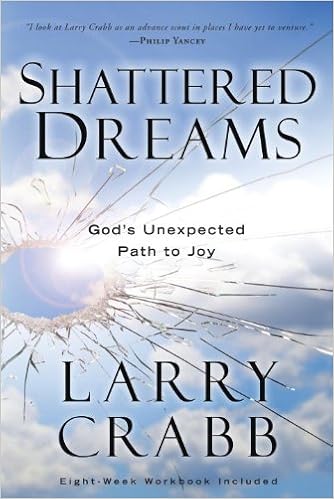
Crabb Conversations: Shattered Dreams

For the last few years, I have been blessed to be on the radio to talk about one of my favorite authors, Larry Crabb with a couple of guys I really love, Mark Halvorsen and Rob Gillette. This week, we finished up our discussion of Crabb's book Shattered Dreams. Going back, it took us a year.  Below, I have included links to all of the discussions. Please, whether you have listened to Shattered Dreams or not, give them a listen.

Chapter 1-August
Chapter 2-September
Chapters 3-4-October
Chapters 5-7-November
Chapters 8-9-December
Chapters 10-11-January
Chapters 12-13-February
Chapters 14-16-April
Chapter 17-May
Chapters 18-19-June
Chapters 20-21-July


03 July 2016

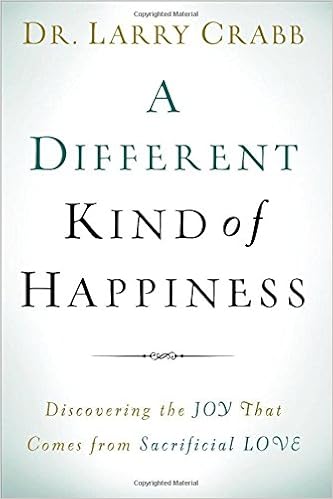
Book Review: A Different Kind of Happiness

I've read every book Larry Crabb has written, including the lesser known two volume Adventures of Captain Al Scabbard. Most of them I have read several times. When people ask me my favorite, I am never sure which to choose--I love most of them. His latest book, A Different Kind of Happiness (2016, Baker) is no different. Several months ago, I read an electronic copy of the book and offered my impressions. At the time, I wrote, "It is no exaggeration that Dr. Crabb has had a profound impact upon me, my family, and the community of believers to which I belong. Like his favorite prophet, Jeremiah, Dr. Crabb has a message that challenges the status quo: ultimately the Bible is about relationship. His latest book is a welcome yet challenging call to a lived relational theology. He reminds us that growing in sacrificial other-centeredness is not easy but it is the way of Christ, which is a critical message for the body of Christ." (from the back cover).

Last week, I received a package containing a physical copy of the book and I was just as excited about receiving the paper copy as I was to review the electronic one and I have already read it again. Like many of Larry's books, this one is my favorite. A Different Kind of Happiness demonstrates Crabb's continued maturing as an author and Christ follower. It is also the clearest explanation of what might be called a relational theology. He is a wise sage and to me a valued mentor.

One of the ideas that has formed Crabb's thinking is that the Trinitarian God exists in perfect relationship and therefore, as His image bearers, we also were created to relate. However, our ideas of what constitutes Christian love is often anemic and self-centered. In this book, he uses Scripture to show us how God calls us to a deeper, sacrificial love. Because relationships, like all of creation, have been affected by the fall, each of us have "the lingering corruption of self-centeredness" that can stain all of our relationships. "We all fall short of the glory of God, the relational glory of God."

All of us on some level recognize the importance of love. But perhaps we don't know what true love--sacrificial love--Christlike love--really is.  What if true happiness develops when our love is modeled after Christ's sacrificial love?  Christ loved those who didn't deserve it. He loved them when they rejected him. That includes you. That includes me.

In the second half, Dr. Crabb explores in some depth what he calls the 7 questions of spiritual theology:
  1. Who is God?
  2. What is God up to?
  3. Who are we?
  4. What's gone wrong?
  5. What has God done about our problem? 
  6. How is the Spirit working to implement the Divine solution to our human problem?
  7. How can we cooperate with the Spirit's work? 

These seven questions provide a useful framework for a lived relational theology and are worth pondering in some depth.


For all the positives of this book, and there are many, a caution is in order. This book will unsettle you. If you are willing to honestly consider what Dr Crabb has to say, you will feel uncomfortable. Reflecting upon God's word and Christ's life, Larry asks us to love deeply and sacrificially. He calls upon us to love those who don't deserve it because none of us do. He exhorts us to love even while people are sinning against us as he loved us when we were (are) sinning against him.

This book contains a prayer that I have written out and pray as often as I can:
"Whatever the cost, make me a little Christ. Father, may Your Spirit open the eyes of my heart to see your beauty so that I am left with no greater desire while I live in this world than to reveal Your Son's love to others by how I relate." 

I received a free copy of this book from Baker Books in exchange for my review. The reviews presented within are my own. Although this book was provided free of charge, it is a testament of my enjoyment of the book that I have purchased 10 more to give away to others. 
04 December 2015

A few of my favorite audio resources

Most people know that I read a lot, but I also listen a lot. Every Tuesday, I drive the hour to Rice Lake and I sit in my car (and whenever I am going anywhere) and I typically listen to different teachings. Some I may listen to once, but there are some that I listen to over and over again. Unsurprisingly, I have a "Larry Crabb" playlist that is perhaps over a day long that I listen to frequently. But of all of the teachings, here are some of my favorites.

Ambassador Basic Curriculum: Course 1--Although all 3 courses are very well done, Greg Koukl's course 1 are very well done. Koukl is an engaging communicator and these lectures provide a great foundation for communicating with others about the faith. ~5 hours.

Crisis of Care in the Christian Community--"Crisis of Care" presents one of the more comprehensive overviews of Larry Crabb's work in a series of lectures that were given at Regent College in Vancouver. I am not sure of the date that these lectures were given, but by the way he talks, it may be a bit earlier in his professional work, shortly after his thinking began to shift. 7.7 hours.

Eat This Book--In a series of 3 lectures given at Regent College, Eugene Peterson offers one of the finest introductions to absorbing Holy Scripture that I have heard. He has since wrote an excellent book with the same title, but these 3 lectures provide an engaging and important introduction. 3.6 hours.

The Freedom Series--Larry Crabb gave a series of 4 sermons at Valley Springs Fellowship regarding our Freedom in Christ based upon Romans 7:6, the foundational verse for New Way Ministries. ~2 hours.

Solving the Problem of Evil--When I was working on the apologetics certificate through Biola University, one of the many required lectures was entitled, "Solving the Problem of Evil" by Garrett DeWeese. Although DeWeese is a philosopher, he speaks with a pastor's heart and this lecture is one of the finest treatments of the problem of evil I have ever heard, not because DeWeese solved it, but because he was willing to wrestle with it well. 2 hours.

2 Bonus Recommendations
66 Love Letters Audio Book--I am putting this one in here for my wife. She listens to this over and over and over and over again. She also reads along in the book.  It is a full, unabridged version of Dr Crabb's excellent 66 Love Letters and until December 18, 2015, it is only $7.49.  14 hours.

The New Covenant--I just found these 15 lectures by Dwight Edwards on the New Covenant. I really liked his book Revolution Within and so far, these lectures have been great.  In addition to great material, Edward's voice is wonderful. ~8 hours.

20 November 2015

The One Page

I seem to remember a blog post, though I cannot recall where, in which authors were asked to share the one page in a book that transformed their thinking. Readers are shaped by what they read, but some pages carry much more punch than others.

The following section comes from page 15 of Larry Crabb's book Connecting (2005 edition). I savor these words.

We need to hear the Father laugh. Change depends on experiencing the character of God.

Until we thrill in the Father's embrace after admitting we've been prostitutes, until we watch him jump up and down with delight every time he sees us, until we hear him ask, "How can I help?" when we expected him to say "I'm sick and tired of putting up with you!" we will not change, not really, not consistently, not deeply.

Do we see the good in people, the good heart buried beneath all the pettiness and resentments and empire-building ambitions that irritate us so badly? Do we accept fellow Christians the way Christ accepts us, forgiving each other for the wrongs we do and believing there is something better?

Do we jump up and down with excitement over what someone else could become? How much time do we spend envisioning what that might be? Could we write a verbal portrait of what our rebellious son or estranged spouse or critical friend might look like in twenty years if God's Spirit has his way?

Without this foundational element of offering others a taste of Christ's delight in them, all of our skillful techniques, our wise counsel, our insightful interpretations, even our warm encouragement, will add up to nothing. If there is no love, no supernatural delighting in who we are and who we one day will be, every effort to help people change will fall short of its potential.

13 April 2015

Crabb Conversation-April 2015

Every month, Mark Halvorsen and I talk about the work of Dr. Larry Crabb, a man who has profoundly affected each of our lives on our show Crabb Conversations. This month, we had the pleasure of having Larry join us.
Here are just a few tidbits from the conversation.
  • Where there is pretense, there is no spiritual growth.
  • The center of the gospel is to look bad in the presence of love. 
  • We long for someone to see us at our worst and still be wanted.
  • What does it mean to learn to dance with the Trinity?
  • My greatest calling is not for someone else to see me at my worst and love me, but for me to see them at their worst and love them.
  • Final reality is passionate, not propositional.
  • When you deny the Trinity, all God is reduced to is power, not love. 
  • I continue to be someone who is in desperate need of grace.
  • The happiness of Jesus is putting divine love on display in any circumstance.
  • I'm on a mission from God to put the character of Jesus on display in all circumstances.
You can listen to the podcast HERE. 

If you are interested in watching Larry's Soul Care course, you can find it HERE for free.

02 February 2015

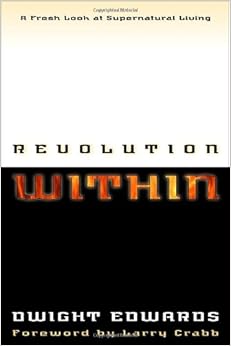
Book Review: Revolution Within

I first heard of Revolution Within: A Fresh Look at Supernatural Living (2002) in a Larry Crabb lecture (the author of the forward to the book). Indeed, the influences upon one another are evident in Crabb's lectures and in Edwards' book. Considering my fondness (some would say excessive fondness) for Dr Crabb, it is unsurprising that I deeply enjoyed this book.

In essence, Revolution Within deals with New Covenant living. Too often, Christians continue to live Old Covenant lifestyles even though the Bible tells them that they are New Covenant believers. Edwards tells the reader that the New Covenant has given believers a new purity, a new identity, a new disposition, and a new power. Apprehending each of those realities that already exist helps the believer to live more fully to the glory of God and for the love of others.

The influences of many of my favorite authors found their way into the pages of this book: John Piper, Chuck Colson, Eugene Peterson, Francis Schaeffer, CS Lewis, not to mention Crabb. In fact, there were a couple of occasions where his books were so closely reminescent of books I love that I assumed Edwards and I had the same books on our shelves. For example, on page 77, Edwards writes about Luke 15 being a story about a prodigal father who "gives to the undeserving with outrageous generosity and irrational kindness", which is the essential message of Tim Keller's excellent book, Prodigal God. Much to my surprise, Edwards' book predated Keller's by 9 years. Second, in chapter 12, he asks the question whether it is better to have Christ physically at your side or the Spirit inside you, a question well-explored with JD Greear's recent book Jesus Continued...

I would like to get this book into the hands of most believers. There is so much food for thought here about the realities of the Christian life that, unfortunately, many believers rarely explore. 

02 December 2014

Practicing Settledness

A couple of weeks ago, I attended the Next Step School of Spiritual Direction in Colorado Springs. Weeks like this are a constant flood of thoughts, feelings, and ideas to be processed. No normal person can process them all; anyway, I can't. Rather, I have learned that it is better to sit with open hands in the flood, eventually grasping onto an idea or two that I can examine more closely once the deluge passes.

One idea that has remained in these last few days is that of "settledness." I do not recall if it was over dinner with Larry or if it was during a group meeting where the term arose. Probably both. Good ideas tend to swirl back around. What really has stirred me is the connection between settledness and masculinity.

As Larry and I have come to know each other a little bit, one of the things that he is helping me to see about myself is my desire to please others. I like to be liked. Unfortunately, because of that desire, I tend to live out of a relational persona that masks my true self. One of his encouragements to me is to live more authentically out of the masculine identity that already resides in me. As a Christian man, my identity is found fully in Christ and the Holy Spirit lives through me. Knowing who, and whose, I am leads to settledness regarding how I relate to others.

I do not need others to appreciate me for my intellect nor my humor. 
I do not need to live to impress.
I do not need to soften my answers to make people happy.

Because my identity is bound up with Christ, I am free to be who God has created me to be.

19 August 2014

Men and Women wrap up

Over the last couple of months, Mark Halvorsen and I have been talking about Larry Crabb's book Men and Women. We have spent three hours discussing it on his show, Front Page. If you haven't had a chance to listen in, here are the three parts.

Part 1
Part 2
Part 3

One of the things that I pointed yesterday on the show was that although the book is called Men and Women, it should not be thought of merely as a marriage book. The topics that are discussed, particularly in the first half of the book hold a broad importance.

Dr Crabb opened his book with this quote from Fredrick Buechner: "'Original sin' means we all originate out of a sinful world which taints us from the word go. We all tend to make ourselves the center of the universe." Anwounded, and people are self-centered. We must decide which is the greater problem." It is easy to consider our woundedness, which should not be discounted or avoided, yet we are all deeply self-centered as well, which has a significant effect on relationships.
d so Dr Crabb begins to address how self-centered each of us are.  In our first show, we spent quite a bit of time discussing Dr Crabb's idea that "people are

In the second show, we spent time talking about justified anger. Each of us has a tendency to find ways to justify how we think and behave in self-centered ways. When we become angry at others, we make it seem like we are the victim and so feel righteous in becoming angry. Unfortunately, this "justified self-centeredness" blocks relational formation.

Yesterday, we made it through three chapters, which was amazing for us! The fourth chapter is entitled "surely I'm not that bad". Most of us, if we are honest believe that the way we act and behave is "not that bad."  Just today, I was convicted of a sin that I didn't make much of before hand, though today, I was confronted with the depth of my sin. The fifth and sixth chapters move into discussing that "change is possible" through the "celebration of forgiveness." 

It was a blessing to talk about this book and these important topics. I would highly recommend the book and I look forward to discovering what we will discuss next!

19 July 2014

Relationship Monday: Men and Women

Last Monday, Mark Halvorsen and I discussed the first chapter from Larry Crabb's book Men and Women: Enjoying the Difference.  We focused primarily on the following ideas:
  • People are wonded, and people are self-centered. We must decide which is the greater problem.
  • Self-centeredness is the killer. In every bad relationship, it is the deadliest culprit. Poor communication, temper problems, unhealthy responses to dysfunctional family backgrounds, co-dependent relationships, and personal incompatibility--everything (unless medically caused) flows out of the cesspool of self-centeredness.
  • "Original sin" means we all originate out of a sinful world which taints us from the word go. We all tend to make ourselves the center of the universe.-Frederic Buechner
  • We are too quick to resent and feel what we suffer from others, but fail to consider how much others suffer from us. Whoever considers his own defects fully and honestly will find no reason to judge others harshly.-Thomas a Kempis.
These ideas provided wonderful fodder for a fruitful discussion. We will continue talking about the book on Front Page on WWIB at 10:00 on Monday July 21. We pre-recorded the session and I think there is much to think about!

You can listen to last week's podcast here.

10 July 2014

Another relationship Monday

Next Monday, July 14th I again have the privilege of being on Front Page with Mark Halvorsen at 10:00AM.  Listen in as Mark and I discuss Larry Crabb's book Men and Women: Enjoying the Difference. If you want to learn more about marriage or how to be other focused, listen in.

If you want to hear last month's discussion on fatherhood, you can listen to the podcast here. 

09 July 2014

Book Review: Real Church: Does It Exist? Can I Find It?

Sometimes, after we have made it through the first few pages or chapters of a book, the only thing that keeps us going is the reputation of the author. For me, Real Church: Does It Exist? Can I Find It? (2009, Thomas Nelson) by Larry Crabb was just such a book. I have read nearly all of Dr Crabb's books and had  the honor of receiving spiritual direction from him. It would not be too much to say that he has been one of the most important influences upon my thinking about church, relationships, and life. But when I began Real Church, I found myself uncomfortable. In the early pages of the book, he boldly claims that he has essentially grown tired of church and really doesn't want to go church. When I read his words, several different things stirred in me. I still like going to church. Every week, so I have a hard time relating when he says he doesn't want to be there. I also found myself pondering the more general question, "is he allowed to say that and still call himself a Christian? I mean, is it okay?"  (Dr Crabb has a way of writing things honestly that most people are reluctant to voice). I have to admit, if this book was written by a different author, I don't know that I would have continued beyond the first few chapters. But this was Larry, a man whose wisdom I have come to value. I am glad I persisted.

After writing about what makes him uncomfortable with the modern church, he sets out to explore what church could be, a community of honest believers, sharing in one another's struggles over the long haul, all while giving glory to God. The picture he paints would be radical to most churchgoers; for example, he proposes spending ten minutes at the opening of church with everyone journaling about where they are at in the moment (their red dot) and then inviting people to share. Radical, but refreshing.

I suspect if you are accustomed to the American status quo, this book may unsettle you, but give it a chance. What Dr Crabb is envisioning could be transformative.


24 June 2014

Book Review: The Marriage Builder

Originally published in 1982, Larry Crabb's The Marriage Builder: Creating True Oneness to Transform Your Marriage (2013) remains an important book for understanding and transforming marriages. As he writes of oneness, he mentions spirit oneness, soul oneness, and body oneness. As is common with Dr Crabb, he argues that we often believe our needs should be met by others whereas in truth, our primary needs are met in Christ.  He does admit, however, that we often lose sight of Christ's filling us. He then moves on to soul oneness, which deals with how spouses are committed to loving the other in an other focused approach. Finally, he spends some time writing about body oneness, or how partners meet one another's physical desires. Having established these facets of true oneness, he discusses a foundation built on grace, commitment, and acceptance. 

On the whole, this was a very practical book, grounded in the gospel. I believe that Dr Crabb rightly identifies that our primary identity and needs are met in Christ, but that we can also minister and serve through the marriage.  His differentiation between goals and desires, and our level of control over them, is an important one. The discussion of the 3 building blocks--grace, acceptance, and commitment--are also worth the price of the book.  This would be a very useful book not only for those who are just starting out, but also for those who have been married for a long time.

21 June 2014

Book Review: 66 Love Letters

I know several people who have been influenced by this book, 66 Love Letters: A Conversation with God that Invites you into His Story (2009). I would add myself to that list.  66 Love Letters is essentially a series of "conversations" between God and Larry Crabb about what God is saying in each book of the Bible. In preparing this book, Crabb spent 5 years writing, which is a long time in the publishing world. For each book, he wrestled through what it seemed God was trying to say. He would spend time in commentaries, time in prayer, and time in the Word. The end product was a unique commentary of sorts on what Crabb believes God is trying to tell us.  Each book tells a story that is a part of a larger story of God and how He loves His people. 

Dr Crabb has said that he would prefer that people not try to master what he writes, to gain intellectual knowledge, but that they would ponder what he writes. In truth, I have moved much faster through his other books than I did through this one, which probably took me three months to complete.  Even at that, there is so much here, I feel like I would gain just as much by reading it again and I may do so. 

66 Love Letters would be a good book for anyone who wants to try to understand what God is saying more deeply. Certainly, this is not on par with Scripture and Crabb would never imply that it is, but it may allow you to see with fresh eyes. 

19 June 2014

Book Review: Finding God

In 1993, Larry Crabb published Finding God, a book in which he explores our journey toward God and His journey toward us. Crabb opens by exploring his personal journey and his necessity of experiencing God and how it is important for each of us.  In the part 2, he examines obstacles to finding him and how they are often driven by wrong thinking and wrong desires. In the final section, he points us to the pathway of of finding God.

Dr Crabb has always struck me as an honest writer, but it seems that in this book, his writing is even rawer than typical.  He openly shares some of his wrestlings with God and with others.  This type of honesty and self-revelation is a necessary thing for our communities. 

One of the messages that routinely finds its way into the pages of this book is that we often place a higher priority on problem solving than on pursuing God (p. 38). Our self-focused culture leads us to believe that our comfort, our satisfaction, and our self-esteem are the ultimate goal. Unfortunately, this message has worked its way into many of our churches as well.  Channeling John Piper and CS Lewis, Crabb suggests that our ultimate need is God and any other passions are too weak.  He encourages us to seek Christ rather than these other things. In classic Crabb style, he also spends a fair amount of time on relating well to others. 

At the end of the book, he talks about how we can be story tellers. One of my favorite things in this book was this statement: "We in the Christian community need to tell our stories, risking shame and rebuke, because we want to find God. We must keep reading our Bibles and listening to good Bible teachers; we must worship and serve together; we must discipline ourselves to give generously to the Lord's work; we must make Christ known to an unbelieving world. But we must also learn to tell our stories to one another." (page 200). 

Like many of Dr Crabb's other books, Finding God provides a God-centered, relationally focused book that will help us to understand ourselves and others better.

25 May 2014

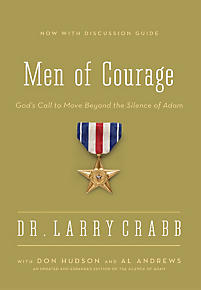
Book Review: Men of courage

Men of Courage: God's Call to Move Beyond the Silence of Adam (2013) by Larry Crabb is the best book I have read on masculinity. Crabb begins the book with a brief discussion of how Adam remained silent, commenting, "the silence of Adam is the beginning of every man's failure."  Against that backdrop, he spends the rest of the book encouraging men to "remember and move."  In other words, we are to remember what God has said and have the courage to move into darkness, confusion, and chaos.  Unfortunately, in our fallen society men hear a cacophony of voices telling them what it means to be a man, with most voices missing the mark. Though we may enjoy adrenaline pumping activities, we have the tendency as men to stay on the surface, to avoid real risk. Relational risk.  Crabb writes, "Men are called to move into darkness, to keep moving ahead with purpose and strength even when they cannot clearly see the path before them" (p. 70). Most of us are reluctant to do this.

Crabb also argues that "the design of every man is to talk and be talked to" (p. 104). This runs contrary to what many modern notions of manhood imply.  However, it seems to me that our failure to talk is rooted in fear of uncertainty and confusion about who we are. To counteract this trend, Crabb encourages us to get into real relationships--with fathers, with brothers, with other men.

Father's Day is coming soon.  This may be one of the best gifts for men who desire to live a godly life. I would like to get this message out to every man that I know. 

13 May 2014

Book Review: The Holy Trinity

In my goal of reading through all of Larry Crabb's recommended reading list he provided at the School of Spiritual Direction, The Holy Trinity: In Scripture, History, Theology, and Worship (2004) by Robert Letham was the third book on the Trinity and far and away the most detailed and scholarly (The first two being Delighting in the Trinity by Reeves and Experiencing the Trinity by Johnson). Letham's book provides some 550 pages exploring the Trinity for evangelicals who he argues have "underachieved" in this arena.

The book is divided into four general sections: biblical foundations, historical development, modern discussion, and critical issues. Each of these sections goes into some depth. 

I as glad that he opened with the biblical foundations exploring both Old and New Testament justification for the Trinity. How these biblical foundations then gave way to developments in the early church toward the development of a trinitarian theology was quite interesting. In the second section, Letham examined how the doctrine developed and the heresies that also arose. After reaching Calvin, he jumps forward to more modern explorations, in large part because there were apparently many silent years in terms of doctrinal development.

The four chapters that made up the final section, critical issues, were the most important to me. Though the historical development was interesting and quite beneficial in terms of understanding why certain decisions were reached, this final section dealt much more with practical matters.  In other words, how does trinitarian thinking influence worship, prayer, missions, and relationships. In the chapter on worship, Letham I believe rightly assesses that the modern church lacks a distinctly trinitarian worship and that we need to rethink our hymnody. Trinitarian thinking also affects how we treat others, which he explored in chapter twenty. 

All in all, this is a comprehensive balanced book on the Trinity, but it is not for the faint of heart. If you are looking for a more accessible book on the Trinity, I would strongly recommend either of the others mentioned above, but if you want to go deeper, I can happily recommend Letham's text.

03 May 2014

Book Review: Experiencing the Trinity

Experiencing the Trinity by Darrell W Johnson (2002) is a good, basic introduction to the doctrine of the Trinity.  Composed of five chapters over 111 pages, this book is a very quick, accessible read.  Johnson's five chapters are:
1) Finding the Trinity
2) Understanding the Trinity
3) Joining the Trinity
4) Entering the Trinity
5) Experiencing the Trinity. 

The first chapter was essentially a biblical defense of the doctrine of the Trinity. Johnson provided several biblical references to support the notion of the Trinity even though the word does not appear in the Bible.  Frankly, though this chapter is important for establishing the groundwork, I did not find it particularly engaging.  However, as the book continued, I became more and more drawn in.  He opened chapter 2 with these two sentences, "'At the center of the universe is a relationship.' That is the most fundamental truth I know." He then proceeds to shows the ways we have misunderstood this mystery (e.g., tri-theism, modalism) and what the consequences will be if we get it right. 

In chapter 3, we are exposed to what for Johnson is an absolutely essential thought, one he retrieved from the writings of Thomas Torrance. In his book on the Trinity, Torrance wrote, "God draws near to us in such a way as to draw us near to himself within the circle of his knowing himself." Several times throughout the book, Johnson repeated this phrase, reminding the reader how, next to the Bible, it may be the most important thing he has ever read. In other words we are "co-lovers with God," which has foundation rattling implications for our relationships with God, with one another, and with the world.

I particularly appreciated the seven words he chose to express "inter-Trinitarian dynamics": intimacy, joy, servanthood, purity, power, creativity, and peace.  Oh that our relationships would manifest some of this!

He concludes the book with a beautiful reflection on Paul's prayer in the middle of his letter to the Ephesians. I have never looked at it in quite such a Trinitarian fashion before, but I am seeing with new eyes. 

23 April 2014

Book Review: Connecting

When I was having dinner with Dr Crabb at the School of Spiritual Direction a few weeks ago, I remember during our conversation that I wondered aloud whether I was going through some of the same professional transition that he went through many years before as a professional psychologist. It felt arrogant saying it, and in no way would I imply that I am similarly brilliant, but it seemed that many of his struggles of 20 years ago are things that I struggle with.  His book Connecting (1997) has strengthened that impression. In fact, on page 42, he wrote, "Was I afraid to just be with this man (a client), to take off the Dr Crabb white coat, to stop being an expert, and offer myself as a person?" This statement so closely mirrors what he told me--"I have no interest in knowing Dr Kanz, but I would really like to know Jason"--I wonder if he had this section in mind. 

Peppered throughout the book are references to the inadequacy of the professional model of helping for soul healing. Of course professionals can, and often do help, but what people often desire is connection, not professional therapy or legalistic moralism.  In this book, Crabb discusses what connection may look like in relationships with one another. 

True connection, what Curt Thompson calls the desire to "be known", is at the heart of healing and soul work. We are relational beings created by a relational God, but as a result of the fall, we struggle to relate well.  This book may provide some wisdom as to what it might look like to start down the path of connecting with one another.  Highly recommended.

08 April 2014

Book Review: Delighting in the Trinity

Delighting in the Trinity (2012) by Michael Reeves was one of the five books on the Trinity recommended by Larry Crabb at the School of Spiritual Direction that I attended last week. I started with this one, primarily because of price.

I am glad I started with this one and now I am eager to read more. Reeves is a humorous, engaging writer who discusses the importance of understanding the doctrine of the Trinity for Christian belief. Prior to reading this book, I would have happily endorsed the importance of the Trinity, but I am quite certain I didn't understand the full implications. I suspect I would have said that I believe in the Trinity because I believe it is what is taught by the Bible, but now I would add that it seems to me that not only does the Bible teach it, but that in order for an eternal God to be "loving" the Trinity is logically required.

Having used a word phrase like "logically required", I certainly hope that it doesn't scare you off from this book. I found myself drawn to God as Reeves presented Him. A Trinitarian God is able to love me ferociously, and subsequently enable to me to love.  Furthermore, His holiness and even His wrath make more sense in the light of the Trinity.

In addition to his clear writing, Reeves features short vignettes from many of the Reformers and early church fathers to make his case.

I would highly recommend this book.  

03 April 2014

New Way Ministries School of Spiritual Direction

Dr Crabb and Me.  I am a giant.
Last week, I attended the School of Spiritual Direction in Asheville, North Carolina. This week long school is offered by Larry Crabb and New Way Ministries. Dr Crabb is a clinical psychologist who is a popular speaker and author. About 20 years ago, he had a significant change in his thinking about what constituted helping or "soul care."

Dr Crabb has shifted from a counselor/counselee model to a focus on "conversations that matter" that can, and should, occur between believers. He describes wise conversations between pilgrim's on the way. There are none who have arrived in and of themselves; each faces his or her own brokenness.  Along with about 30 other people, we learned about what it meant to have conversations that matter.

I wasn't sure what to expect, but it is fair to say that I have not experienced anything quite like this event. We were given a binder full of notes, but we rarely looked at it. Dr Crabb encouraged us not to get bogged down in taking notes. Rather, I would describe the week as a series of conversations--sometimes with the whole group and sometimes one on one.

Over the week, each day had a rhythm of sorts. After breakfast, we would meet as a group from 9 until noon. This time involved worship, devotional thoughts from Dr Crabb, and his explanation of how he envisions having these conversations. His approach is very conversational, engaging the class with his stories and ours. He was very good at drawing people out.

The afternoons consisted of work in small groups of 3 or 4 where we were able to share one another's stories on most days. One afternoon was dedicated to meeting with Dr Crabb or one of the other directors. I had the pleasure of meeting with Dr Crabb a couple of times, which was helpful in understanding how he approaches spiritual direction. Meeting with 3 others, though was equally useful.

In the evenings, Dr Crabb would spend some more time talking through his model.  Though I would get tired, I always looked forward to the next session. And I never skipped any, which was unique from any other conference that I have attended.

The in between times were spent walking in the woods, visiting with new friends, or resting and relaxing. The beauty of the mountains is unparalleled.

More personally, I wish it were possible to explain the shift in my soul that I experienced when I was there. Spending time meditating on what Dr Crabb shared with me individually and what he talked about in the group has shaken up my thinking, in a positive way. I am eager to see how it affects relationships. Dr Crabb said, "spiritual formation is relational formation."

If you want to talk specifically about the school, or if you have questions, let me know. I would be eager to sit down with you and have a conversation that matters.