I know several people who have been influenced by this book, 66 Love Letters: A Conversation with God that Invites you into His Story (2009). I would add myself to that list. 66 Love Letters is essentially a series of "conversations" between God and Larry Crabb about what God is saying in each book of the Bible. In preparing this book, Crabb spent 5 years writing, which is a long time in the publishing world. For each book, he wrestled through what it seemed God was trying to say. He would spend time in commentaries, time in prayer, and time in the Word. The end product was a unique commentary of sorts on what Crabb believes God is trying to tell us. Each book tells a story that is a part of a larger story of God and how He loves His people.
Dr Crabb has said that he would prefer that people not try to master what he writes, to gain intellectual knowledge, but that they would ponder what he writes. In truth, I have moved much faster through his other books than I did through this one, which probably took me three months to complete. Even at that, there is so much here, I feel like I would gain just as much by reading it again and I may do so.
66 Love Letters would be a good book for anyone who wants to try to understand what God is saying more deeply. Certainly, this is not on par with Scripture and Crabb would never imply that it is, but it may allow you to see with fresh eyes.
21 June 2014
19 June 2014
Book Review: Finding God
In 1993, Larry Crabb published Finding God, a book in which he explores our journey toward God and His journey toward us. Crabb opens by exploring his personal journey and his necessity of experiencing God and how it is important for each of us. In the part 2, he examines obstacles to finding him and how they are often driven by wrong thinking and wrong desires. In the final section, he points us to the pathway of of finding God.
Dr Crabb has always struck me as an honest writer, but it seems that in this book, his writing is even rawer than typical. He openly shares some of his wrestlings with God and with others. This type of honesty and self-revelation is a necessary thing for our communities.
One of the messages that routinely finds its way into the pages of this book is that we often place a higher priority on problem solving than on pursuing God (p. 38). Our self-focused culture leads us to believe that our comfort, our satisfaction, and our self-esteem are the ultimate goal. Unfortunately, this message has worked its way into many of our churches as well. Channeling John Piper and CS Lewis, Crabb suggests that our ultimate need is God and any other passions are too weak. He encourages us to seek Christ rather than these other things. In classic Crabb style, he also spends a fair amount of time on relating well to others.
At the end of the book, he talks about how we can be story tellers. One of my favorite things in this book was this statement: "We in the Christian community need to tell our stories, risking shame and rebuke, because we want to find God. We must keep reading our Bibles and listening to good Bible teachers; we must worship and serve together; we must discipline ourselves to give generously to the Lord's work; we must make Christ known to an unbelieving world. But we must also learn to tell our stories to one another." (page 200).
Like many of Dr Crabb's other books, Finding God provides a God-centered, relationally focused book that will help us to understand ourselves and others better.
17 June 2014
Mutual Humility
Peter said to him, "you shall never wash my feet." Jesus answered him, "If I do not wash you, you have no share with me." -John 13:8
In the final hours of his life, Jesus shared a meal and fellowship with his closest disciples. After they ate, he rose from dinner, tied a towel around his waist, filled a basin with water, and proceeded to wash the feet of his twelve dinner companions. When he came to Peter, he resisted Jesus. He was not about to allow his Lord to do something as disgusting as washing his feet. That was a job for servants, not saviors.
In response, Jesus said, "If I do not wash you, you have no share with me." He could have honored Peter's request and skipped over him, but he did not. There was a lesson his disciples needed to hear. Theirs was to be a life of service to one another regardless of their station in life.
We often hear the words "mutual submission" as a model for how to relate to one another. That is a useful term, but as I was meditating on this story today, the words that stirred in me were "mutual humility." Jesus' incarnation was the ultimate act of God humbling himself for the benefit of mankind, yet his earthly life was also one of humble servanthood. He was eager to meet the needs of the hopeless and the downtrodden.
In this story, I was struck by the interaction between Jesus and Peter. The incarnate Lord was serving, just as he always did, but Peter did not want to be served and so he resisted. In response, Jesus firmly told Peter that humbling himself and allowing himself to be served was a part of the Christian life and that would require humility.
I think it is much easier for Christians to accept the call to serve others (though we often fail at that too) than it is to be served. Allowing others to meet our needs feels weak, perhaps even humiliating. Yet what Christ is calling his people to is not just that we serve, but also a humble willingness to be served by one another.
The Christian life is not an individualistic life; it requires mutual humility.
In the final hours of his life, Jesus shared a meal and fellowship with his closest disciples. After they ate, he rose from dinner, tied a towel around his waist, filled a basin with water, and proceeded to wash the feet of his twelve dinner companions. When he came to Peter, he resisted Jesus. He was not about to allow his Lord to do something as disgusting as washing his feet. That was a job for servants, not saviors.
We often hear the words "mutual submission" as a model for how to relate to one another. That is a useful term, but as I was meditating on this story today, the words that stirred in me were "mutual humility." Jesus' incarnation was the ultimate act of God humbling himself for the benefit of mankind, yet his earthly life was also one of humble servanthood. He was eager to meet the needs of the hopeless and the downtrodden.
In this story, I was struck by the interaction between Jesus and Peter. The incarnate Lord was serving, just as he always did, but Peter did not want to be served and so he resisted. In response, Jesus firmly told Peter that humbling himself and allowing himself to be served was a part of the Christian life and that would require humility.
I think it is much easier for Christians to accept the call to serve others (though we often fail at that too) than it is to be served. Allowing others to meet our needs feels weak, perhaps even humiliating. Yet what Christ is calling his people to is not just that we serve, but also a humble willingness to be served by one another.
The Christian life is not an individualistic life; it requires mutual humility.
15 June 2014
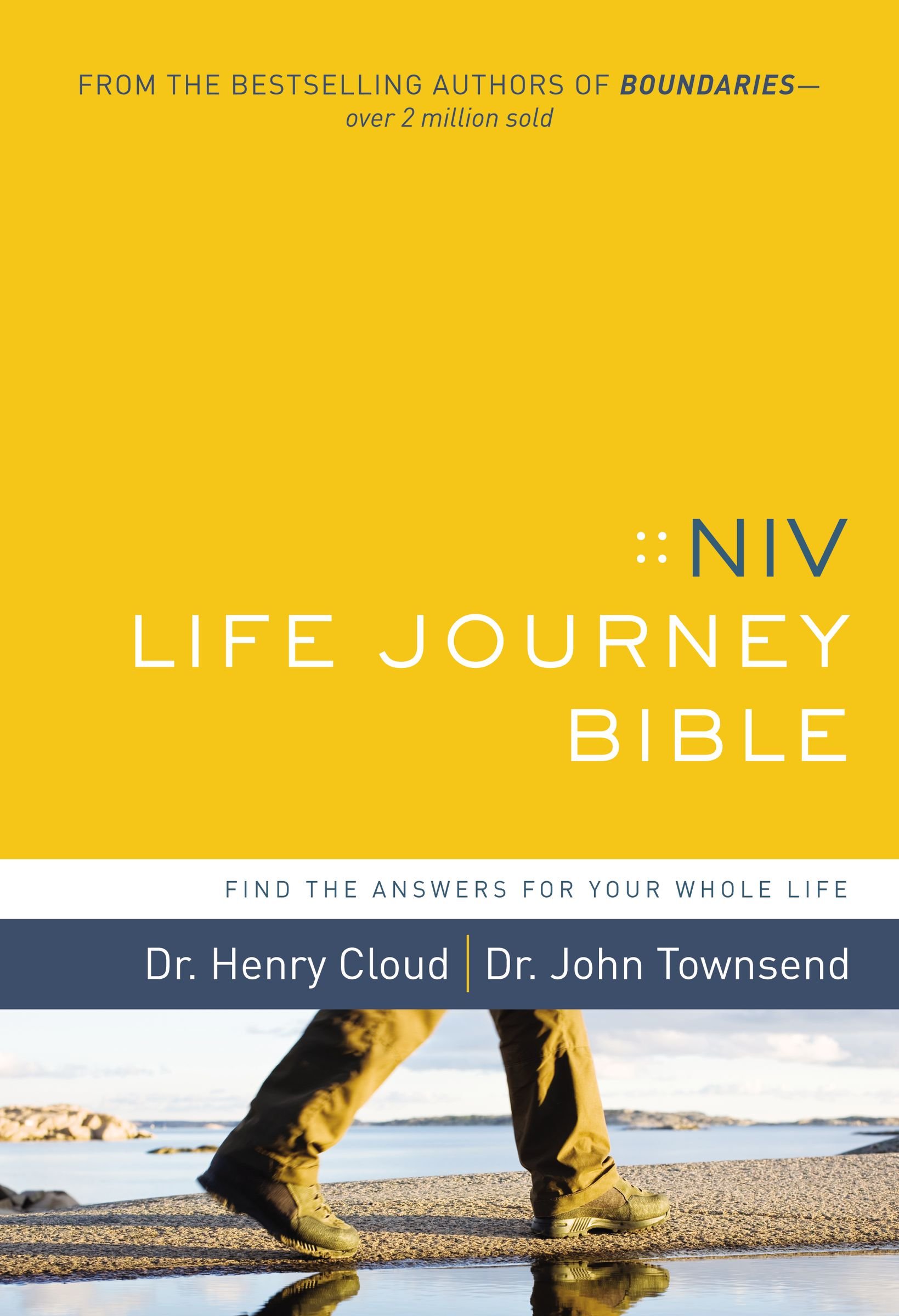
Book Review: NIV Life Journey Bible
The NIV Life Journey Bible (2012) combines the popular NIV translation with thoughts, reflections, and notes from Drs. Henry Cloud and John Townsend. Interspersed throughout the Bible are hundreds of short, half-page insights, over 30 character profiles, and 20 longer essays focused on emotional health, spiritual insight, and Christian growth. These thoughtful insights are cataloged at the back of the Bible in addition to recommended places to look in the Bible regarding various issues such as addiction, bitterness, or pride.
The NIV Life Journey Bible is one amongst a growing niche market for Bibles. On the positive side, Cloud and Townsend are respected for their insights into our emotional and relational lives. Many Christians have benefited from their combined wisdom. The short essays in this book will also benefit their readers. I particularly liked the character profiles, in part because we are all living in the midst of a story. Understanding how the stories of other people played out I believe helps us to grow in wisdom.
There were drawbacks too. First, I admit a struggle when pictures of the note-writers are featured on the dust jacket of a Bible. By its nature, the Bible differs from other books. It remains a book by God and about God. It is not a book by Cloud or Townsend, even if they did write some useful notes. In a related fashion, one of the dangers of niche Bibles like this, or even more carefully constructed study Bibles, is for people to equate the notes with Scripture. Cloud and Townsend would no doubt agree that their notes do not carry the same weight as scripture, but I wonder if for some people, keeping those things separate is difficult. As an example, I am always curious how people present the biblical character of Noah. The authors note, "While Noah is the character in the story who earned God's approval..." (page 9). I wonder how many struggling people will read this and wonder what they need to do to "earn God's approval." Isn't that the opposite of the gospel? We are made righteous by God, the only righteous one.
Overall, this is a good Bible, when the appropriate cautions are kept in mind. Cloud and Townsend are wise teachers and we should seek to learn from them.
I received this book free from the publisher through the BookLook Bloggers book review bloggers program. I was not required to write a positive review. The opinions I have expressed are my own. I am disclosing this in accordance with the Federal Trade Commission’s 16 CFR, Part 255: “Guides Concerning the Use of Endorsements and Testimonials in Advertising.”
Book Review--Relationships: A Mess Worth Making
They rightly demonstrate that relationships are often difficult and, given enough time, all relationships will likely show strain. However, they suggest that "God keeps us in messy relationships for His redemptive purpose" (page 11). In the midst of struggle, it is often difficult to see God's work at hand, but it is.
Exploring topics such as sin, forgiveness, and mercy, the authors provide examples of moving in the rhythms of life with one another. In many ways, this book was reminiscent of the things that I have been reading from Dr Larry Crabb. The idea of "relational sin" would not be foreign to these authors and this book would serve as an excellent addition to the libraries of those who believe that relationships are a mess worth making.
14 June 2014
Fighting for One Another's Marriages
In our churches, we tell married couples about the importance of fighting for their marriages. We offer parenting seminars, talk about the importance of staying married, and discuss biblically-defined roles of manhood and womanhood. All of these are good things.
But lately, I have been wondering how well we fight for one another's marriages and relationships. I think its easier for us to offer people principles, prayers, and verses than it is to go to battle for them and with them. It is easier to say to people, "you should really read Ephesians 5" or to say, "This must be tough. I'll be praying for you guys." Maybe we even get a little edgy and suggest some new sexual technique.
But we don't fight for them. We don't move into their lives and invite them into ours. We don't roll up our cuffs and enter the mess of life with them. We keep their messy marriages at a safe, clean distance, just as we keep them from our own messy lives. We spiritualize marriage and how it is a reflection of Christ and the church and meanwhile, lots of people are hopelessly wondering, "What are we doing wrong? Why isn't being married what everyone promised it would be?" And so they suffer. Alone.
We need to enter the fight for one another. Yes, we need to offer to pray for and with them, we need to point them to Scripture, we maybe even need to offer practical suggestions, but it seems to me that we need to put our arms around one another's shoulders and walk together. We need to enter the mess.
James 2:15-16 (NIV84) says, "Suppose a brother or sister is without clothes and daily food. If one of you says to him, 'Go, I wish you well; keep warm and well fed,” but does nothing about his physical needs, what good is it?'" This applies to our married lives as well. If we see a brother or sister who is struggling in their marriage and we say, "go, I wish you well; keep happy in your marriage," but we do nothing about helping them to fight for their marriage, what good is it?
Let's make an effort to go to war for one another in our relationships. Let's wipe one another's tears. Let's bind one another's wounds. Let's journey together.
But lately, I have been wondering how well we fight for one another's marriages and relationships. I think its easier for us to offer people principles, prayers, and verses than it is to go to battle for them and with them. It is easier to say to people, "you should really read Ephesians 5" or to say, "This must be tough. I'll be praying for you guys." Maybe we even get a little edgy and suggest some new sexual technique.
But we don't fight for them. We don't move into their lives and invite them into ours. We don't roll up our cuffs and enter the mess of life with them. We keep their messy marriages at a safe, clean distance, just as we keep them from our own messy lives. We spiritualize marriage and how it is a reflection of Christ and the church and meanwhile, lots of people are hopelessly wondering, "What are we doing wrong? Why isn't being married what everyone promised it would be?" And so they suffer. Alone. We need to enter the fight for one another. Yes, we need to offer to pray for and with them, we need to point them to Scripture, we maybe even need to offer practical suggestions, but it seems to me that we need to put our arms around one another's shoulders and walk together. We need to enter the mess.
James 2:15-16 (NIV84) says, "Suppose a brother or sister is without clothes and daily food. If one of you says to him, 'Go, I wish you well; keep warm and well fed,” but does nothing about his physical needs, what good is it?'" This applies to our married lives as well. If we see a brother or sister who is struggling in their marriage and we say, "go, I wish you well; keep happy in your marriage," but we do nothing about helping them to fight for their marriage, what good is it?
Let's make an effort to go to war for one another in our relationships. Let's wipe one another's tears. Let's bind one another's wounds. Let's journey together.
12 June 2014
Book Review: Why Sin Matters
I'm facing a conundrum. A friend of mine loaned me Why Sin Matters (2004) by Mark McMinn. I had forgotten it on my shelf for a while, but then I heard Larry Crabb mention it during a lecture he was giving and I took it down to read it. The conundrum is that even though this is a borrowed book, it was so good I am going to have to buy my own copy and I wonder if that is a good use of resources. McMinn is a board certified clinical psychologist who is currently on faculty at George Fox University, though in this book he worked to integrate psychology, theology, and spirituality and in my opinion, he did so admirably.
From the front cover, one might imagine this is a book about sin. It is that, but to me, it was much more a book about grace. Through the book, McMinn explores the relationship between sin and grace. He (I believe rightly) made the point that "understanding grace cannot be done without understanding sin." Through real life examples as well as biblical reflections, particularly related to the story of the prodigal son, he helps the reader to see that we cannot minimize sin, nor can we minimize the awe of grace.
One concept that he explored is that humans are "noble ruins". We are God's image bearers, but we are infected by our sin. I suspect this is an idea that will continue to influence my thinking about personhood for some time to come. This is just one example of many wonderful things in this book.
It is not too much for me to say that I loved this book. I look forward to getting my own copy so that I can mark it up and think through sin and grace in more depth. If you are a fan of Brennan Manning, Larry Crabb, John Piper, or Tim Keller, this may be a good book for you. If you are a pastor, a counselor, or a psychologist, this may be a good book for you. If you are weary and downtrodden, this may be a great book for you too. Buy it now before I purchase my copy!
08 June 2014
Book Review: Evil and the Justice of God
Evil and the Justice of God (2006) is a concise treatment of the problem of evil and why the Christian response makes sense. Through five relatively long chapters, Wright explores why evil acts seem so extreme to our postmodern sensibilities, and why the biblical story anticipates and expects evil. He walks through the Old Testament and New Testament and explains how kingdom Christians can respond to evil. He concludes by looking at the necessity of forgiveness as the response to evil, both societally and in one on one circumstances.
This book would be a nice addition to John Stott's The Cross of Christ and Randy Alcorn's If God is Good. He acknowledges the reality of evil, the necessity of the cross, and the importance of ongoing forgiveness.
Wright also reminds me why I like many British authors. They tend to write very well, and possess a humility that seems absent from many Americans.
If you want to explore the topic of evil, Wright's book is a fine place to start.
05 June 2014
Book Review: Know the Heretics
Taking the opening questions out of order, we must ask does heresy have any relevance today? I know many people who would argue that heresy is not only an irrelevant, but a frankly intolerant, term. To refer to someone as a heretic is to say that they are wrong about some foundational biblical truth and to say someone is wrong is to be judgmental. In modern society, intolerance is the unforgivable sin, but in the early church, believers painstakingly committed themselves to proclaiming, clarifying, and defending the truth, which Holcomb shows us along the way in this book. Holcomb is right to clarify that heresy does not mean "everyone who disagrees with me" but has to do with foundational beliefs of the faith. I wish the church today would take a stronger stand for these foundational biblical truths rather than being blown around by every wind of doctrine.
My initial question was, "do you think you would recognize a heretic?" Unfortunately, I believe the answer would be "no" for many people in the church today. I would imagine that the majority of church goers today would be unable to differentiate between modalist, a Mormon, and a Trinitarian Christian.
Holcomb opened the concluding chapter by quoting GK Chesterton, who wrote "the disadvantage of men not knowing the past is that they do not know the present." How many Christians would recognize that the ever popular image of the Trinity as being like water (ice, water, steam) is reminiscent of Sabellianism, which is one of the most well known forms of modalist heresy (p. 84). In fact, how many Christians know what modalism is and why it is important? How many people would recognize that the theology of Michael and Debi Pearl, authors of the surprisingly popular To Train Up a Child, appears to be Pelagian? Pelagius was a heretic who said many things, but one of them was his rejection of original sin. How many of us would recognize the roots of these ancient heresies in contemporary thinking, or even that they are something worth fighting for?
I am grateful for godly men and women throughout the history of the church who were willing to fight long and hard for orthodox biblical teaching. I am also grateful for those like Justin Holcomb who believe these issues are important enough for "common" (i.e., not the academic type) believers to continue to think through.
Truth matters. We need more books like this one to help the church see that it does.
I received this book free from the publisher through the BookLook Bloggers book review bloggers program. I was not required to write a positive review. The opinions I have expressed are my own. I am disclosing this in accordance with the Federal Trade Commission’s 16 CFR, Part 255: “Guides Concerning the Use of Endorsements and Testimonials in Advertising.”
02 June 2014
Book Review: Men and Women--Enjoying the Difference
Men and Women: Enjoying the Difference (1991/2013) by Larry Crabb sets out to explore gender differences, particularly within the marital relationship. Having said that, I believe that a substantial part of this book would be useful to anyone, married or not.
Men and Women is a practical exploration of the notion of relational sin, and particularly our tendency to be self-centered. Crabb argues that when things go wrong in relationships, the primary reason is that people are committed first of all to themselves. On page 23, he wrote "it is the act of putting ourselves at the center of the universe, where God belongs, that is unqualified sin." That thesis drives the remainder of the book.
Having done his homework, Crabb explores the two typical "camps" of understanding biblical marriage, what he terms the egalitarian and the traditionalist. He believes that problems ultimately emerge from both of these traditional understandings, on the one hand suffocating legalism and on the other self-expressing freedom. the problem with both of them is that they are self-, rather than other-, centered. In typical Crabb fashion, he describes things in a fresh way that others don't always grasp while remaining firmly committed to Scripture.
Men and Women is a great book for the health of marriages, but I would say that it is also an excellent book for relationships in general. I am committed to the notion of self-denial as essential Christian teaching and this book gets right to that heart.
Subscribe to:
Posts (Atom)