07 December 2014

Finding Blessings in the Dry Parts

The Holy Bible contains 66 books, 39 in the Old Testament and 27 in the New Testament. If you're like me, you prefer certain books to others. Almost everyone likes John and Romans. For me, Ephesians is also a favorite. In the same way, there are other books that you may avoid if you can help it. For many people Numbers, the fourth book of the Bible, tops that list. It's often repetitive and unclear. But there is beauty.  


In Numbers 6:24-26, we read Moses's benediction:

The Lord bless you and keep you;
the Lord make his face to shine upon you and be gracious to you;
the Lord lift up his countenance upon you and give you peace.


I have been soaking in these words for the last few days. If you are a believer, God is for you and God is with you. He will not let you go.  The look upon his face is not stern, it shines with grace. The word countenance can imply a smiling look of approval. Imagine God looking upon you, smile upon his face, saying, "rest child, you are mine."

03 December 2014

Book Review: Eat this Book

Eugene Peterson, the author of the Message paraphrase of the Bible is a prolific author. He has also authored several other books, including a 5 volume spiritual theology series. Eat This Book (2006) is the second book in the series. Peterson informs the reader about the importance of how we read the Bible and not just that we read it. Too often, evangelicals come to the Bible with a desire to parse and master the word rather than have the word master them. In the first section, he makes a strong case for the transformative nature of scripture. In the second, he presents the Lectio Divina, a method of sacred reading. Well, to be fair, he is careful not to provide a prescriptive method, but rather talks about what spiritual reading looks like. I particularly benefited from his description of the contemplatio as this has never been entirely clear to me before.  In the third section, he addresses how Bibles are translated including his own approach to translating the Message. This section did not flow from the other two, but was interesting nonetheless. I think this is a beneficial read for those wanting to grow in godliness through interacting with the word.

02 December 2014

Practicing Settledness

A couple of weeks ago, I attended the Next Step School of Spiritual Direction in Colorado Springs. Weeks like this are a constant flood of thoughts, feelings, and ideas to be processed. No normal person can process them all; anyway, I can't. Rather, I have learned that it is better to sit with open hands in the flood, eventually grasping onto an idea or two that I can examine more closely once the deluge passes.

One idea that has remained in these last few days is that of "settledness." I do not recall if it was over dinner with Larry or if it was during a group meeting where the term arose. Probably both. Good ideas tend to swirl back around. What really has stirred me is the connection between settledness and masculinity.

As Larry and I have come to know each other a little bit, one of the things that he is helping me to see about myself is my desire to please others. I like to be liked. Unfortunately, because of that desire, I tend to live out of a relational persona that masks my true self. One of his encouragements to me is to live more authentically out of the masculine identity that already resides in me. As a Christian man, my identity is found fully in Christ and the Holy Spirit lives through me. Knowing who, and whose, I am leads to settledness regarding how I relate to others.

I do not need others to appreciate me for my intellect nor my humor. 
I do not need to live to impress.
I do not need to soften my answers to make people happy.

Because my identity is bound up with Christ, I am free to be who God has created me to be.

18 November 2014

Book Review: The Prodigal


Brennan Manning died last year. Writer extraordinaire and grace addict. For those who love the message of grace, his books have been a rich source of sustenance. The Prodigal: A Ragamuffin Story (2013) co-authored by Greg Garrett was the last book of Brennan's before he died.

The authors tell the story of Jack, a megachurch pastor, who has built a church and a huge following on a message of door more, try harder. At the beginning of the book, we discover that he has been caught in a moral failure. The rest of the book tells the story of his ailing father bringing him back home to small town Texas. 

Although I suspect the text itself was largely constructed by Garrett, the story has the unmistakable fingerprints of Brennan, particularly in the character of Father Frank, the aging Catholic priest. If you have enjoyed Brennan's works, this book is for you. If you have lost hope in the church, this book is for you. 

16 November 2014

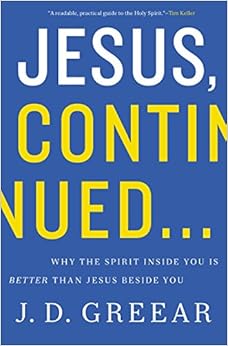
Book Review: Jesus Continued

In Jesus Continued: Why the Spirit Inside You is Better Than Jesus Beside You (2014), JD Greear tackles an important issue: the neglect of the Holy Spirit in the modern, presumably American, church. Although we are often sincere, we weary because we rely not upon the promised Spirit, but upon our own efforts.

Early in the book, Greear draws out an important distinction between the two extremes (p. 22) that Christians tend to gravitate towards. On the one hand, there are Christians who seem to regard experiences of the Spirit, apart from the Word of God as the normal Christian life. On the other hand, there are those who operate as though there is no current involvement of the Holy Spirit (i.e., hard cessationism). Greear argues that neither extreme represents biblical Christianity. As someone who probably tends toward the second extreme, I appreciated his view of the ongoing work of the Spirit. I want to hope in His continued work on a bigger scale than I do. In chapter 15, Greear quotes AW Tozer, who wrote, "if the Holy Spirit was withdrawn from the church today, 95 percent of what we do would go on and no one would know the difference. If the Holy Spirit had been withdrawn from the New Testament church, 95 percent of what they did would stop, and everybody would know the difference." Is the Spirit still active as he was with the New Testament church? Greear says yes and I am inclined to agree with him.

Jesus Continued is divided into three sections. The first section is entitled "The Missing Spirit" and deals with our feeble pneumatology in the church today. In many regards, this book is good companion piece to Francis Chan's excellent Forgotten God, another book about the Holy Spirit. Part two is "Experiencing the Holy Spirit." Here, Greear demonstrates the different ways in which the Spirit manifests, not only through the Gospel and through his word, but through our giftings, in the church, in our circumstances, and in our Spirits. Too often, we tend to limit the movement of the Spirit. Part three is "Seeking the Holy Spirit," which deals with prayer, revival, and the Spirit's ongoing movement.

I really appreciated this book.  I share Greear's concern that too many Christians have a anemic view of the Spirit. May He use this book to stir people to be sensitive to the movement of the Spirit. 

I was provided a complementary copy of this book from Zondervan through the Book Look Bloggers Program.  I was not required to write a positive review of this book. 

08 November 2014

Flying kites in a whirlwind

Adoption is not for the faint of heart. Rather, you are called to it. It is no mere weekend adventure. Instead, it is flying a kite in a whirlwind. You throw your sail into the air and hang on for dear life.

Yesterday, my wife and I were talking about our first adoption five years ago when our Tessa came home to us. I was reminding her of how out of control things felt near the end of the process. Heather was going through chemotherapy and we were hoping Tessa would be home by Christmas. In fact, we were specifically praying that she would get a December 17th embassy date, but even a week before she came home, we were told by our social worker that she just didn't see how it could happen. But God...I love those two words...but God moved mountains and we received a December 16th date, almost as if He were saying, "I'll do you one better." As whirlwinds go, that one felt like a subtle breeze compared to this time around.

Adopting from Haiti has brought with it every emotion--fear, joy, anger, sadness, bitterness--the list goes on. This has been a much longer process too, years versus months. Each trip to Haiti makes it harder to leave. Heather, Grace, and Tessa have now been living down there with Jasmine and Calvin for about 3 weeks in the home of a dear friend. Even in that brief period of time, our emotions have blown in a thousand directions, though yesterday was hardest.

We had been searching for the children's birth mother, following whatever leads we could and eventually, they just seemed to dry up. We had no clue where to find her and in a country of millions of people, where do you go next when your leads have led nowhere? Friday morning, Heather purchased plane tickets to come home on Saturday and began packing while trying attend to a sobbing Jasmine and a Grace refusing to come home. I wished I was there with her to help pick up the pieces. After crying for hours, Jasmine went out on the porch to pray. Fifteen minutes later, Heather received a call that the kid's birth mother had heard on the radio that we were looking for her and had come to the orphanage, the one thing we needed to happen. Our mourning turned to dancing in a very literal sense.

Heather and I made the decision to cancel the Saturday return trip, eating the $1600 tickets if need be. It was more important to stay and see this through. Amazingly, I was able to cancel the tickets with only a $75.00 service charge.

So, what does that mean over the next few weeks? God only knows. For us, it means hanging tight to the kite string, knowing that our God lives in the whirlwind.

Postscript: If you want to read more stuff about our adoptions, you can click here.

01 November 2014

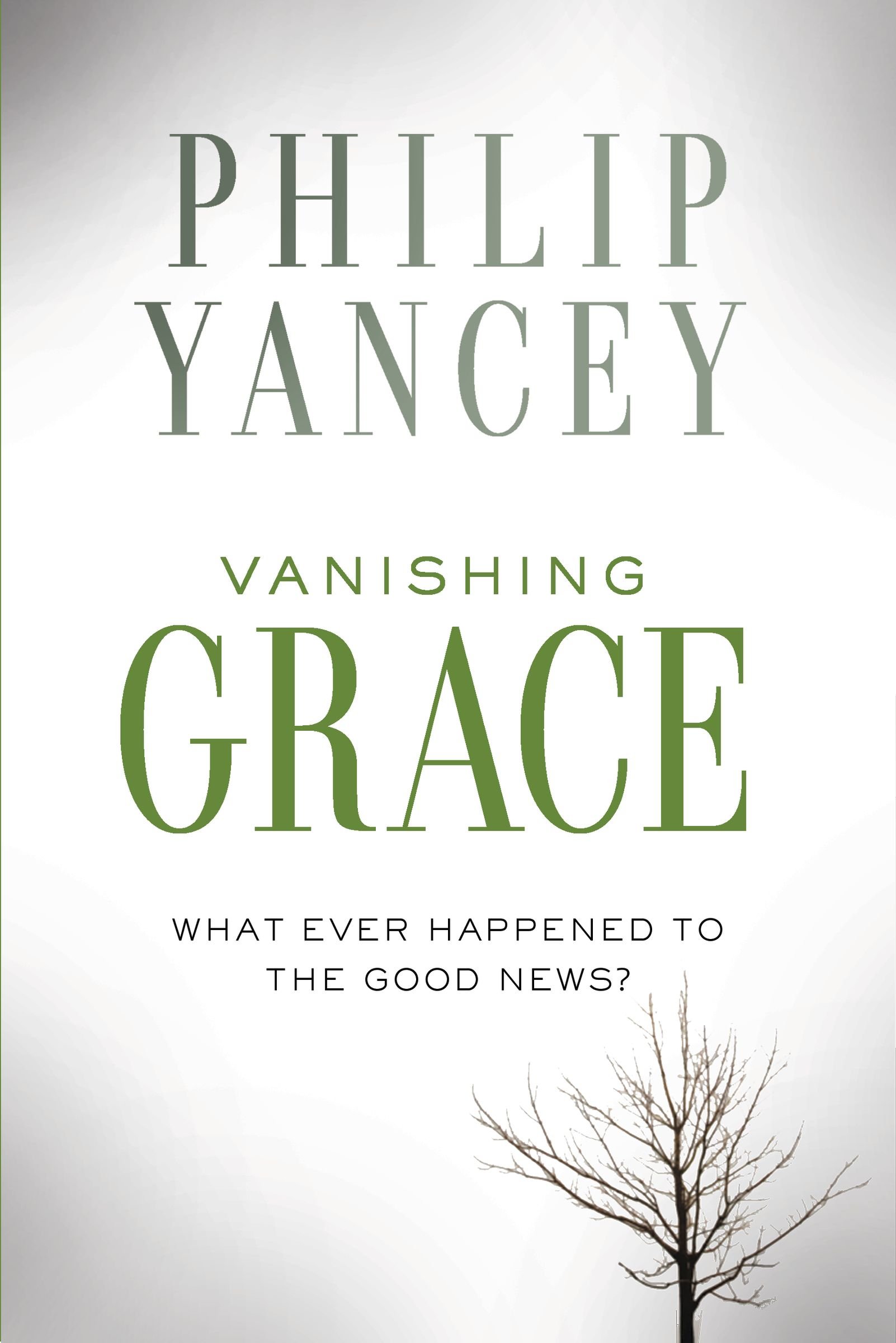
Book Review: Vanishing Grace

According to the dustjacket, Philip Yancey is a successful Christian author. He has written 13 Gold Medallion Awards, won the ECPAs book of the year twice, and 4 of his books have sold over 1 million copies. I've had the pleasure of reading several of his books and his reputation is well earned. Vanishing Grace: What Ever Happened to the Good News (2014, Zondervan) is his latest offering.

In the introduction, Yancey pointed out that this is actually a volume of 4 mini-books around a central theme: a world athirst, grace dispensers, is it really good news?, and Faith and culture. In the first section, he explores questions about why evangelicals have increasingly been viewed with derision in society. It seems to me he rightly points out that too often Christians want to propose answers before listening for questions. He writes, "to communicate to post-Christians, I must first listen to their stories for clues to how they view the world and how they view people like me" (p. 21). He showed that Christians are viewed as judgmental, confusing, guilt dispensers and he calls us back to love, grace, and humility. People are thirsty. We must dispense living water.

In the second section he explores three specific groups whom he identifies as grace dispensers--pilgrims, activists, and artists--those he appears to identify as having the most potential impact upon secular culture. He calls us to walk with others on their journeys, to be agents of change in our culture, and to show the world the beauty of Christ through creative, artistic means.

In the third section, perhaps my favorite, Yancey explores the influences that Christians have had on human flourishing and the culture at large. As he notes, "the way of life set out in the Bible is intended for our own good" (p. 163). Christian missionaries have had a greater influence upon societies than anything. I appreciated Yancey's insight into the common rebuttal about European countries like Denmark where Christian commitment is low but society seems to work well. He writes, "to be fair, let's admit that the region was populated by warring and pillaging Vikings until the Christian gospel came along. The gospel transforms culture by permeating it like yeast, and long after the people abandon belief, the tend to live by habits of the soul. Once salted and yeasted, society is difficult to un-salt and un-yeast" (p. 169).

In the final section, Faith and Culture, he dives more deeply into how Christians may be involved in the surrounding culture. He offers suggestions about how Christians may engage with politics and other cultural influences. In the final chapter, Holy Subversion, he revisits the concepts of pilgrim, activist, and artist.

I really liked this book. As a certified Centurion, I frequently enjoy books about how we can influence the culture around us and this book is no different. As I read, there were whispers of Abraham Kuyper, Francis Schaeffer, and Chuck Colson and reflections of books from the Centurion program including Glenn Sunshine's Why You Think the Way You Do, Neal Plantinga's Not the Way Things Are Supposed to Be, Rodney Stark's The Victory of Reason, and most notably Colson's How Now Shall We Live? Yet, for those familiar with these authors, Yancey approaches these issues from a different vantage. It is as though he is looking at the same issues, twenty degrees to the left.

In sum, I would happily recommend this book. Yancey is an engaging, thoughtful writer and consistent with his typical style, he winsomely takes on issues that matter.

I received a complementary copy of this book free from the Book Look Bloggers program and Zondervan publishers. I was not required to write a positive review of this book.

27 October 2014

Book Review: God at Work

A friend of mine sent me a video of Tim Keller talking about the doctrine of vocation, which brought back to mind Gene Veith's God at Work (2002, Crossway), an engaging, accessible summary of the doctrine of vocation, particularly through the lens of the Reformation tradition. Veith, a Lutheran scholar, draws particularly on the writings of Luther himself, a source we all benefit from.

Veith sets out to examine what is meant by vocation or calling. Too often, it seems, we are limited to thinking of our jobs as our vocation, though we all have a variety of vocations. For example, I hold the vocation of neuropsychologist, but I also hold vocations of husband, son, father, citizen, deacon. Veith explores how we live out our callings in each of the roles God has called us to.  I particularly appreciated his chapters on "your calling as a citizen" and "bearing the cross in vocation." In the first case, understanding how we live as citizens of two kingdoms, how we submit to the governing authorities, and how we resist when necessary were all good and useful topics.  His application of Luther's Theology of the Cross to vocation was also beneficial.

I would happily recommend this book to those interested in learning what does it mean to live as a Christian in the world.

23 October 2014

Absence Makes the Heart Grow Fonder

They say "absence makes the heart grow fonder", whoever "they" are. When separated from your beloved, you develop a deeper sense of longing, or perhaps appreciation. All I know is that I miss my wife. I feel like when she is here at home, I am fond of her, yet I can see the truth in this pithy statement. Seeing the tenderness in the pixilated face of my wife tonight, surrounded by our children--four of them, at least--filled me with a desire to be with her. Not just romantically, but in all ways. She is my best friend and after just four days, I miss her so deeply it hurts. I think the most difficult thing is not knowing when she will come home.

How do soldiers manage? Or those left behind? How do they pass the days separated from those whom their hearts long for? How do they fit all the pieces of each daily puzzle together when some very important pieces are missing?

O Lord, I am grateful that you allow me to continue to delight in the wife of my youth, my companion, and friend. Thank you for reminding me of the desire for her that you have continued to fan into flame for over 17 years.

Bring her home to me.

You’ve captured my heart, dear friend.
    You looked at me, and I fell in love.
    One look my way and I was hopelessly in love!

-Song of Songs

21 October 2014

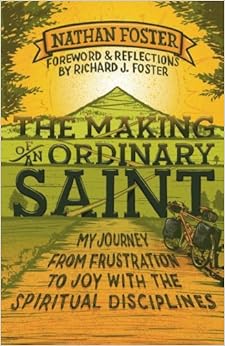
Book Review: The Making of an Ordinary Saint

The spiritual disciplines are a curious thing to me. I have read numerous books about them over the years, but I have never been quite sure what to do with them. The message that I seem to hear from the conservative side of evangelicalism with which I would align myself would suggest that spiritual disciplines can be a dangerous business if improperly understood. And yet, I have read many books about them. When I saw The Making of An Ordinary Saint: My Journey from Frustration to Joy with the Spiritual Disciplines (2014) by Nathan Foster, I was intrigued. Certainly, as a "Foster", the child of author Richard Foster, he has a regal lineage. Honestly, though, the book cover was just as inviting and a wise choice by the publisher.

In the book, Foster set out to explore twelve spiritual disciplines--those initially described by his father in the Celebration of Discipline--stitched to his everyday life. This approach allowed for an honest, autobiographical description of the spiritual disciplines in his life. Foster shared his challenges and new understandings in an engaging way.

As I read the book, I was deeply affected by some of his chapters, but with others, I was less engaged. The chapter on submission was my favorite. I could find myself easily connecting with what he was saying about some of the frustrations he experienced, but was drawn to his description of an Eskimo man who didn't fit the mold of the bike racers he was with. I also learned from the other chapters as well.

One of the criticisms that Foster anticipated was hearing from fundamentalists...like me, I suppose.  On page 143, he wrote "While I try to remain teachable and open to the insights of others, I'm finding I have little interest in learning from extreme fundamentalists whose lives and careers are based on criticizing others--you know, those people who call themselves Christians but seem to know nothing of love." I wonder if Foster cuts himself short. I share a concern for a lack of love, but I also share a concern for truth. There is an old proverb that says, "don't become so open minded that your brains fall out." I wonder if Foster's unwillingness to learn from those whom he considers unloving is actually an unloving thing to do.

On the whole, this is a good book and I would commend it. Foster is a captivating writer and tells his story well. 

A review copy of this book was provided to me by Baker Books in exchange for this review. I was not required to submit a positive review of this book.