Grace and are taking a writing class this summer, Writing from Your Roots, taught by Chris Yokel. As appropriate, I will probably also share some of what I am writing here. Below are my observations from spending some time sitting in my library.
Perhaps 6 months ago, Grace and I consolidated our family's books
into one room, now appropriately called "the library." At present, we
have about 4500 volumes in that room. But I rarely just sit down there.
Today, I headed to the library and sat for a while to observe.
When I first sat down, I found myself writing about the physical
space. I was struck by the comfort of the chair, remembering the shape
of my body. The air was a cool tranquility. We need better lighting. The
overhead lights are underpowered, almost useless. Other varied lamps
surround the room, but they cast uneven shadows and harsh bright spots.
The books do not come to the edge of the shelves; some of them cower
closer to the back, making them harder to see. Calvin's commentaries
almost appear a wave upon the top shelf. How did they end up like that?
The predominant sound was that of the dehumidifier, a noisy necessary
evil. The shelves offer up a rare creak but are mostly silent. The only
other appreciable noise comes from my son moving around upstairs. On the
whole, the library is a quiet space in a house that is otherwise a
cacophony.
The longer I sat, the more I began to think about the residents of
the library, the books occupying the shelves. They express a unity in
diversity. Fiction and nonfiction, old and new, hardcover and paperback,
poetry, music, and cookbooks. Despite the varied topics, they all have a
place. My poetry section is too small. I'm glad for Auden, Frost,
Dickinson, and Oliver, but who's missing? Many, no doubt. Many of my
books remain unread. Some of them I will likely never read. So why have a
library? Why do I keep purchasing books? Is it a sickness? I do not
know. What I do know is that this place brings me comfort.

21 July 2016

20 July 2016
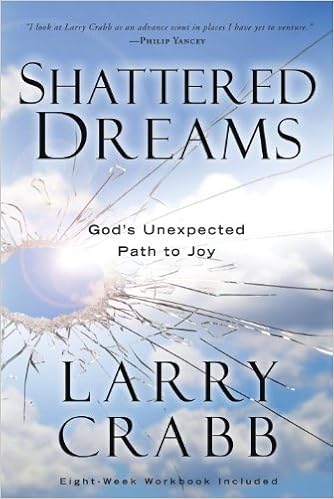
Crabb Conversations: Shattered Dreams
For the last few years, I have been blessed to be on the radio to talk about one of my favorite authors, Larry Crabb with a couple of guys I really love, Mark Halvorsen and Rob Gillette. This week, we finished up our discussion of Crabb's book Shattered Dreams. Going back, it took us a year. Below, I have included links to all of the discussions. Please, whether you have listened to Shattered Dreams or not, give them a listen.
Chapter 1-August
Chapter 2-September
Chapters 3-4-October
Chapters 5-7-November
Chapters 8-9-December
Chapters 10-11-January
Chapters 12-13-February
Chapters 14-16-April
Chapter 17-May
Chapters 18-19-June
Chapters 20-21-July
Chapter 1-August
Chapter 2-September
Chapters 3-4-October
Chapters 5-7-November
Chapters 8-9-December
Chapters 10-11-January
Chapters 12-13-February
Chapters 14-16-April
Chapter 17-May
Chapters 18-19-June
Chapters 20-21-July
17 July 2016
Light a Candle
It seems that everywhere we look, there is violence, hurt, and loss. It seems that every day, we hear stories that make us cry out, "what is going on?!" Suicide bombings. People shooting other people. People shooting cops. Cops shooting people. Human trafficking. Increasing porn consumption. Divorce. Abortion. Homelessness. Mass attacks.
Violence.
Corruption.
Sin.
 Jesus told his disciples, "And you, beloved, are the light of the world. A city built on a hilltop cannot be hidden. Similarly
it would be silly to light a lamp and then hide it under a bowl. When
someone lights a lamp, she puts it on a table or a desk or a chair, and
the light illumines the entire house. You are like that illuminating light. Let your light shine everywhere you go, that you may illumine creation, so men and women everywhere may see your good actions, may see creation at its fullest, may see your devotion to Me, and may turn and praise your Father in heaven because of it."-Matthew 5:14-16 (The Voice).
Christians, Jesus tells us to be lights in the world. By His Spirit, the only hope for a broken world lives within us--not public policy, not stricter laws, not even moral conformity. Jesus is the only hope. He tells us to go forth and let His light shine. I am "lighting a candle" to remind me that we bear the light of the Son of man.
-Andrew Peterson
Violence.
Corruption.
Sin.
Christians, Jesus tells us to be lights in the world. By His Spirit, the only hope for a broken world lives within us--not public policy, not stricter laws, not even moral conformity. Jesus is the only hope. He tells us to go forth and let His light shine. I am "lighting a candle" to remind me that we bear the light of the Son of man.
'Cause we bear the light of the Son of man
So there's nothing left to fear
So I'll walk with you in the shadow lands
Till the shadows disappear
'Cause He promised not to leave us
And his promises are true.
So there's nothing left to fear
So I'll walk with you in the shadow lands
Till the shadows disappear
'Cause He promised not to leave us
And his promises are true.
11 July 2016
We Need More Armchair Receivers
In the past week or two, we have witnessed needless violence throughout our nation. Alton Stirling was killed by two police officers in Baton Rouge. Philando Castile was killed by a police officer in Minneapolis. Five police officers were targeted and killed, and others wounded, at a protest in Dallas. Though these events grabbed the national headlines, there were other protests, some resulting in injuries. There were other unrelated murders that did not grab the national spotlight. To assume this violence is something new is misguided; it is nearly as old as humankind. What is different is the availability of information and the efficiency impulsivity with which we are able to respond through social media. For example, the widespread dispersion of smart phone technology allows bystanders to visually document events, often in a particularly gruesome manner. When we see Alton Stirling dying on camera, it triggers something deep within us. When we see Dallas police officers squeezing their loved ones tightly, we react.
But the availability of these advanced technologies also not only allow, but encourage us to share our thoughts and feelings. Facebook asks, "What's on your mind?"; Twitter asks, "What's happening?". So we respond. Twenty-four hour news feeds and the instant availability of information promotes a society of false experts. In the sports world, there are armchair quarterbacks who offer their opinions about things they know little about. As Alexander Pope said, "a little learning is a dangerous thing." Thankfully, when it comes to sports, it is rarely harmful to be an armchair quarterback.
Unfortunately, armchair quarterbacking is not limited to things that don't matter. As a society, we are eager to assert our opinions and beliefs about things like violence and racism. We even go so far as to presume that what we are sharing is "fact," but what do we do when our "facts" disagree with each other? If you don't believe this happens, talk to informed conservatives and liberals about whether President Obama has been good for the economy. You will hear different sets of "facts" complete with "reliable" sources. Furthermore, when we blindly assert that our set of facts are the correct ones, we shut down further conversation because we are unwilling to listen.
We need fewer armchair quarterbacks and more armchair receivers.
We need people who are willing to sit and listen--really listen--to another tell her story, not with ultimate intent of offering a rebuttal, but to know her. It is quite possible that the people who share with us are wrong about certain things. So are we. When we enter conversations with others, we must enter with a desire to love, which promotes harmony, rather than to seek to be right, which often promotes divisiveness. For my Christian brothers and sisters, we often do a poor job of listening.
One of my spiritual heroes is Francis Schaeffer, who was undoubtedly one of the most informed, logical, and thoughtful Christians in recent times. His ministry, L'Abri, had a profound impact on many people. Yet, what draws me to Schaeffer is his deep respect for others. Jerram Barrs, a student of Schaeffer, had this to say, "He always treated people with dignity as God's image-bearers, with compassion as those fallen from a glorious origin and deeply marred by sin and its consequences, and with love as those for whom Christ died. If I long to imitate anything about him, it is this deep respect, compassion, and grace which was so evident in the way he responded to the miserable, difficult, and even aggressive people who challenged him."
We would all do well to heed these words from Schaeffer, "If I have only an hour with someone, I will spend the first 55 minutes asking questions and finding out what is troubling their heart and mind, and then in the last 5 minutes I will share something of the truth." Friends, we need fewer assertions of fault and more curiosity about people. We need fewer opinions about causes and more compassion toward the suffering. We need more listeners and fewer commentators.
Every person we meet bears the image of God.
Every person you meet matters to God.
Every person you meet is loved by God.
Every person you meet needs God.
Listen.
05 July 2016
Book Review: The Blessings of Humility
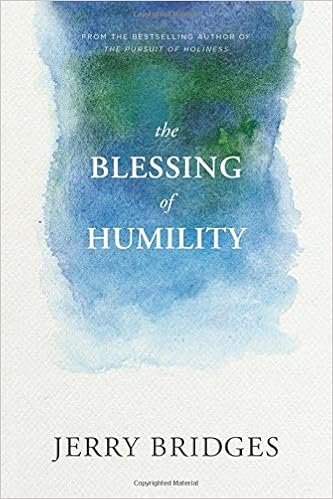
At a short 95 pages, The Blessing of Humility uses the beatitudes as a launch-pad for exploring humility. Quite honestly, I would never have made the connections between the beatitudes and humility that Bridges did, but I believe he is correct. He describes them as "humility in action."
There are several good books on humility (and, of course, CS Lewis' chapter in Mere Christianity) and this is a welcome addition. If you are interested, may I humbly recommend this excellent little book.
03 July 2016
Book Review: A Different Kind of Happiness
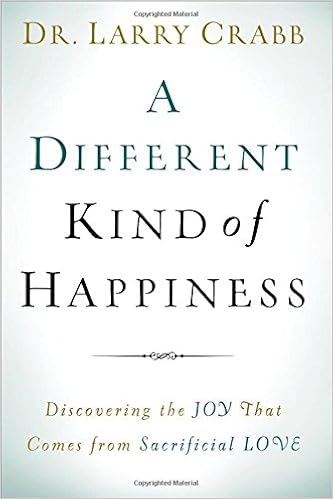
Last week, I received a package containing a physical copy of the book and I was just as excited about receiving the paper copy as I was to review the electronic one and I have already read it again. Like many of Larry's books, this one is my favorite. A Different Kind of Happiness demonstrates Crabb's continued maturing as an author and Christ follower. It is also the clearest explanation of what might be called a relational theology. He is a wise sage and to me a valued mentor.
One of the ideas that has formed Crabb's thinking is that the Trinitarian God exists in perfect relationship and therefore, as His image bearers, we also were created to relate. However, our ideas of what constitutes Christian love is often anemic and self-centered. In this book, he uses Scripture to show us how God calls us to a deeper, sacrificial love. Because relationships, like all of creation, have been affected by the fall, each of us have "the lingering corruption of self-centeredness" that can stain all of our relationships. "We all fall short of the glory of God, the relational glory of God."
All of us on some level recognize the importance of love. But perhaps we don't know what true love--sacrificial love--Christlike love--really is. What if true happiness develops when our love is modeled after Christ's sacrificial love? Christ loved those who didn't deserve it. He loved them when they rejected him. That includes you. That includes me.
In the second half, Dr. Crabb explores in some depth what he calls the 7 questions of spiritual theology:
- Who is God?
- What is God up to?
- Who are we?
- What's gone wrong?
- What has God done about our problem?
- How is the Spirit working to implement the Divine solution to our human problem?
- How can we cooperate with the Spirit's work?
These seven questions provide a useful framework for a lived relational theology and are worth pondering in some depth.
For all the positives of this book, and there are many, a caution is in order. This book will unsettle you. If you are willing to honestly consider what Dr Crabb has to say, you will feel uncomfortable. Reflecting upon God's word and Christ's life, Larry asks us to love deeply and sacrificially. He calls upon us to love those who don't deserve it because none of us do. He exhorts us to love even while people are sinning against us as he loved us when we were (are) sinning against him.
This book contains a prayer that I have written out and pray as often as I can:
"Whatever the cost, make me a little Christ. Father, may Your Spirit open the eyes of my heart to see your beauty so that I am left with no greater desire while I live in this world than to reveal Your Son's love to others by how I relate."
I received a free copy of this book from Baker Books in exchange for my review. The reviews presented within are my own. Although this book was provided free of charge, it is a testament of my enjoyment of the book that I have purchased 10 more to give away to others.
02 July 2016
The beauty of lament and the folly of presumption
Hannah's story in 1 Samuel 1 demonstrates the beauty of lament and the folly of presumption. Hannah, barren wife of Elkanah, was sad. In the Voice Translation, verse 10 reads, "She was heartbroken, and she began to pray to the Eternal One, weeping uncontrollably as she did." Witnessing her, Eli, a priest, confronted her. He said, "How long are you going to continue drinking, making a spectacle of yourself? Stop drinking wine, and sober up!"
Hannah was a woman with chronic maternal longings and feelings of incompleteness. She prayed earnestly for God's work in her life and specifically for a child. In her, we see the beauty of lament. On the other hand, Eli the priest was presumptive. Rather than bringing comfort, rather than seeking clarity, he made assumptions about Hannah's state and confronted her. She could have retaliated. She could have left silently in shame. But by God's grace, Hannah chose to respond humbly to him.
How often do God's people make assumptions about those they encounter? How often do our presumptions give way to harsh words, words that distance people from Christ rather than draw him to the beauty of his mercy?
Christian, learn to listen before you speak. Learn to comfort before you challenge. Learn to slow down rather than rushing in.
28 June 2016
Book Review: The Power of Together

The Power of Together: Discover the Christian Life You've Been Missing (2016, Baker) by Jim Putman is a wonderful addition to this growing body of books. Putman is the pastor of Real Life Ministries in Post Falls, Idaho and has developed and promoted what he calls "relational discipleship". Matthew 28 reminds Christians that we are to go and make disciples and Putman (rightly) surmises that making disciples happens in relationship. On page 66, he wrote, "That's what discipleship looks like--learning to love in real relationships."
Perhaps what I most appreciated about the book is that Putman brings to it a balanced wisdom. He doesn't come from a naive perspective where every one simply holds hands and tolerates everyone else. He knows, from lived experience as a pastor, that relationships can be difficult. Difficult conversations can and must happen in order to continue to grow as disciples of Christ.
Putman is a churchman in the best sense of the word. He strongly advocates for engaging in a local church and staying in a local church even when things get tough, because they will. Churches are made up of messy, sinful people, yet they are God's plan for the world. If God is relational (He is) and love is expressed through relations with God and others (it is), then it happens in the church.
In sum, The Power of Together captures my hope for the church. I desire to see the church become more intentionally relational in the way that God has called us to. Putman's book helps us on the way.
I received a copy of this book from Baker Books in exchange for an honest review. The opinions presented here are my own.
15 June 2016
Ortberg on Reviewing the Day with God
I found this gem in John Ortberg's excellent book The Life You've Always Wanted.
Reviewing the Day with God
Reviewing the Day with God
- [At the end of the day] Be still for a moment and quiet your mind.
- Acknowledge that Jesus is present. Invite him to teach you.
- Go back in your mind to when you first woke up. Watch that scene, as if on video. This may lead you to pray for patience, greater love, courage, forgiveness, or other virtues.
- Continue through the day, going from scene to scene. As you reflect on them, some scenes may fill you with gratitude, others with regret. Speak directly to the Lord about this. You may also be led to pray for some people you were interacting with during the day.
- End with a prayer of thanksgiving for God's mercy and love. Ask him to refresh you as you sleep.
13 June 2016
#Orlando: A wandering reflection
Most gun owners don't kill people,
Most Muslims don't either.
Most conservatives aren’t greedy,
Most liberals aren’t either.
Most homosexuals don’t hate those who are different,
Most Christians don’t either.
Some things on the Internet are false.
Perhaps many things.
Exercise wisdom and honesty
with what you share.
Ask yourself
Is it kind?
Is it true?
All people want to be known
and valued.
Gun owners
and Muslims,
Conservatives
and liberals,
Homosexuals
and Christians.
All people want to hear,
“You
matter.”
Let's tell them.
Subscribe to:
Posts (Atom)