In How Joyful People Think (Baker, 2018), pastor Jamie Rasmussen explores eight elements of right thinking derived from Philippians 4:8, which reads "Finally, brothers, whatever is true, whatever is honorable, whatever is just, whatever is pure, whatever is lovely, whatever is commendable, if there is anything of excellence, if there is anything that is worthy of praise, think about these things" (ESV). Rasmussen suggests that in this passage, Paul has given us a path to joy in the way that we think.
There were several things I appreciated about Rasumssen's book. First, as a pastor, there is assuredly a pastoral heart behind his writing. He desires his readers to not only understand this verse, but to take it within themselves, to have it become a part of who they are and how they live. Second, in the case of the eight traits, he explores the original Greek words, including their usage and meaning. I particularly appreciated his exploration of the word "whatever," whose meaning has morphed even in the last 60 years. The author desires that his readers understand authorial intent. Third, like me, Rasmussen has been influenced by our friend Larry Crabb, so the relational nature of these traits comes through loud and clear.
On the whole, I would happily recommend this book. We need books that explore and try to understand what the Bible is actually saying and to live in that reality.
I received a copy of this book in exchange for my review. The opinions expressed here are my own.

Showing posts with label books. Show all posts
Showing posts with label books. Show all posts
09 August 2018

07 July 2018
Book Review: Believe Me

In Believe Me, Fea explores Donald Trump's popularity among American evangelicals--81% of them anyway. Along the way, he addresses the inconsistencies that many conservative religious leaders have demonstrated over time in their responses to different presidents, Clinton and Trump, for example, giving an unlimited pass to one while wanting to burn the other at the stake. Fea shared this example from a 1998 letter from James Dobson (a Trump supporter) questioning Clinton's morality: "As it turns out character DOES matter. You can't run a family, let alone a country, without it. How foolish to believe that a person who lacks honesty and moral integrity is qualified to lead a nation and the world! Nevertheless, our people continue to say that the President is doing a good job even if they don't respect him personally. Those two positions are fundamentally incompatible. In the book of James, the question is posed 'Can both fresh water and salt water flow from the same spring?' (James 3:11, NIV). The answer is no." In my opinion, those who fail to see the hypocrisy in this statement are blind.
When Fea wrote of "the evangelical politics of fear," I resonated with the phrase. I think he is right when he suggests that fear drives many of the political viewpoints and voting practices among evangelicals. We place our hope not in God, the All-Sovereign, but in compromised earthly powers, especially those who tell us what to be afraid of and how they are the only ones who can fix it. The fear-mongering is reminiscent of Richard Dreyfuss's Senator Rumson in 1995's The American President. I was grateful that Fea is a historian; he was able to trace the roots of these fears to the 17th century up into the 21st century, with particular attention to the civil rights movement.
His thoughts on Trump's slogan, "Make America Great Again," were also beneficial. He commented that as a historian, he was less interested in the definition of great than what Trump means by the word again. To what era is Trump referring? And from whose perspective? It remains nebulous. Fea rightly draws the distinction between history and nostalgia, noting that "nostalgia is closely related to fear." Fea writes, "Sometimes evangelicals will seek refuge from change in a Christian past that never existed in the first place. At other times they will try to travel back to a Christian past that did exist--but, like the present, was compromised by sin."
In his conclusion, Fea calls evangelicals to three things: hope, not fear; humilty, not power; and history, not nostaligia.
I found Believe Me to be an insightful, timely book and I cannot recommend it highly enough. Unfortunately, I suspect most of the 81% will not even consider reading it; it's something that Trump would quickly dismiss as "fake news." As Americans, we tend to prefer political propaganda propagated by Twitter, Facebook, and our preferred news networks than actually digging in, with humility, to consider what might be true. As Christians, whose primary citizenship is in an eternal kingdom, we cannot afford to do this any longer.
I cannot think of a better way to conclude this book than with the quote that first intrigued me: "The Court Evangelicals have decided that what Donald Trump can give them is more valuable than the damage their Christian witness will suffer because of their association with the president."
This is a really important book. Believe me.
01 February 2018
Book Review: The Farewell Discourse and Final Prayer of Jesus

D.A. Carson chose to explore this section in great detail as well, devoting over 200 pages to Jesus' Farewell discourse in his new book The Farewell Discourse and Final Prayer of Jesus (Baker, 2018). Carson's exposition focuses on chapters 14 to 17, though in the prologue, he starts with chapter 13.
As I began reading the prologue, I was immediately drawn in to Carson's wording. I felt a kindred spirit as he envisioned the upper room as I have so often done. He effectively places the reader right there in the midst of the thirteen men. I was hoping for that sort of magic (forgive me, that seems to be the best-fitting word) throughout the remainder of the book. It was there, but less present.
Carson is undoubtedly a master exegete. His capacity to examine a text and help us to see what is actually being communicated is remarkable. In this book, he identifies details and themes that most people, perhaps even those with theological training, might miss. He explores Christ in community--with his disciples, and with the rest of the Trinity.
On the whole, a person interested in developing a much deeper understanding of the farewell discourse could do worse than Carson. My criticisms are few and perhaps idiosyncratic. As I mentioned above, I wish the imagery presented in the prologue would have persisted with greater consistency, though that likely would have changed the nature of the book. Second, Carson's vocabulary may make this book inaccessible to many readers, unless they are willing to read with a dictionary at hand. Come to think of it, that is probably a wise practice to consider.
I received a review copy of this book from Baker Books in exchange for my review. The viewpoints presented above are my own.
26 January 2018
Book Review: Life Without Lack
Often, when the world loses a well-respected author, one grieves their death, but also laments the realization that there will likely be no more published works. Occasionally, a posthumous publication may appear; for example, Jerry Bridges' beneficial The Blessing of Humility. But in Dallas's case--due in large part to a large corpus of unpublished works and the perseverance of his family and friends to see his works come to light--new books continue to appear. I'm grateful.
Life Without Lack: Living in the Fullness of Psalm 23 (2018) is the latest offering. In the book's preface, Larry Burtoft wrote, "Twenty-six years ago, I was introduced to the possibility of a life in which I was never in need. Of anything. At any time. From anyone. A life that knows no fear or fluster. No anxiety or angst. No perturbation of any sort. It was, in short, the offer of a life with lack" (p. vii). Burtoft goes on to talk about how this book was born out of an 8-week study of Psalm 23.
The book's 200 plus pages progress through eight chapters in addition to some supplementary material. Willard writes of the importance of renewing the mind to truly live into the reality of a glorious, all-sustaining God as an essential characteristic of the Christian life. One of the sentences that captured me early on was this: "One of our greatest needs today is for people to really see and really believe the things they already profess to see and believe." As I thought about the importance of renewing our minds, the truth of that sentence landed hard upon me. Do I merely give assent to the truths of God, or do I live my life, fully and completely, as though those truths matter? Willard unapologetically believed that what God said in His word could actually change our lives, not only that we could live a little less anxiously or angrily, but that we could live without anxiety, without anger. In other words, we could live a life without lack.
Through the book, he carefully explores what a Psalm 23 life could look like. There is no naivete here; he addresses the threats to this peaceable life. His discussion of "Satan's Three Weapons of Temptation" in chapter 4 was exceptional. I was particularly struck by the ways in which he connected these three weapons described in 1 John 2:16, with the temptations of Eve and Jesus. He made a three way connection that I had never even considered before, but seems clear and accurate.
However, Dallas did not stop with these three weapons, but went on in the latter chapters to describe "the three things that must be working in us before we can truly experience the sufficiency of God: faith, death to self, and agape love," devoting a chapter to each. In the final chapter, he lays out the practicalities of living this way. I was particularly appreciative of his plan for spending a day with Jesus where he identifies several particularities one may wish to consider as they put this life into place.
As I stopped to reflect upon what I had read, I felt challenged, hopeful, and invigorated. Challenged to consider whether I believe that a life without lack was really possible, hopeful in envisioning that it might be, and invigorated as I ponder how I might put this into practice.
Though Dallas's earthly life concluded nearly four years ago, his words remain as fresh as ever. If you get a chance, pick this book up and read it. Talk to others about it. And then begin to put it into practice. You never can tell what could happen.
*I received a proof copy of this book in exchange for my review. All of the viewpoints expressed here are my own.
08 January 2018
Review: Called to Create
I was principally drawn to the title of Jordan Raynor's new book. Called to Create (2017, Baker Books). I have thought a lot recently about the concept of creativity in the Christian life. About a year ago, I instituted something in our home, Family Create Nights, where we would practice expression. I am convinced that part of our nature as God's image bearers is that we are creative, whether that is through art, or some other medium. I was excited about reading more about those ideas in Raynor's book.
I admit, however, that right off the bat, I was disappointed. The opening chapter was entitled "the first entrepreneur." I was not interested in a book on business, which it appeared this was going to be. By definition, an entrepreneur is "a person who organizes and operates a business or businesses, taking on greater than normal financial risk in order to do so." This is not what I thought I had signed up for as I have almost no interest in business or entrepreneurship.
Once I moved past my initial confusion, though, I found that there is much to commend this book. Within, Raynor writes extensively about the fact that work is not merely a result of the fall, but that we were created to work. He then tells his readers about how they can work and create in such a way that it gives glory to God. I particularly appreciated his emphasis on keeping God in view. All in all, this was a good book and worth looking into, particularly if you are someone with that entrepreneurial spark.
I received a review copy of this book from Baker Books in exchange for this review. The viewpoints presented above are my own.
I admit, however, that right off the bat, I was disappointed. The opening chapter was entitled "the first entrepreneur." I was not interested in a book on business, which it appeared this was going to be. By definition, an entrepreneur is "a person who organizes and operates a business or businesses, taking on greater than normal financial risk in order to do so." This is not what I thought I had signed up for as I have almost no interest in business or entrepreneurship.
Once I moved past my initial confusion, though, I found that there is much to commend this book. Within, Raynor writes extensively about the fact that work is not merely a result of the fall, but that we were created to work. He then tells his readers about how they can work and create in such a way that it gives glory to God. I particularly appreciated his emphasis on keeping God in view. All in all, this was a good book and worth looking into, particularly if you are someone with that entrepreneurial spark.
I received a review copy of this book from Baker Books in exchange for this review. The viewpoints presented above are my own.
14 December 2017
Top Ten Books of 2017
Every December, since 2010, I have put out a list of what I consider to be the best books I read during the year (see the bottom of the page for each of those lists). I typically read between 100 and 150 books each year, some of which rise to the top as particular stand outs. Some books, frankly, sink to the bottom, though I have learned over the years that if I don't particularly like a book, no one will give me detention if I set it aside and don't bother to finish it. So without further ado, here is the 2017 list of best books.
10) Whole Prayer by Walter Wangerin
I am a little surprised that Whole Prayer, now 16 years old, has not been more widely read. Of course there are many books on prayer and it is hard to know where to begin. This one should be amongst those most readily considered. Although Wangerin provides a basic structure--we speak, God listens; God speaks, we listen--it isn't really a prayer manual. Rather, it is a series of reflections about prayer and how we relate to God. Additionally, Wangerin's writing is a delight to the senses.
9) Union with Christ by Rankin Wilbourne
In this book, the author explores the important, even essential, doctrine of how we are joined with Christ. Christ is in us, we are in Christ, if we are believers. That is not just an obscure theological maxim, but a living truth that has significant implications for how we live. In fact, there may be fewer things more important than understanding this concept.
I particularly liked the third chapter, which explores "two songs playing in our heads". One song is the way of extravagant grace, the other the way of radical discipleship. I find myself drawn to both concepts. I love Brennan Manning and I love Dallas Willard. The author demonstrates that these are not mutually exclusive concepts.
8) Recapturing the Wonder by Mike Cosper
I found myself immediately engaged in this book. He writes of a modern faith that has somehow lost its sense of mystery and wonder, a supernatural faith stripped of the "super" and thus becoming mundane. He observes this trend and tells his readers "open your eyes!" I have been trying to communicate this message to fellow believers, and I don't know if the message ever lands. Often, I suspect I am regarded as either a religious nutjob, or simply as kooky. Honestly, I'm okay with those characterizations, but as someone has tasted supernatural wonder, I want to invite others to the same. God's kingdom is so much larger and more glorious than most people ever imagine, and I, like Mike Cosper, want to shout, "come and see! come and see!"
7) The Pastor's Justification by Jared Wilson
The Pastor's Justification is the first of two Wilson books on my list this year. In my review of this book, I noted that Wilson wields a twin blade of theological wisdom and a gift with words. Assuredly, his literary achievement is quite remarkable for anyone, much less someone of his age. If a person were interested in reading through all of an author's books, a worthwhile practice, Wilson would be a good person to consider. Although the title would suggest that this book is targeted to pastors, I think anyone who struggles with the burden of imperfection and who fails to recognize how amazing justification by grace alone through faith alone in Christ alone really is would benefit from this book.
6) The Good and Beautiful series by James Bryan Smith
Smith wrote a series of three books--The Good and Beautiful God, The Good and Beautiful Life, and the Good and Beautiful Community. Perhaps it is unfair to gather all of these together, but it's my list, so I won't apologize. As one might expect, the initial book in the series deals with the goodness and beauty of God, and then, through the other two, translates those ideas into the Christ life. Of the three, my favorite was The Good and Beautiful Life, which addresses character formation by exploring the Sermon on the Mount.
5) Liturgy of the Ordinary by Tish Harrison Warren
The longer I live the Christian life, the more deeply I appreciate the ways in which some authors are able to connect real life with a life of worship on a deep level. As I look over my list of books for this year, this theme certainly presents itself. In this book, the author is able to connect things like eating meals and arguments with the church's liturgy, and does so with exceptional writing.
4) As Kingfishers Catch Fire by Eugene Peterson
For people who know me, it is no surprise that Eugene Peterson is one of my favorite authors. I think I have read almost every book he has written though assuredly there are some lesser known volumes that I have not yet encountered. It is a large book by Christian non-fiction standards, 372 pages, consisting of a collection of Peterson's sermons. Initially, this was a disappointment to me, though once I dug in, I was pleasantly surprised. The overarching theme of Kingfishers was the call to congruence, a way of living life that consistently reflects the "with God-life". This is certainly a book I will revisit often.
3) The Jubilee by John Blase
I am fairly certain The Jubilee by John Blase is the only book of poetry I have ever included in my top 10. Although most of my books are shelved in my library in the basement, this book remains out on a display shelf in our living room, with the hope that someone will pick it up and read it. In my longer review in April, I wrote, "An unfortunate truth is that many people avoid poetry, finding it confusing, boring, or perhaps overly sentimental. As a poetry lover, I am never sure where to direct those who might have a spark of interest in poetry. Mary Oliver is certainly good and so is Wendell Berry, yet if I am to be honest, this might well be the first book I recommend now. It is both accessible and fosters wonder."
2) Love Big. Be Well. by Winn Collier
This book is unusual. It is a series of (fictional) letters written mostly by a pastor, Jonas McAnn, to his congregation. The skillful way in which Collier was able to map real life and real concerns onto a fictional church was remarkable. I found myself caring deeply about the folks in the letters.
1) The Imperfect Disciple: Grace for People Who Can't Get Their Act Together by Jared Wilson
Undoubtedly, Jared Wilson is one of my favorite authors. Last year I commented that he was one of only two authors who had made my top 10 books list three times or more (the other was Jerry Bridges). As of this year, he stands alone as the author most featured, and with two books no less!
In this book, Wilson explored discipleship, but it read differently than most books on the topic. Even when writing about things we may do to grow in Christ, Wilson did not fail to shine a spotlight on God's graciousness. Although the whole book was excellent, this bit from chapter 9 brought me to tears. "When you are in the pit of suffering--on the verge of death, even--Jesus isn't up in heaven simply blasting you down below with some ethereal values. He's not 'sending good thoughts'--or worse, 'good vibes'--your way. No, when you are laid low in the dark well of despair, when the whole world seems to be crashing down on you, when your next breath seems sure to be your last, Christ Jesus is down in the void with you, holding you. He keeps your hand between his own. He offers his breast for your weary head. He whispers the words of comfort a whisker's breath from your ear: 'and behold, I am with you always.' Grace is all-sufficient for weakness and for suffering because Jesus is all-sufficient." I cannot recommend this book highly enough.
2016
1) The Wingfeather Saga (technically 4 books) by Andrew Peterson
2) Living in Christ's Presence by Dallas Willard and John Ortberg
3) A Different Kind of Happiness by Larry Crabb
4) Wholeheartedness by Chuck DeGroat
5) World Enough and Time by Christian McEwen
6) The Blessing of Humility by Jerry Bridges
7) The Voice Bible by the Ecclesia Bible Society
8) The Cry of the Soul by Dan Allender and Tremper Longman
9) You are What You Love by James K.A. Smith
10) Letters to a Young Pastor by Calvin Miller
2015
1) Love Does by Bob Goff
2) The Allure of Gentleness by Dallas Willard
3) The Pastor by Eugene Peterson
4) A Grace Disguised by Jerry Sittser
5) A Loving Life by Paul Miller
6) Relational Soul by Rich Plass and Jim Cofield
7) Reversed Thunder by Eugene Peterson
8) Prodigal Church by Jared Wilson
9) The Solitary Tales by Travis Thrasher
10) hand in Hand: The beauty of God's sovereignty and meaningful human choice by Randy Alcorn
2014
1) Extravagant Grace by Barbara Duguid
2) Everybody's Normal Till You Get to Know Them by John Ortberg
3) Seeking Allah, Finding Jesus by Nabeel Qureshi
4) The Gospel: How the Church Portrays the Beauty of Christ by Ray Ortlund Jr.
5) Joy for the World by Greg Forster
6) Why Sin Matters by Mark McMinn
7) What's Best Next? by Matt Perman
8) Messy Spirituality by Mike Yaconelli
9) Delighting in the Trinity by Michael Reeves
10) Jesus Continued... by JD Greear
2013*
1) One Way Love by Tullian Tchvidjian
2) Grace in Addiction by John Z
3) Becoming a True Spiritual Community by Larry Crabb
4) Tale of the Toboggans by Christian Schmidt
5) Prodigal God by Tim Keller
*I only listed 5 in 2013 for some reason.
2012**
1) Anatomy of the Soul by Curt Thompson
2) The Transforming Power of the Gospel by Jerry Bridges
3) Not the Way Its Supposed to Be by Cornelius Plantinga
4) Total Truth by Nancy Pearcey
5) Think Christianly by Jonathan Morrow
6) Gospel Wakenfulness by Jared Wilson
7) Gospel Deeps by Jared Wilson
8) The Explicit Gospel by Matt Chandler
9) Shame Interrupted by Ed Welch
**Nine? Why nine? What a weird number.
2011***
1) Commentary on Galatians by Martin Luther
2) Stand: A Call for the Endurance of the Saints by John Piper and Justin Taylor
3) Give Them Grace by Elyse Fitzpatrick and Jessica Thompson
4) How People Change by Tim Lane and Paul Tripp
5) Spiritual Disciplines for the Christian Life by Donald Whitney
***Apparently in 2011, I didn't actually put out a list. Why? I am not sure. However, I went back through my list and here are some I would have recommended from that year. Luther on Galatians is an absolute must read for Christians, in my opinion.
2010
1) Chosen by God by RC Sproul
2) The Pilgrim's Progress by John Bunyan
3) Ashamed of the Gospel by John McArthur
4) Surprised by Grace by Tullian Tchvidjian
5) Confessions by St Augustine
6) The Pursuit of Holiness by Jerry Bridges
7) Spectacular Sins by John Piper
8) If God is Good by Randy Alcorn
9) Notes from the Tilt-a-Whirl by ND Wilson
10) Family Driven Faith by Voddie Baucham
10) Whole Prayer by Walter Wangerin
I am a little surprised that Whole Prayer, now 16 years old, has not been more widely read. Of course there are many books on prayer and it is hard to know where to begin. This one should be amongst those most readily considered. Although Wangerin provides a basic structure--we speak, God listens; God speaks, we listen--it isn't really a prayer manual. Rather, it is a series of reflections about prayer and how we relate to God. Additionally, Wangerin's writing is a delight to the senses.
9) Union with Christ by Rankin Wilbourne
In this book, the author explores the important, even essential, doctrine of how we are joined with Christ. Christ is in us, we are in Christ, if we are believers. That is not just an obscure theological maxim, but a living truth that has significant implications for how we live. In fact, there may be fewer things more important than understanding this concept.
I particularly liked the third chapter, which explores "two songs playing in our heads". One song is the way of extravagant grace, the other the way of radical discipleship. I find myself drawn to both concepts. I love Brennan Manning and I love Dallas Willard. The author demonstrates that these are not mutually exclusive concepts.
8) Recapturing the Wonder by Mike Cosper
I found myself immediately engaged in this book. He writes of a modern faith that has somehow lost its sense of mystery and wonder, a supernatural faith stripped of the "super" and thus becoming mundane. He observes this trend and tells his readers "open your eyes!" I have been trying to communicate this message to fellow believers, and I don't know if the message ever lands. Often, I suspect I am regarded as either a religious nutjob, or simply as kooky. Honestly, I'm okay with those characterizations, but as someone has tasted supernatural wonder, I want to invite others to the same. God's kingdom is so much larger and more glorious than most people ever imagine, and I, like Mike Cosper, want to shout, "come and see! come and see!"
7) The Pastor's Justification by Jared Wilson
The Pastor's Justification is the first of two Wilson books on my list this year. In my review of this book, I noted that Wilson wields a twin blade of theological wisdom and a gift with words. Assuredly, his literary achievement is quite remarkable for anyone, much less someone of his age. If a person were interested in reading through all of an author's books, a worthwhile practice, Wilson would be a good person to consider. Although the title would suggest that this book is targeted to pastors, I think anyone who struggles with the burden of imperfection and who fails to recognize how amazing justification by grace alone through faith alone in Christ alone really is would benefit from this book.
6) The Good and Beautiful series by James Bryan Smith
Smith wrote a series of three books--The Good and Beautiful God, The Good and Beautiful Life, and the Good and Beautiful Community. Perhaps it is unfair to gather all of these together, but it's my list, so I won't apologize. As one might expect, the initial book in the series deals with the goodness and beauty of God, and then, through the other two, translates those ideas into the Christ life. Of the three, my favorite was The Good and Beautiful Life, which addresses character formation by exploring the Sermon on the Mount.
5) Liturgy of the Ordinary by Tish Harrison Warren
The longer I live the Christian life, the more deeply I appreciate the ways in which some authors are able to connect real life with a life of worship on a deep level. As I look over my list of books for this year, this theme certainly presents itself. In this book, the author is able to connect things like eating meals and arguments with the church's liturgy, and does so with exceptional writing.
4) As Kingfishers Catch Fire by Eugene Peterson
For people who know me, it is no surprise that Eugene Peterson is one of my favorite authors. I think I have read almost every book he has written though assuredly there are some lesser known volumes that I have not yet encountered. It is a large book by Christian non-fiction standards, 372 pages, consisting of a collection of Peterson's sermons. Initially, this was a disappointment to me, though once I dug in, I was pleasantly surprised. The overarching theme of Kingfishers was the call to congruence, a way of living life that consistently reflects the "with God-life". This is certainly a book I will revisit often.
3) The Jubilee by John Blase
I am fairly certain The Jubilee by John Blase is the only book of poetry I have ever included in my top 10. Although most of my books are shelved in my library in the basement, this book remains out on a display shelf in our living room, with the hope that someone will pick it up and read it. In my longer review in April, I wrote, "An unfortunate truth is that many people avoid poetry, finding it confusing, boring, or perhaps overly sentimental. As a poetry lover, I am never sure where to direct those who might have a spark of interest in poetry. Mary Oliver is certainly good and so is Wendell Berry, yet if I am to be honest, this might well be the first book I recommend now. It is both accessible and fosters wonder."
2) Love Big. Be Well. by Winn Collier
This book is unusual. It is a series of (fictional) letters written mostly by a pastor, Jonas McAnn, to his congregation. The skillful way in which Collier was able to map real life and real concerns onto a fictional church was remarkable. I found myself caring deeply about the folks in the letters.
1) The Imperfect Disciple: Grace for People Who Can't Get Their Act Together by Jared Wilson
Undoubtedly, Jared Wilson is one of my favorite authors. Last year I commented that he was one of only two authors who had made my top 10 books list three times or more (the other was Jerry Bridges). As of this year, he stands alone as the author most featured, and with two books no less!
In this book, Wilson explored discipleship, but it read differently than most books on the topic. Even when writing about things we may do to grow in Christ, Wilson did not fail to shine a spotlight on God's graciousness. Although the whole book was excellent, this bit from chapter 9 brought me to tears. "When you are in the pit of suffering--on the verge of death, even--Jesus isn't up in heaven simply blasting you down below with some ethereal values. He's not 'sending good thoughts'--or worse, 'good vibes'--your way. No, when you are laid low in the dark well of despair, when the whole world seems to be crashing down on you, when your next breath seems sure to be your last, Christ Jesus is down in the void with you, holding you. He keeps your hand between his own. He offers his breast for your weary head. He whispers the words of comfort a whisker's breath from your ear: 'and behold, I am with you always.' Grace is all-sufficient for weakness and for suffering because Jesus is all-sufficient." I cannot recommend this book highly enough.
2016
1) The Wingfeather Saga (technically 4 books) by Andrew Peterson
2) Living in Christ's Presence by Dallas Willard and John Ortberg
3) A Different Kind of Happiness by Larry Crabb
4) Wholeheartedness by Chuck DeGroat
5) World Enough and Time by Christian McEwen
6) The Blessing of Humility by Jerry Bridges
7) The Voice Bible by the Ecclesia Bible Society
8) The Cry of the Soul by Dan Allender and Tremper Longman
9) You are What You Love by James K.A. Smith
10) Letters to a Young Pastor by Calvin Miller
2015
1) Love Does by Bob Goff
2) The Allure of Gentleness by Dallas Willard
3) The Pastor by Eugene Peterson
4) A Grace Disguised by Jerry Sittser
5) A Loving Life by Paul Miller
6) Relational Soul by Rich Plass and Jim Cofield
7) Reversed Thunder by Eugene Peterson
8) Prodigal Church by Jared Wilson
9) The Solitary Tales by Travis Thrasher
10) hand in Hand: The beauty of God's sovereignty and meaningful human choice by Randy Alcorn
2014
1) Extravagant Grace by Barbara Duguid
2) Everybody's Normal Till You Get to Know Them by John Ortberg
3) Seeking Allah, Finding Jesus by Nabeel Qureshi
4) The Gospel: How the Church Portrays the Beauty of Christ by Ray Ortlund Jr.
5) Joy for the World by Greg Forster
6) Why Sin Matters by Mark McMinn
7) What's Best Next? by Matt Perman
8) Messy Spirituality by Mike Yaconelli
9) Delighting in the Trinity by Michael Reeves
10) Jesus Continued... by JD Greear
2013*
1) One Way Love by Tullian Tchvidjian
2) Grace in Addiction by John Z
3) Becoming a True Spiritual Community by Larry Crabb
4) Tale of the Toboggans by Christian Schmidt
5) Prodigal God by Tim Keller
*I only listed 5 in 2013 for some reason.
2012**
1) Anatomy of the Soul by Curt Thompson
2) The Transforming Power of the Gospel by Jerry Bridges
3) Not the Way Its Supposed to Be by Cornelius Plantinga
4) Total Truth by Nancy Pearcey
5) Think Christianly by Jonathan Morrow
6) Gospel Wakenfulness by Jared Wilson
7) Gospel Deeps by Jared Wilson
8) The Explicit Gospel by Matt Chandler
9) Shame Interrupted by Ed Welch
**Nine? Why nine? What a weird number.
2011***
1) Commentary on Galatians by Martin Luther
2) Stand: A Call for the Endurance of the Saints by John Piper and Justin Taylor
3) Give Them Grace by Elyse Fitzpatrick and Jessica Thompson
4) How People Change by Tim Lane and Paul Tripp
5) Spiritual Disciplines for the Christian Life by Donald Whitney
***Apparently in 2011, I didn't actually put out a list. Why? I am not sure. However, I went back through my list and here are some I would have recommended from that year. Luther on Galatians is an absolute must read for Christians, in my opinion.
2010
1) Chosen by God by RC Sproul
2) The Pilgrim's Progress by John Bunyan
3) Ashamed of the Gospel by John McArthur
4) Surprised by Grace by Tullian Tchvidjian
5) Confessions by St Augustine
6) The Pursuit of Holiness by Jerry Bridges
7) Spectacular Sins by John Piper
8) If God is Good by Randy Alcorn
9) Notes from the Tilt-a-Whirl by ND Wilson
10) Family Driven Faith by Voddie Baucham
16 November 2017
Book Review: Love Big. Be Well.
If it weren't for the high praise offered by John Blase, author of The Jubilee, one of my favorite collections of poetry, I am not sure I would have happened upon this remarkable book. Love Big Be Well (2017) by Winn Collier is such a warm and welcome gift. About two-thirds of the way through it, I wrote inside the front cover, "this whole book is a benediction."
Love Big Be Well offers a unique premise. A disenchanted man, Jonas McAnn, responds to a handwritten letter from a pastoral search committee from Granby Presbyterian Church, ultimately becoming this small town church's pastor. The book is a collection of pastoral letters, which routinely conclude with "Love Big. Be Well. Jonas."

In these letters, Jonas addresses several aspects of the Christian life, identifying what he sees as marks of true faith and those that seem to be counterfeits of what Jesus actually said with a raw honesty. One of the advantages of using a fictional story like this is the ability to describe one's convictions without seeming self-important.
Collier also accomplished what I think was an impressive rhetorical feat: I came to care deeply about the members of the church, and especially Don, through the pastor's descriptions in his letters. Fictional letters about fictional characters, and yet I was moved.
Several times, I found myself longing to read more about Port William, Kentucky, Wendell Berry's fictional small town because in many ways, Collier's book was reminiscent of Berry.
I certainly see why John Blase endorsed this book. And Eugene Peterson. I am happy to add my unknown name to that list. I will be reading this book again, and likely purchasing copies for others, because I won't want to share mine.
Love Big Be Well offers a unique premise. A disenchanted man, Jonas McAnn, responds to a handwritten letter from a pastoral search committee from Granby Presbyterian Church, ultimately becoming this small town church's pastor. The book is a collection of pastoral letters, which routinely conclude with "Love Big. Be Well. Jonas."

In these letters, Jonas addresses several aspects of the Christian life, identifying what he sees as marks of true faith and those that seem to be counterfeits of what Jesus actually said with a raw honesty. One of the advantages of using a fictional story like this is the ability to describe one's convictions without seeming self-important.
Collier also accomplished what I think was an impressive rhetorical feat: I came to care deeply about the members of the church, and especially Don, through the pastor's descriptions in his letters. Fictional letters about fictional characters, and yet I was moved.
Several times, I found myself longing to read more about Port William, Kentucky, Wendell Berry's fictional small town because in many ways, Collier's book was reminiscent of Berry.
I certainly see why John Blase endorsed this book. And Eugene Peterson. I am happy to add my unknown name to that list. I will be reading this book again, and likely purchasing copies for others, because I won't want to share mine.
14 November 2017
Book Review: Recapturing the Wonder
I picked up Mike Cosper's Recapturing the Wonder: Transcendent Faith in a Disenchanted World (2017) from the Intervarsity Press table at the AACC world convention along with a few other books. I tucked it in my briefcase and when I got home, shelved it. Thankfully, I didn't forget it was there because this book is excellent.
I found myself immediately engaged in this book. He writes of a modern faith that has somehow lost its sense of mystery and wonder, a supernatural faith stripped of the "super" and thus becoming mundane. He observes this trend and tells his readers "open your eyes!" I have been trying to communicate this message to fellow believers, and I don't know if the message ever lands. Often, I suspect I am regarded as either a religious nutjob, or simply as kooky. Honestly, I'm okay with those characterizations, but once one has tasted supernatural wonder, he wants to invite others to the same. When one recognizes that God's kingdom is so much larger and more glorious than most people ever imagine, he wants to shout, "come and see! come and see!"
I cannot commend this book strongly enough. If you find your faith boring, mundane, or disenchanted, please get this book and read it. I don't think you'll regret it. The last page and a half of the book proper (149-150) are alone worth its price.
I found myself immediately engaged in this book. He writes of a modern faith that has somehow lost its sense of mystery and wonder, a supernatural faith stripped of the "super" and thus becoming mundane. He observes this trend and tells his readers "open your eyes!" I have been trying to communicate this message to fellow believers, and I don't know if the message ever lands. Often, I suspect I am regarded as either a religious nutjob, or simply as kooky. Honestly, I'm okay with those characterizations, but once one has tasted supernatural wonder, he wants to invite others to the same. When one recognizes that God's kingdom is so much larger and more glorious than most people ever imagine, he wants to shout, "come and see! come and see!"
I cannot commend this book strongly enough. If you find your faith boring, mundane, or disenchanted, please get this book and read it. I don't think you'll regret it. The last page and a half of the book proper (149-150) are alone worth its price.
21 October 2017
Soil of the Divine
 In late 2016, I began working on a book of poetry based upon the Psalms. Each weekday morning, I would read one of the Psalms, meditate upon it, and see what stirred in my heart, with the goal of writing a poem inspired by each Psalm. Some mornings, words flowed easily; on others, I felt blocked, but each day, I wrote. After finishing the draft, I spent a few months editing and tweaking the poems. Some friends graciously agreed to offer editorial assistance as I neared the end (thank you Briana and Cindy!). I formatted the interior, designed the cover, and ultimately sent it on to publication.
Earlier in the week, I received my first case of books. They arrived while I was meeting with 7/8 of my life group. I gathered my children to the basement and subjected them to the grand unveiling. I am grateful they humored me. I sent copies along to a few people, but remained rather tight-lipped. I wanted my mom and my aunt Sandy to see it before I went public with it. They both have their copies, so I am glad to be able to tell you all about it.
I do hope you will consider reading it. Even if poetry "isn't your thing," my hope is that you might be edified by it. It's available on both Kindle and in paperback (if you know me, you are aware of my preference). You can purchase it directly through the CreateSpace e-store or Amazon.
If you are looking for Christmas gifts for everyone you know, I would also be happy to recommend it. 😊
*At times, I will post some of my favorite poems at my new blog, jasonkanz.com
10 October 2017
Book Review: Immeasurable
A good friend of mine has often spoken fondly of Skye Jethani, though until now, I have not taken the opportunity to read anything he has written. When I saw Immeasurable: Reflections on the Soul of Ministry in the Age of Church, Inc. (Moody, 2017) I decided to give it a go. Jethani does his readers a welcome service by providing a number of essays addressing the modern church, helping to reveal blind spots and suggesting ways forward. For example, he offered push back on the celebrity church culture, viewing church as transactional rather than relational, and, ironically, reading the latest Christian books. I especially liked his chapter, Illumination, in which he explored the differences between preaching and teaching. Another friend and I have been talking about the differences between these two things recently and after reading this chapter, I am going to work hard to call what I do on Sunday mornings preaching rather than teaching. I am there to proclaim.
On the whole, this is a really good book full of welcome insight. The chapters vary considerably in length which tripped me up perhaps more than it should, but whether two pages or a dozen, each section contains something beneficial to ministers of the gospel.
On the whole, this is a really good book full of welcome insight. The chapters vary considerably in length which tripped me up perhaps more than it should, but whether two pages or a dozen, each section contains something beneficial to ministers of the gospel.
31 August 2017
I'm looking for a book about...
People often ask if I have recommendations for books about certain topics. I started putting together a list and came up with 50. Each of these books is relatively easy to understand and hits on important topics. I have included a number of topics. What did I miss?
- Addiction--Grace in Addiction, John Zahl
- Adoption--Adopted for Life, Russell Moore
- Anxiety--Running Scared, Ed Welch
- Apologetics: Content--Christian Apologetics, Doug Groothuis
- Apologetics: Method--Tactics, Greg Koukl
- Beauty--Notes from the Tilt-a-Whirl, ND Wilson
- Bible--ESV Legacy Bible
- Biography--Confessions, Augustine of Hippo
- Calvinism--Chosen by God, RC Sproul
- Character--The Good and Beautiful Life, James Bryan Smith
- Compassion--Generous Justice, Tim Keller
- Counsel (providing)--Soul Talk, Larry Crabb
- Creationism--More than a Theory, Hugh Ross
- Creativity--World Enough and Time, Christian McEwen
- Decision Making--Just Do Something, Kevin DeYoung
- Depression--Christians Get Depressed Too, David Murray
- Discipleship--Conformed to His Image, Ken Boa
- Emotions--Cry of the Soul, Dan Allender and Tremper Longman
- Fasting--Hunger for God, John Piper
- Gender--Fully Alive, Larry Crabb
- Gentleness--The Allure of Gentleness, Dallas Willard
- Gospel--The Gospel, Ray Ortlund
- Grace--Extravagant Grace, Barbara Duguid
- Holiness--Holiness by Grace, Bryan Chapell
- Holy Spirit--Jesus Continued..., JD Greear
- Interpreting the Bible--Dig Deeper, Niles Benyon
- Islam--Seeking Allah, Finding Jesus, Nabeel Qureshi
- Leadership--Heart of a Servant Leader, Jack Miller
- Marriage--What Did You Expect?--Paul Tripp
- Masculinity--Men of Courage, Larry Crabb
- Mental Health--Grace for the Afflicted, Matthew Stanford
- Neuroscience--Anatomy of the Soul, Curt Thompson
- Other-Centeredness--A Different Kind of Happiness, Larry Crabb
- Parenting--Give the Grace, Elyse Fitzpatrick and Jessica Thompson
- Pastoring--The Pastor's Justification, Jared Wilson
- Poetry--The Jubilee, John Blase
- Prayer--Whole Prayer, Walter Wangerin
- Psalms--A Long Obedience in the Same Direction, Eugene Peterson
- Preaching--Preaching, Tim Keller
- Relationships--Everybody's Normal Until You Get to Know Them--John Ortberg
- Relativism--Relativism: Feet Firmly Planted in Midair--Frank Turek and Greg Koukl
- Revelation--Reversed Thunder, Eugene Peterson
- Sexual Abuse--Rid of my Disgrace, Justin and Lindsey Holcomb
- Shame--Shame, Interrupted, Ed Welch
- Sin--Why Sin Matters, Mark McMinn
- Spirituality--True Spirituality, Francis Schaeffer
- Suffering--A Grace Disguised, Jerry Sittser
- Trinity--Delighting in the Trinity, Michael Reeves
- Union with Christ--Union with Christ, Rankin Wilbourne
- Worldview--Total Truth, Nancy Pearcey
18 August 2017
Book Review: The Christian Book of Mystical Verse
A.W. Tozer is a compelling writer, whose books have deeply affected Christians for decades, so I was glad to see The Christian Book of Mystical Verse: A Collection of Poems, Hymns, and Prayers for devotional reading (Moody, 1963). However, it would be unfair to say that this Tozer's book as much as it is a book of his influences. He wrote a 4 page introduction, but the remainder of the book is poetic verse collected under several headings: adoration of the godhead, devotional meditations on the cross, penitential reflections on our sins, rejoicing in forgiveness and justification, yearning for purity of heart, aspirations after God, delighting in God's presence, the rapture of divine love, the rest of faith, the spiritual warfare, victory through praise, the prayer of quiet, the bliss of communion, joyous anticipation of Christ's return, and immortality and the world to come. I found some familiar favorites, such as Isaac Watts, but also some people I was not familiar with, perhaps most notably Frederick William Faber (1814-1863).
All in all, this is a welcome collection. Poets have a way of lifting our eyes higher than simple prose and that goal is certainly accomplished in this book. More Christians would benefit from reading poetry and poetic prayers, such as in the excellent Valley of Vision. This collection by Tozer is a most welcome addition.
I received a complimentary copy of this book for review from Moody Publishers. I was not required to share a positive review. These impressions are my own.
All in all, this is a welcome collection. Poets have a way of lifting our eyes higher than simple prose and that goal is certainly accomplished in this book. More Christians would benefit from reading poetry and poetic prayers, such as in the excellent Valley of Vision. This collection by Tozer is a most welcome addition.
I received a complimentary copy of this book for review from Moody Publishers. I was not required to share a positive review. These impressions are my own.
05 August 2017
Ten Tips for Becoming a Better Reader
 A good friend of mine, a self-described "book philanderer," has asked me several times if I would be willing to put together a list to help people become better readers, or perhaps just readers. As I began to think about sharing my thoughts and ideas, I realized it would be a good idea to do some research on reading trends. In 2014, the Atlantic published an article "The Decline of the American Book Lover" by Jordan Weismann that presented some fascinating information.
- Over three decades, the number of Americans who did not read any books in the previous year nearly tripled from 8% to 23%. Nearly one in four people read zero books.
- However, over one in four Americans (28%) read at least 11 books over the year, which is an admirable number. This was still a decline from 1978, when 42% hit that number.
- Although the mean number of books read per year was 12, the median number was just 5. Mean and median are two ways of expressing average and in this case, median is likely a better representation of "average" because the distribution is skewed. A fuller discussion of statistics is beyond the scope of this blog post, however.
Yet reading has many benefits; here are a few. It provides mental stimulation, which may be important for brain health. It serves as a stress reducer, which is also good for one's cognitive and emotional well being. Recent research suggests that reading may help you develop empathy and the ability to better understand another's perspective. It improves your vocabulary.
Personally, reading has been one of my deepest pleasures. There are few things I enjoy more than reading a good book. I love to put books in other people's hands too, even when I suspect they are internally rolling their eyes thinking, "Not another book. I haven't read the first five you gave me." If you want to become a better reader, you might want to consider Yancey's suggestions in the article above. He is certainly more well read than I am. Nevertheless, here are some things that I find beneficial when it comes to reading habits.
- Read. Okay, you may be thinking "well, duh...", but you have to start somewhere. If you don't pick up a book with the intention to read, you never will. You may be someone who says, "I sure wish I were a reader," but then you never open a book. Research demonstrates that there is a difference between online reading and reading books and I would encourage you to develop the habit of reading books at least some of the time.
- Spend time with books. This suggestion may seem a little weird to you, and perhaps it is objectively strange. I haven't decided. My basement has been converted to a library which contains a few thousand books. Often, at the end of a day, I will spend time with my books, not necessarily reading, but looking at them. At times, I spend enough time doing this that I suspect my family is worried where I have gone. Sometimes, when I am looking at them, a title will trigger my interest and I will pick it up and read it. Most people don't have a library in their basements, but they do have them in their communities. You can go in and wander the stacks...for free. Or go to the bookstore--used or new, or the thrift store. They all have books and sometimes unusual people.
- Read what interests you. My daughter prefers fiction; I prefer nonfiction, especially theology. Most of the time, I read what I enjoy. When I finish a book, I often will saunter through my library and grab a few titles that pique my interest. I will read the first few pages of each until I decide upon one of them and then reshelve the rest for later. I also reread books, sometimes many times.
- Don't be afraid to abandon a book. Too often, we get embarrassed when we fail to complete things. Who are you trying to please? If you don't want to read the book, don't read the book, even if you've already finished 100 pages.
- On the flip side, don't be afraid to revisit a book that you have previously abandoned. It took me three times before I finally connected with NT Wright's How God Became King. The first two, I would read a chapter or two, but just couldn't continue. Eventually, I gave a third attempt and really enjoyed it. I have several partly finished books on my shelves in the basement. Someday I will finish them. Or maybe I won't. And that's okay.
- Read in free moments. Every one of us is given 24 hours in a day. We presumably sleep at night. Many of us have jobs, significant others, children, and other responsibilities. However, even with all of those things, there are certainly times when you are not tied up. Carry a book with you and read when you walk to and from your office. Read when you're waiting for a friend. Read while cooking dinner. Before smart phones, people read in the bathroom. You still can and it would be much less expensive to drop a book in the toilet than an i-Phone.
- Read in longer blocks. I don't watch a whole lot of TV anymore. Interestingly, it doesn't really hold my attention long, though I can read for hours. If the majority of your free moments are spent in front of the television, on the Internet, playing games, or exercising, you will have less time for reading. I am not suggesting these activities are bad; indeed, they can be beneficial (e.g., exercise). The point is that each of us must decide what is most important to do with our time. If you want to become a reader, it may just be that you will spend less time watching sports.
- Ask other people what they are reading. My interest often increases when friends tell me what they are reading and learning. In your reading, you may also discover that the authors mention books that influenced them. I have found the recommendations from those "friends" quite beneficial as well. Ask for suggestions from friends.
- Take notes. When I read, I read with pen. Even if I have no intention of underlining, I nearly always have a Pilot G2 Ultra Fine in hand. For me, it is a part of my reading process. There is significant benefit to underlining what strikes you, writing questions and thoughts in the margins, and marking up your books. For me personally, a pen is preferable to a highlighter. In fact, I buy a lot of used books and if I find one with a significant amount of highlighted text, I am unlikely to buy it, though that may be a personal preference. Similarly, it can be beneficial to write down meaningful quotes for future reference or to share them with others. Associated with this, sites like Goodreads allow you to track progress, take notes, and find out what others are up to.
- Practice. I have often had people say, "I wish I read as much as you." Don't make me (or anyone else for that matter) your standard for accomplishment. It can be beneficial to set a goal (e.g., twelve books a year, five books a year), but I wonder if it may be discouraging when comparing your reading habits to another. But here's the thing: as you begin to develop that habit of reading, you will develop rhythms and efficiency you didn't have when you began. In the same way most people don't just wake up one day and say "I'm going to run a marathon this afternoon," reading habits also require training and practice. If it is something you want to grow in, and you commit yourself to it, you will become a better reader.
Personally, I would like to see the declining trends above reversed, but I also understand that not everyone enjoys reading, is able to read, or has a desire to become a reader. That is totally fine, do what you love. But if you want to become a better reader, perhaps these tips may be of use.
02 August 2017
Book Review: His Last Words
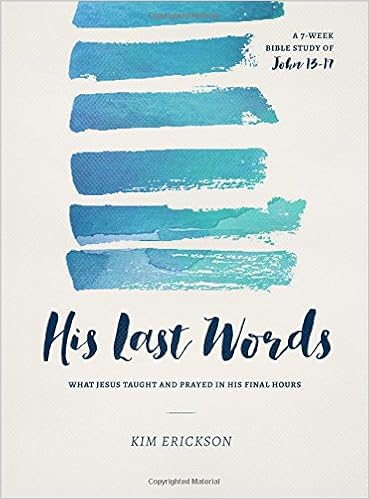
In light of my fascination with these five chapters, I was glad to see a book that focused upon them. Kim Erickson's His Last Words: What Jesus Taught and Prayed in His Final Hours (Moody, 2017). Erickson prepared the book as a seven-week study rather than typical prose. This approach allows the reader to enter the story with Jesus and the disciples. She invites her readers to consider the story that is being told and to continually ask, "what does this tell me about God?" After we think about what the story says, she provides brief narratives granting insight into the story and into her own life, enriching the experience.
I am grateful for this book. Any author who helps her readers to gain a greater appreciation and an accurate understanding of the upper room is a gift in my book.
I received a free copy of this book from Moody Publishers in exchange for my review. I was not required to write a positive review. The thoughts presented here are my own.
21 July 2017
Growing in Christlikeness--a book list.
A few days ago, I texted my friend Mark--a fellow bibliophile--and I said to him, "Today's mental gymnastics have to do with coming up with a list of books [outside of the Bible] that would help one grow in Christlikeness. If you had 12 books, say one per month, what would you include? Thinking about it, I would want enough breadth to cover a variety of topics, but enough depth to promote growth."
Mark was the first to construct his list, which he sent with the clarification that these are in no particular order:
1) Inside Out--Larry Crabb
2) Ragamuffin Gospel--Brennan Manning
3) Abba's Child--Brennan Manning
4) Sacred Romance--Brent Curtis and John Eldridge
5) Transforming Grace--Jerry Bridges
6) The Last Addiction--Sharon Hersh
7) Brokenness--Nancy Leigh DeMoss
8) So, You Want to be Like Christ?--Chuck Swindoll
9) Descending into Greatness--Bill Hybels
10) The Life You Always Wanted--John Ortberg
11) Knowing God--JI Packer
12) Disciplines of a Godly Man--Kent Hughes
He must have also had some conversation at home, because his insightful wife Peggy added three more:
1) Soul Talk--Larry Crabb
2) Crucial Conversations--Kerry Patterson and Joseph Grenny
3) Emotionally Healthy Spirituality--Pete Scazzero
I've read half of these books and they are an excellent list. In fact, Ortberg's book is one of my favorites.
After realizing Mark decided to actually put a list together, I realized that I probably needed to as well. I looked through my Goodreads profile where I have logged over 600 books since late 2011.
Here was my list, also in no particular order.
1) Confessions--St Augustine
2) Renovation of the Heart--Dallas Willard
3) Conformed to His Image--Ken Boa
4) Soul Keeping--John Ortberg
5) A Different Kind of Happiness--Larry Crabb
6) Life Together--Dietrich Bonhoeffer
7) A Long Obedience in the Same Direction--Eugene Peterson
8) True Spirituality--Francis Schaeffer
9) A Loving Life--Paul Miller
10) Practice Resurrection--Eugene Peterson
11) Abba's Child--Brennan Manning
12) The Letters of John Newton
I was a bit surprised about how little we overlapped; indeed, only one book.
Readers, I am curious what you would include? What did Mark, Peggy, and I miss?
Mark was the first to construct his list, which he sent with the clarification that these are in no particular order:
1) Inside Out--Larry Crabb
2) Ragamuffin Gospel--Brennan Manning
3) Abba's Child--Brennan Manning
4) Sacred Romance--Brent Curtis and John Eldridge
5) Transforming Grace--Jerry Bridges
6) The Last Addiction--Sharon Hersh
7) Brokenness--Nancy Leigh DeMoss
8) So, You Want to be Like Christ?--Chuck Swindoll
9) Descending into Greatness--Bill Hybels
10) The Life You Always Wanted--John Ortberg
11) Knowing God--JI Packer
12) Disciplines of a Godly Man--Kent Hughes
He must have also had some conversation at home, because his insightful wife Peggy added three more:
1) Soul Talk--Larry Crabb
2) Crucial Conversations--Kerry Patterson and Joseph Grenny
3) Emotionally Healthy Spirituality--Pete Scazzero
I've read half of these books and they are an excellent list. In fact, Ortberg's book is one of my favorites.
After realizing Mark decided to actually put a list together, I realized that I probably needed to as well. I looked through my Goodreads profile where I have logged over 600 books since late 2011.
Here was my list, also in no particular order.
1) Confessions--St Augustine
2) Renovation of the Heart--Dallas Willard
3) Conformed to His Image--Ken Boa
4) Soul Keeping--John Ortberg
5) A Different Kind of Happiness--Larry Crabb
6) Life Together--Dietrich Bonhoeffer
7) A Long Obedience in the Same Direction--Eugene Peterson
8) True Spirituality--Francis Schaeffer
9) A Loving Life--Paul Miller
10) Practice Resurrection--Eugene Peterson
11) Abba's Child--Brennan Manning
12) The Letters of John Newton
I was a bit surprised about how little we overlapped; indeed, only one book.
Readers, I am curious what you would include? What did Mark, Peggy, and I miss?
18 July 2017
Book Review: Spiritual Maturity
I first encountered J. Oswald Sanders when a good friend of mine recommended the book Enjoying Intimacy with God. It seemed to have a rather profound effect upon him. I read it as well, and was able to see where the effect came from. When I encountered the three book series from Moody by Sanders--including Spiritual Maturity, Spiritual Discipleship, and Spiritual Leadership--I was eager to jump in.
The first one that I ordered was Spiritual Maturity: Practices of Spiritual Growth for Every Believer, which was first published in 1962. The book is divided into 21 chapters, with seven each devoted to maturity in The Father, the Son, and the Holy Spirit.
Each of the chapters is deeply biblical and also makes use of spiritual wisdom from individuals throughout the history of the church. As an aspiring poet, I particularly enjoyed his inclusion of both his own rhymes as well as those of others, such as George Hebert.
Although they were all excellent, two chapters in particular stood out as exceptional. Chapter 6, entitled "the moral antipathy of God" dealt quite effectively with the pervasive issue of pride. Also chapter 11, "Christ's ideal of character" examined the blessed life through the eyes of the beatitudes. Chapter 11 contained one of the sentences that may be amongst the most glorious sentences outside of the Bible I've read: "Many Christians bring unnecessary opprobrium upon themselves and the cause of Christ by their aggressive tactlessness" (Page 138).
One final thought. Though I typically prefer hardbacks, the construction of this little volume is exceptional. There are two color pages throughout, bright clean paper, and a sturdy cover.
I suspect this book I will revisit, and certainly chapters 6 and 11. I also think that for most believers, it would be a worthwhile resource as well.
I received a free copy of this book from Moody Publishers in exchange for my review. I was not required to give a positive review. The opinions presented here on my own.
15 July 2017
Books & Crannies
In my favorite fictional book series, the Wingfeather Saga, there is a character who is very much my kindred spirit--Oskar N. Reteep. Oskar is a bumbling, balding, overweight lover of books. Indeed, his slogan is "appreciator of the strange, neat, and / or yummy." He is the owner of Books and Crannies, a bookstore in Glipwood Township, a store which contains many strange and usual things.
In updating my library with new shelves and a new layout (I think we are now at 24 shelves in a 20 x 24 room), my children and I have been excitedly pondering how we could add some storybook charisma. Together, we have brainstormed many ideas about what to include, but we are drawn most Narnia, Middle Earth, Hogwarts, and Aerwiar. We faced the question how to incorporate bits from each of these tales and yesterday, I settled on Books and Crannies.
Because Reteep is a bookstore owner and an "appreciator of the strange, neat, and/or tasty," Books & Crannies seems to be the perfect setting for collecting the unusual. Also, because Reteep is willing to look far and wide in search of the interesting, it would not be surprising that he might have obtained things from other lands. Also, we know from ND Wilson's contribution to the Wingfeather Tales, Andrew Peterson is not opposed to story crossover. However, if you are new to Wingfeather, start with On the Edge of the Dark Sea of Darkness.
And so my library is on the way. Books are re-shelved, though I need to make sure they are in proper order. There are many things I yet want to do, but for now, its a start. Some additions will be small, but nonetheless fun. Others will involve a Herculean search--I continue to look for a hardcover edition of Pembrick's Creaturepedia.
Here are a few updated pictures.
In updating my library with new shelves and a new layout (I think we are now at 24 shelves in a 20 x 24 room), my children and I have been excitedly pondering how we could add some storybook charisma. Together, we have brainstormed many ideas about what to include, but we are drawn most Narnia, Middle Earth, Hogwarts, and Aerwiar. We faced the question how to incorporate bits from each of these tales and yesterday, I settled on Books and Crannies.
Because Reteep is a bookstore owner and an "appreciator of the strange, neat, and/or tasty," Books & Crannies seems to be the perfect setting for collecting the unusual. Also, because Reteep is willing to look far and wide in search of the interesting, it would not be surprising that he might have obtained things from other lands. Also, we know from ND Wilson's contribution to the Wingfeather Tales, Andrew Peterson is not opposed to story crossover. However, if you are new to Wingfeather, start with On the Edge of the Dark Sea of Darkness.
And so my library is on the way. Books are re-shelved, though I need to make sure they are in proper order. There are many things I yet want to do, but for now, its a start. Some additions will be small, but nonetheless fun. Others will involve a Herculean search--I continue to look for a hardcover edition of Pembrick's Creaturepedia.
Here are a few updated pictures.
 |
| Of course, I made a sign for Books and Crannies--it is just missing a Zouzab. |
 |
| We still have a sitting area. |
 |
| I also have a sitting area. The shelf on the right of the chair is commentaries and Bible dictionaries. |
 |
| The fiction section, which once seemed so full, has room to grow. |
 |
| I tried to get most of the non-fiction in one shot. |
 |
| This is just for decoration--books from Middle Earth, Narnia, Aerwiar, and Hogwarts |
 |
| Notice the "publisher marks" |
 |
| I love The Annieriad. |
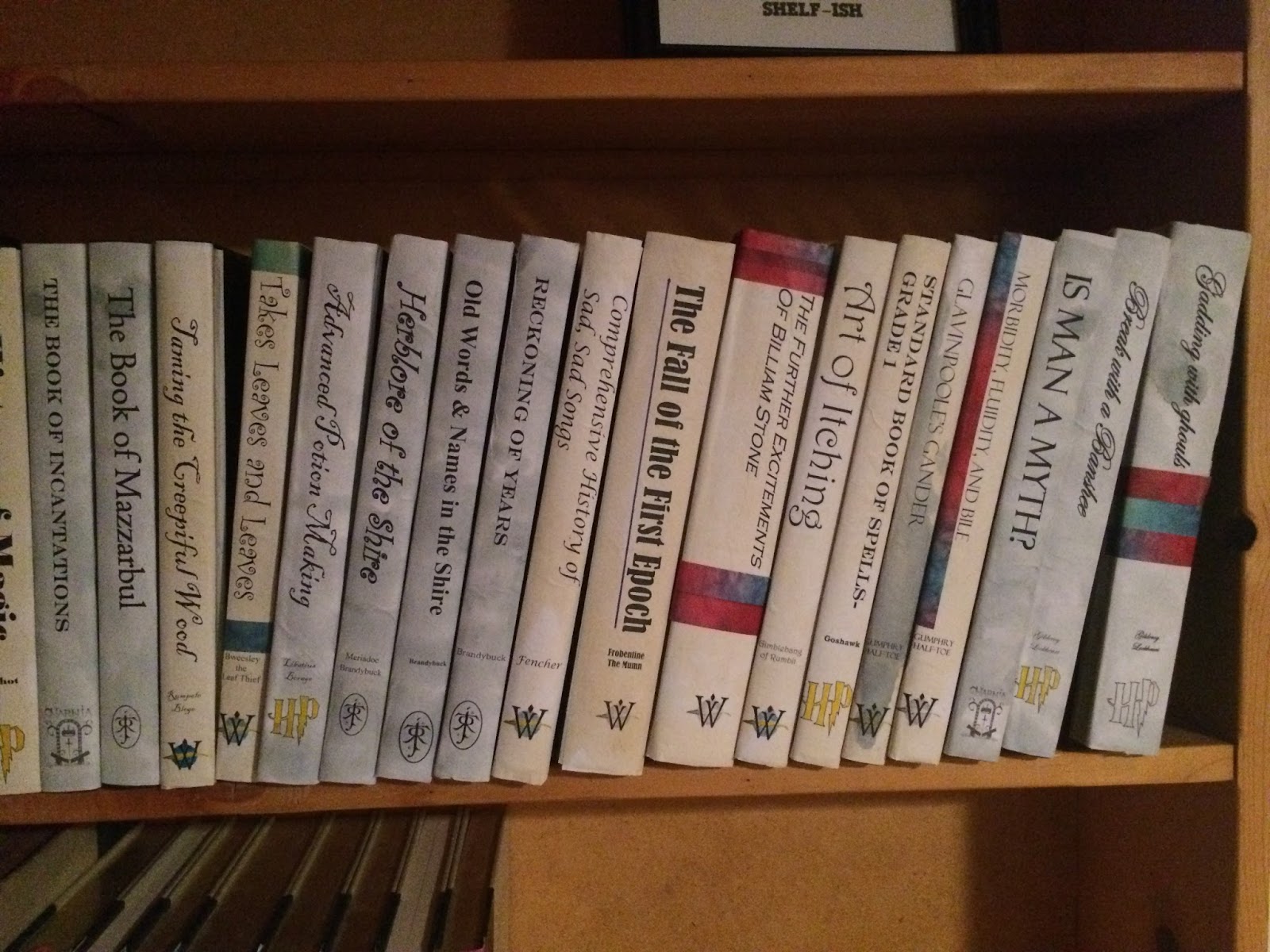 |
| Those familiar with these stories will recognize the titles. |
 |
| Sitting on the carpet |
 |
| Laying on the floor |
 |
| More shelves on the sitting side. |
28 June 2017
Book Review: The Curious Christian

As I said, it exceeded my expectations.
Piper writes about what I believe is an underappreciated virtue, perhaps especially among Christians. If we are honest with ourselves, we are often an uncurious bunch. Whether from fear or dogmatism or pride, we lack curiosity about God, ourselves, others, and creation. Without intending to do so, many of us live what Augustine called incurvatus in se, lives "curved in on ourselves." Curiosity opens our posture, tilting back our heads and looking up and out with wonder, unblocking our eyes and ears to drink deeply from God's good creation. Perhaps since last summer, when my eldest daughter and I took the course Writing from Your Roots--and maybe longer--I have been been on a personal pilgrimage to live with a deeper sense of wonder and awe, though it involves intention.
If you spend any time with my wife or me, you will likely hear one of use the term sacred curiosity, something I picked up from Larry Crabb. Sacred curiosity involves showing interest in another's story and asking questions with a desire simply to learn more about that person. As both Crabb and Piper suggest, curiosity is often lacking.
I appreciated many things about this book and it likely will enter the rotation of books I read again. One thing I was glad he wrote was that curiosity does not exclude conviction. On page 119, he wrote "I don't need to give up on my beliefs about Jesus in order to listen graciously. Rather, my beliefs about Jesus should be the very reason I listen graciously. I don't need to ignore Scripture to be curious about what other people believe. In fact, Scripture gives me security in my curiosity."
As a recently appointed pastor, one of my desires for those I serve is that they would learn to actually see God's beauty, in His Word and in His world. Christians often (rightly) focus on truth and morality, but beauty is too frequently neglected; however, a two-legged stool doesn't stand well. We need truth, goodness, and beauty and curiosity provides us with an important tool.
Above my desk, I have a fading yellow Post-It note that reads:
Stop.
Look.
Listen.
Those three words are a good beginning, and Piper's book may get us a little further down the way, but ultimately, no book or blog post will foster curiosity; we simply need to begin.
Nota Bene:
- If you want to foster curiosity, read some poetry. Don't think of poetry with disdain. Poets are among our most curious citizens. Perhaps start with Mary Oliver.
- I would strongly recommend Christian McEwan's excellent book World Enough and Time: On Creativity and Slowing Down for an additional relevant read.
- Somewhat fortuitously, I suppose, a week ago, I wrote a poem entitled: All Life is a Poem, which I believe gets at some of what Piper writes about. I would love it if you'd read it and if it makes you curious, click on "poetry" on the right side of the blog page, and you will find several more.
29 May 2017
Book Review: As Kingfishers Catch Fire
I waited for the release of As Kingfishers Catch Fire: A Conversation on the Ways of God Formed by the Words of God (Waterbrook, 2017) by Eugene Peterson for many months, yet when I received it, I was reluctant to begin. There is a certain desire to savor what may be one of the final books by a favorite author. Yet ultimately, it does no good to look at a meal with admiration; one must eat. And Kingfishers is a satisfying meal.
I knew little about the book when I pre-ordered it in November. When it arrived, I was pleasantly surprised at its length, 372 pages. In the opening letter to the reader, I was also surprised to discover that the book was a collection of 49 teachings from Peterson's 29 years as a pastor. The editorial team wrote, "Throughout this definitive collection of teachings, Peterson is intentional in keeping the main idea the main idea: that we, as Christians, live lives of congruence. Put another way, that the inside matches the outside. Or as we used to hear, that we indeed practice what we preach." Congruence is a good descriptor.
The 49 sermons were broken into seven parts. Each part contained seven sermons centered around the writings of Moses, David, Isaiah, Solomon (save one about Job), Peter, Paul, and John. The sermons cover the ground between Genesis 1 and the end of John's Revelation.
Through his books, Peterson has reinforced several themes for me: the importance of prayer, the sacredness of the ordinary, and the the beauty of the Word, expressed through words. Each of these themes found their way into the pages of Kingfishers.
Although I love words, I fail to capture meaning and beauty the way Peterson so consistently does. My hope is that sharing a few of his words whets your appetite for more.
- Regarding the Sabbath--"One day a week stop what you are doing and pay attention to what God has been and is doing" (page 13).
- "We are always drifting off into the impersonal. It is easier and less demanding. But it is also demeaning and estranging. Always and everywhere in Scripture our attention is brought back to the central fact: God is a person; God makes persons; God remakes persons. A person like me" (p. 25).
- "We live in a culture that knows little or nothing of a life that listens and waits, a life that attends and adores" (p. 77).
- From my favorite chapter, The Beauty of Holiness, "Beauty is the outside and holiness is the inside of what is essentially the same thing: life full and vibrant, life God created and God blessed, life here and now" (p. 78).
- "We read and live at different speeds" (p. 158).
- "A critical question every Christian has to deal with is 'How can I best assist others to a full, mature growth in the Christian way?'" (p. 189).
- "International diplomacy takes time and careful listening. Parenting takes time and careful listening. Friendship takes time and careful listening. And Scripture takes time and careful listening" (p. 236).
- "You think religion is a matter of knowing things and doing things. It is not. It is a matter of letting God do something for you: letting Him love you, letting Him save you, letting Him bless you, letting Him command you. Your part is to look and believe, to pray and obey" (p. 291).
- "I want to know that the nitty-gritty of my life is taken seriously by the gospel, not just the state of my soul. I don't want a religion of neat little slogans about sunsets and heartthrobs. I want something practical that gets into the working parts of my life" (p. 303).
- "If Jesus makes it into our daily behavior, observers will begin to think there might be something to this after all" (p. 307).
- "In Christ we see the putting to death of self, the killing of self-centeredness, the crucifixion of the ego" (p. 310).
Subscribe to:
Posts (Atom)