Wandering the dark forest trail
my children venture out alone
dangers, seen and unseen
are ever-present.
Temptations present
at every bend.
Guideless, they try to make their way.
Is it any wonder
if they become lost
or ensnared?
Yet I hold the map
and I have the light.
They have watched me study it
every day.
What good will I be to them
if I don't enter their journey
and teach them to read
and know the map
as they walk the dark path?
May God grant me courage
to enter dark places
the wisdom to know the snares
and the dependence on the Spirit
to bring us safely home.

Showing posts with label parenting. Show all posts
Showing posts with label parenting. Show all posts
08 June 2017

27 April 2017
Thank God for Slow Growth

Parents fear
strangling thorns
that threaten to choke
the life out
of their tender shoots
They fear
world-worn paths
that seek to
consume
and corrupt
their seed
Yet they foolishly
cast their tender buds
upon the rocks
and pray for rapid growth
of unrooted sprouts
Slowness disappoints
Thank God
for slow growth
and deep roots
-Mark 4:3-8
26 January 2016
Light Your Children on Fire
What are Christian parents to do? What does Christian parenting even look like? There are nearly as many theories about how to raise children as there are parents. Should they spank or not spank? If they spank, are they supposed to use a switch or just their hand? Are they supposed to discipline or train or ignore? Are they expected to positively reinforce or punish? Does birth order matter or not? Is it essential to homeschool, or should they send them to Christian school, or public school or a mix? It is easy to get overwhelmed by the amount of information that is out there.
As a subculture, we are not short on theories and so my specific thoughts here will probably just add more noise to the cacophony. So read on, or don't. Its up to you.
Let me state my concern, and then I will flesh it out a bit. I have serious reservations about a certain brand of Christian parenting that seeks to break the will of a child, through physical discipline. The goal is apparently to create children of total obedience who unquestioningly follow the directives of their parents, I suppose the theory being that they will then unquestioningly submit to God. Like a good dog or horse, a child whose spirit is broken is well behaved.
But listen, our goal as parents is not primarily to produce well behaved children. Our goal is not to come to church on Sunday morning and have people tell us how well mannered our children are. No where in the Bible does it say that we are to raise automatons. Yes, we are to discipline. Yes, we are to encourage kindness, and self control, and humility, and other-centeredness, but that is not our principle goal and my fear is that the form of parenting that I am talking about loses sight of the balance, seeking to raise Pharisees, but not Christians.
So what is our goal? Let me suggest that our goal is to light our kids on fire. As parents, let's kindle a desire for Jesus. Don't squelch their passions, fuel them. Point out God's creative work in blazing sunsets, the sound of a symphony, and the smell of fresh baked bread. God is everywhere present; help them to see Him. Let's teach them about how radical, how amazing God's grace and mercy really are. But let's not only teach them, let's show them by the ways in which we love them and forgive them when they mess up. Let's not just give lip service to the truth that God's work in us is a life-long process when in reality we expect them to be perfect. When we see evidences of the Spirit's fruit in their lives, talk with them about His work, and when they sin, remind them of grace.
For my part, I will take a quirky, creative, misbehaving child who knows her status as Jesus' beloved over a Pharisaical, anesthetized child whose only goal is to obey his parents, but knows nothing of the blazing fire of God's grace.
As a subculture, we are not short on theories and so my specific thoughts here will probably just add more noise to the cacophony. So read on, or don't. Its up to you.
Let me state my concern, and then I will flesh it out a bit. I have serious reservations about a certain brand of Christian parenting that seeks to break the will of a child, through physical discipline. The goal is apparently to create children of total obedience who unquestioningly follow the directives of their parents, I suppose the theory being that they will then unquestioningly submit to God. Like a good dog or horse, a child whose spirit is broken is well behaved.
But listen, our goal as parents is not primarily to produce well behaved children. Our goal is not to come to church on Sunday morning and have people tell us how well mannered our children are. No where in the Bible does it say that we are to raise automatons. Yes, we are to discipline. Yes, we are to encourage kindness, and self control, and humility, and other-centeredness, but that is not our principle goal and my fear is that the form of parenting that I am talking about loses sight of the balance, seeking to raise Pharisees, but not Christians.
So what is our goal? Let me suggest that our goal is to light our kids on fire. As parents, let's kindle a desire for Jesus. Don't squelch their passions, fuel them. Point out God's creative work in blazing sunsets, the sound of a symphony, and the smell of fresh baked bread. God is everywhere present; help them to see Him. Let's teach them about how radical, how amazing God's grace and mercy really are. But let's not only teach them, let's show them by the ways in which we love them and forgive them when they mess up. Let's not just give lip service to the truth that God's work in us is a life-long process when in reality we expect them to be perfect. When we see evidences of the Spirit's fruit in their lives, talk with them about His work, and when they sin, remind them of grace.
For my part, I will take a quirky, creative, misbehaving child who knows her status as Jesus' beloved over a Pharisaical, anesthetized child whose only goal is to obey his parents, but knows nothing of the blazing fire of God's grace.
29 May 2014
Longing to Connect
 "Hey dad, why do people smoke?"
"Hey dad, what's your favorite sea creature--other than a killer whale?"
"Hey dad, if you could be any Marvel comics superhero, which one would you be?"
"Hey dad, how much does God weigh?"
"Hey dad, does Jesus love Satan?"
"Hey dad, I was playing this videogame and there is a character. He's a frog, but he's red. It's weird. In the game the frog battles with a blue rabbit. Dad, I rock at that game. I have earned 10,000 diamonds so far, which means that I can get a new suit for my frog. That will help me play the game."
"Dad..."
"Dad..."
"Dad..."
Our children ask a ton of questions, don't they? My two little ones, ages 5 and 8, talk incessantly. My 14 year old doesn't talk as much, but she used to. Many kids just talk a lot. As parents, it often seems like they are talking about meaningless things. Sometimes, we just want to tell them to shut up. Often, in our frustration, we simply ignore them.
I was talking with a friend of mine this morning who has had similar experiences with his children and finds it equally frustrating. We sat wondering why children seem to ask so many questions. As he was talking, I pondered aloud, "what if the questions our children ask us have much less to do with their curiosity than they do with their longing to connect with us? What if our children ask us questions because they desire relationship?"
Recently, there has been a significant shift in my thinking about what it means to be human. In particular, I think I am beginning to see the centrality of relationship in what it means to be a person created in the image of God. God created us to relate, to Him and to one another. In that light, I think the questions our children ask come first from their longing to connect and only secondarily from their interest in the answer.
Ideally as parents, we will begin to appreciate the importance of relational connectedness. Perhaps instead of ignoring others or becoming frustrated with our kids, we can stop, listen, and connect.
05 January 2014
Preparing our children for their own sin

Every week I counsel young people from solid Christian homes who are undone by their sin. As parents, we are sometimes more invested in protecting our children from sinful influences of this world than we are in preparing them for the deep sinfulness of their own hearts. We think that if we can just keep them from sinning too much while they are young and vulnerable, then they won't struggle with sin so much as adults. Of course, good parents don't allow their kids to sin much. They discipline, teach, restrain, and intervene. Yet these actions alone don't prepare young people well for the reality of the powerful temptations they will face when mom and dad aren't around. Simply building a fence between a child and temptation is not the same thing as preparing him to face life.
If we are honest and wise we will remind our children that they are depraved little sinners right from the start, that being naughty is easy and natural for kids and moms and dads, and that obeying is far beyond our ability. If we deny that reality by acting terribly surprised they sin and saying "how could you do that?" it is not surprising that our children become confused. No wonder college campuses are overflowing with young Christian men and women who know that they are sinners in some global and lofty way, but who fall apart and are shattered with anxiety and depression when they fall into specific sin. They are shocked by their own desires and behavior, and they find themselves turning to harmful addictions or to the manic pursuit of Christian disciplines in order to pacify their desperate feelings of failure and inadequacy.
I think we are afraid to believe that we are weak (or to help our kids know that they are weak) because we fear that admitting weakness is the same thing as condoning sin.
06 March 2013
Lifestyle Liberalism
Rod Dreher, writing for The American Conservative, has written an important article regardless of your political persuasion. Dreher interacts with a letter he received from a friend of his who was expressing concerns about the activities of his young children. Essentially, the father expressed shock that his 10 year old boy had become a gamer waking up early to play M-rated games and watch sexual clips from HBO.
His friend wrote, "But there’s something deeper here that is profoundly disturbing. Just last week, my wife and I attended an orientation at our son’s middle school next year. It’s a lovely school with great test scores and supportive staff and a million extracurricular options, etc. Everything you’d expect in a wealthy suburb with high taxes. But in all the orientation talks by the principal and administrators and counselors, not one word was spoken of morality or character. It was a complete moral vacuum, beyond empty tolerance (no bullying, which I support, of course). And meanwhile, at home we’re experiencing the consequences of this way of raising a child."
This father, it seems, has painfully stumbled upon the failure of value free education that promotes a world of tolerance of the kind that says "you must completely accept whatever someone else does" rather than "you must show another respect even if what they do makes your blood boil." We must get back to a standard where children are taught right from wrong. The Ten Commandments are a good place to start, or perhaps to which we should return.
His friend wrote, "But there’s something deeper here that is profoundly disturbing. Just last week, my wife and I attended an orientation at our son’s middle school next year. It’s a lovely school with great test scores and supportive staff and a million extracurricular options, etc. Everything you’d expect in a wealthy suburb with high taxes. But in all the orientation talks by the principal and administrators and counselors, not one word was spoken of morality or character. It was a complete moral vacuum, beyond empty tolerance (no bullying, which I support, of course). And meanwhile, at home we’re experiencing the consequences of this way of raising a child."
This father, it seems, has painfully stumbled upon the failure of value free education that promotes a world of tolerance of the kind that says "you must completely accept whatever someone else does" rather than "you must show another respect even if what they do makes your blood boil." We must get back to a standard where children are taught right from wrong. The Ten Commandments are a good place to start, or perhaps to which we should return.
08 February 2013
Book Review: Family Shepherds
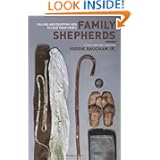
The most recent offering was Family Shepherds: Calling and Equipping Men to Lead Their Homes
 (2011). Although he often speaks to dads, this one is directly addressed to fathers as he calls them to shepherd their families well.
 He includes several major sections in the book including: the need to equip family shepherds, family discipleship and evangelism, marriage enrichment, the training and discipleship of children, and lifestyle evaluation. In the first section, he writes about the 3-legged stool of discipleship revealed in Titus, which includes the need for 1) godly, mature men and women in the church; 2) godly, manly pastors and elders; and 3) biblically functioning homes. He writes, "if we are going to see a generation of young men rise to the occasion and begin to disciple their families, it will be due in large part to the reestablishment of the biblical paradigm of mature believers pouring their lives into younger Christians, and demonstrating godliness and maturity to them by their daily lives" (p. 30). We cannot underestimate the importance of strong biblical mentoring in the context of a local church.
In the second section, he talks about putting the good news of the gospel in front of our children and helping them to get it right. Baucham tells his reader what the gospel is and what the gospel requires. He also calls for restoring the tradition of catechizing our children, which is an objective way of teaching our children biblical truths. There are many wonderful catechisms available for families who want to pursue this way of training. This process of catechism would seem to be linked with his call for family worship, daily times when the father instructs his wife and children in the truths of scripture.
In the third section, Baucham rightly talks about the importance of marriage and honoring the marriage bed as a way to shepherd children. Children need to see their parents functioning well in the marital relationship. As a part of this section, he makes an unapologetic argument for the biblical mandate for male headship in the home which has been under attack not only from secular culture, but also from certain sectors within the church. Baucham rightly asks not what does society say, but what does the Bible say.
In the fourth section, he talks about the training and discipline of children. He makes a distinction between formative and corrective discipline, a distinction that is good to consider. He argues that 90% of our discipline of our children should be formative which involves instructing, training, and rebuking our children, whereas corrective discipline deals with disobedience.
One area in particular that I appreciated about section four was that Baucham spends some time writing a critique of Michael Pearl's To Train Up a Child, which is popular among certain homeschooling groups (as Baucham himself is). I have many friends who like this book and have used it successfully with their children, so I want to tread lightly. Essentially, Baucham views Pearl's work as theologized behaviorism and warmed over semi-pelagianism. Specifically, he cites example after example from Pearl's work that does not fit with scripture. For example, Pearl refers to children as "incomplete creations" and "not morally viable souls", which is inconsistent with the teaching of scripture. Baucham also points out a section in Pearl's work where he alludes to each child having to stand for themselves before the tree of the knowledge of good and evil and decide for themselves, which leans toward an outright denial of original sin. Baucham comments, "the result is a child training approach that relies on behavioral modification as opposed to spiritual transformation. Instead of the child's greatest need being the gospel, his greatest need is a parent whose 'role is not like that of policemen, but more like that of the Holy Spirit," since the child is 'incapable of holding moral values.'" Baucham contrasts Pearl's approach with authors like Tedd Tripp (Shepherding a Child's Heart), who views children "not as morally neutral or incomplete beings, but sinners" which is grounded in Psalm 51 and other scriptures.
In the final section, he encourages a lifestyle evaluation. He talks about the importance of church membership and having people who are able to speak into the lives of one another. He also discusses a fairly careful analysis of how we spend our time as family shepherds. He concludes with a brief, albeit important, section on how single mom's are to function in regard to this mindset and what is the role of family and church.
On the whole, this is a very good book. I still prefer his earlier and longer book Family Driven Faith, though this is a short, worthwhile read. If you are father, I would commend this work to you.
12 June 2012
Gospel Centered Parenting
Luma Simms shares thoughts on Gospel-centered parenting:
If we stop to consider the motivations of our hearts—what is driving us as parents—we can gain important insight into the discipleship of our children. The driver behind gospel-centered discipleship is the glory of Christ. The driver behind child-centered discipleship is the glory of our children, and by extension, our own glory. In order to understand my own motives, I’ve learned to ask myself: Do I want my children to know God, to rest in the person and work of Christ, to have their many, many sins washed in the blood of the Lamb, and to eternally glorify Him? Or rather do I want my children to be “good,” to scrupulously avoid sin and follow biblical injunctions, to avoid bad consequences in this life? Obviously, these are not mutually exclusive, but where does Christ ask us to put our emphasis? My answers to these questions revealed some very selfish desires. I have lived with fear and anxiety over my children’s sins, and I’ve come to realize what was in my heart. I was not offended by their sins for the sake of God’s reputation, nor was I offended because sin is rebellion and an affront to the person of Christ himself. No, I feared sin in my children’s lives because I cared more about all the earthly consequences of sin. For example, a little over eight years ago, I grabbed hold of Deuteronomy 6 and started rattling it like a sword in a battle cry for homeschooling. I had convinced myself that this was the only type of schooling capable of producing godly children. At the heart of my child-centered thinking, was the belief that I, as a parent—not Christ, as our Lord—must do everything to protect my children from the world and sin.
By pure grace, almost two years ago, I was convicted that I had valued my children’s well-being more than I had valued Jesus. I trembled at the realization that the comfort and safety (even the spiritual safety) of my children, had become more important to me than the person of Christ. Their “godliness” was a higher priority in my own life than was Christ’s glory. For all my talk about holy living, I was unwilling to follow Abraham’s spiritual example. I had denied Christ’s call to forsake all else and follow Him. Instead, I had attempted to supplant the Holy Spirt, to save and sanctify my children by my good works. This is the sad truth of child-centered discipleship—at its core it is self-centered legalism, even rebellion.
Read the rest here.
If we stop to consider the motivations of our hearts—what is driving us as parents—we can gain important insight into the discipleship of our children. The driver behind gospel-centered discipleship is the glory of Christ. The driver behind child-centered discipleship is the glory of our children, and by extension, our own glory. In order to understand my own motives, I’ve learned to ask myself: Do I want my children to know God, to rest in the person and work of Christ, to have their many, many sins washed in the blood of the Lamb, and to eternally glorify Him? Or rather do I want my children to be “good,” to scrupulously avoid sin and follow biblical injunctions, to avoid bad consequences in this life? Obviously, these are not mutually exclusive, but where does Christ ask us to put our emphasis? My answers to these questions revealed some very selfish desires. I have lived with fear and anxiety over my children’s sins, and I’ve come to realize what was in my heart. I was not offended by their sins for the sake of God’s reputation, nor was I offended because sin is rebellion and an affront to the person of Christ himself. No, I feared sin in my children’s lives because I cared more about all the earthly consequences of sin. For example, a little over eight years ago, I grabbed hold of Deuteronomy 6 and started rattling it like a sword in a battle cry for homeschooling. I had convinced myself that this was the only type of schooling capable of producing godly children. At the heart of my child-centered thinking, was the belief that I, as a parent—not Christ, as our Lord—must do everything to protect my children from the world and sin.
By pure grace, almost two years ago, I was convicted that I had valued my children’s well-being more than I had valued Jesus. I trembled at the realization that the comfort and safety (even the spiritual safety) of my children, had become more important to me than the person of Christ. Their “godliness” was a higher priority in my own life than was Christ’s glory. For all my talk about holy living, I was unwilling to follow Abraham’s spiritual example. I had denied Christ’s call to forsake all else and follow Him. Instead, I had attempted to supplant the Holy Spirt, to save and sanctify my children by my good works. This is the sad truth of child-centered discipleship—at its core it is self-centered legalism, even rebellion.
Read the rest here.
06 June 2012
The inner and outer chaos of SAHMs
Gloria Furhman, writing at Desiring God, has a word of encouragement for stay at home moms and an exhortation for their husbands. She writes,
The harrowing, inner chaos in the soul of a SAHM can drive a woman to do things she never wanted to do. A woman driven by inner chaos will do things like give her children the silent treatment, manipulate her friends, get an ulcer over the budget, or belittle her husband’s hard work.
The manageable outer chaos is aggravated by the inner chaos in our soul. Outer chaos all of a sudden becomes unmanageable. Competent, confident homemakers lose their nerves of steel. Even though it’s “just” a hiccup in the schedule, or a setback with a child’s discipline, or a burned piece of garlic bread, it becomes so much bigger in our hearts.
Then the elusive “peace like a river” is more like a category five hurricane of anxiety, bitterness, discouragement, or discontent.
Husbands, when you can, please step into the outer chaos and help your wife put out a few fires. Then, when the smoke has cleared (or even as it is still lingering), let the Spirit lead you to step into her inner chaos as well.
Read the rest here.
The harrowing, inner chaos in the soul of a SAHM can drive a woman to do things she never wanted to do. A woman driven by inner chaos will do things like give her children the silent treatment, manipulate her friends, get an ulcer over the budget, or belittle her husband’s hard work.
The manageable outer chaos is aggravated by the inner chaos in our soul. Outer chaos all of a sudden becomes unmanageable. Competent, confident homemakers lose their nerves of steel. Even though it’s “just” a hiccup in the schedule, or a setback with a child’s discipline, or a burned piece of garlic bread, it becomes so much bigger in our hearts.
Then the elusive “peace like a river” is more like a category five hurricane of anxiety, bitterness, discouragement, or discontent.
Husbands, when you can, please step into the outer chaos and help your wife put out a few fires. Then, when the smoke has cleared (or even as it is still lingering), let the Spirit lead you to step into her inner chaos as well.
Read the rest here.
25 April 2012
apologetics resurces for kids
This morning, on Facebook, I wrote "If all we give them is a 'heart' religion, it will not be strong enough to counter the lure of attractive, but dangerous ideas. Young believers also need a 'brain' religion--training in worldview and apologetics--to equip them to analyze and critique the competing worldviews they will encounter when they leave home."--Nancy Pearcy.
Ratio Christi has put together a list of apologetics resources for kids at various stages of development that you can find here.
Ratio Christi has put together a list of apologetics resources for kids at various stages of development that you can find here.
18 April 2012
Dating my daughters
Grace is 12. Yoldine is 7. Tessa is 3. Eventually, boys will come courting. They will need to know these words from Jared Wilson if they are to have *any* hope at all. I appreciated his tongue in cheek look at our daughters (and by extension, sons) dating, yet there is a grain of truth in many of these.
1. You must love Jesus. I don't care if you're a "good Christian boy." I was one of those too. So I know the tricks. I'm going to ask you specific, heart-testing questions about your spiritual affections, your daily devotional life, your idols, your disciplines, and the like. I'll cut you a little bit of slack because you're young and hormonal and your pre-frontal lobe isn't fully developed yet, but I'll be watching you like a hawk. I know you. I was you. You will think you can fool me, and you likely have fooled many other dads who didn't pay much attention to their daughters' suitors, but I will be on you like Bourne on that guy whose neck he broke. Which guy was that? Every guy. So love Jesus more than my daughter or go home.
2. You will install X3Watch or Covenant Eyes on your computer and mobile devices and have your regular reports sent to me.
3. I will talk to your dad and tell him I will hold him responsible if you don't treat my daughter like a lady. If he thinks I'm a crazy person, you fail the test and won't get to date her. If he understands what I'm saying, that bodes well for you.
4. You will pay for everything. Oh, sure, every now and then my daughter can buy you a Coke or something and a gift on your birthday and at Christmas. But you pay for meals, movies, outings, whatever else. Don't have a job? I'm sorry, why I am talking to you again?
5. You will accept my Facebook friend request.
6. If it looks like you need a belt to hold your pants up, I will assume you don't have a job. See #4.
7. Young people dating are putting their best face forward, so if you appear impatient, ill-tempered, or ill-mannered, I know you will gradually become more so over time. I will have no jerks dating my daughters.
8. If I am not your pastor, I will talk to the man who is. If your pastor is a woman, why I am talking to you, again?
9. You don't love my daughter. You have no idea what love is. You like her and you might love her someday. That's an okay start with me, so put the seatbelt on the mushy gushy stuff. Don't profess your undying love, quote stupid love song lyrics to her, tell her you'd die for her, or feed her any other boneheaded lines that are way out of your depth as a horny little idiot. A lady's heart is a fragile thing. If you play with hers, I will show you yours.
10. If you ever find yourself alone with my daughter, don't panic. Just correct the situation immediately. If I ever catch you trying to get alone with my daughter, that would be the time to panic.
11. It may sound like I'm joking in threatening you harm, and while I might not physically hurt you if you offend my daughter or violate her honor, when I am addressing the issue with you, you will not be laughing.
12. You may think all this sounds very legalistic. That's fine. You can be one of the many antinomians not dating my daughter.
1. You must love Jesus. I don't care if you're a "good Christian boy." I was one of those too. So I know the tricks. I'm going to ask you specific, heart-testing questions about your spiritual affections, your daily devotional life, your idols, your disciplines, and the like. I'll cut you a little bit of slack because you're young and hormonal and your pre-frontal lobe isn't fully developed yet, but I'll be watching you like a hawk. I know you. I was you. You will think you can fool me, and you likely have fooled many other dads who didn't pay much attention to their daughters' suitors, but I will be on you like Bourne on that guy whose neck he broke. Which guy was that? Every guy. So love Jesus more than my daughter or go home.
2. You will install X3Watch or Covenant Eyes on your computer and mobile devices and have your regular reports sent to me.
3. I will talk to your dad and tell him I will hold him responsible if you don't treat my daughter like a lady. If he thinks I'm a crazy person, you fail the test and won't get to date her. If he understands what I'm saying, that bodes well for you.
4. You will pay for everything. Oh, sure, every now and then my daughter can buy you a Coke or something and a gift on your birthday and at Christmas. But you pay for meals, movies, outings, whatever else. Don't have a job? I'm sorry, why I am talking to you again?
5. You will accept my Facebook friend request.
6. If it looks like you need a belt to hold your pants up, I will assume you don't have a job. See #4.
7. Young people dating are putting their best face forward, so if you appear impatient, ill-tempered, or ill-mannered, I know you will gradually become more so over time. I will have no jerks dating my daughters.
8. If I am not your pastor, I will talk to the man who is. If your pastor is a woman, why I am talking to you, again?
9. You don't love my daughter. You have no idea what love is. You like her and you might love her someday. That's an okay start with me, so put the seatbelt on the mushy gushy stuff. Don't profess your undying love, quote stupid love song lyrics to her, tell her you'd die for her, or feed her any other boneheaded lines that are way out of your depth as a horny little idiot. A lady's heart is a fragile thing. If you play with hers, I will show you yours.
10. If you ever find yourself alone with my daughter, don't panic. Just correct the situation immediately. If I ever catch you trying to get alone with my daughter, that would be the time to panic.
11. It may sound like I'm joking in threatening you harm, and while I might not physically hurt you if you offend my daughter or violate her honor, when I am addressing the issue with you, you will not be laughing.
12. You may think all this sounds very legalistic. That's fine. You can be one of the many antinomians not dating my daughter.
18 January 2012
Kids are not the center of the universe
The fear of the LORD is the beginning of knowledge;
fools despise wisdom and instruction.
Hear, my son, your father's instruction,
and forsake not your mother's teaching,
for they are a graceful garland for your head
and pendants for your neck.
-Proverbs 1:7-9
I had two good conversations about parenting yesterday with a common theme--the degradation of youth. For some time, Bible believing churches have been asking, "where are the men?" In October of last year, William Bennett, writing for CNN, addressed the same issue. It seems that youth today, and particularly the men, have lost sight of what it means to be adults. Psychologists have cautioned us never to do anything to harm the self-image our children. Hollywood releases movie after movie featuring all-wise children saving the day when the bumbling adults have fumbled it once again. In the schools, all win and all must have prizes. In other words, we teach children that the center of the universe is them.
Proverbs takes a different tack. This book of wise sayings was collected by Solomon, at least in part, to provide principles for wise living to God's people and apparently to his son (Proverbs 1:8). Many people today, even non-believers, would read through Proverbs and find that much of it makes sense to them, yet there are other things that seem to run contrary to the wisdom of the world. In my experience, the wisdom of God's word trumps the world.
As Christians, a primary job that we have is to teach our children the fear of the LORD. We must educate our children that God is the source of all that they see, that he is sovereign and he remains involved in the world. We must train them that he is jealous for his own glory and he desires all people to come to a knowledge of him. We must teach them that the wisdom that the world offers is often foolish. We must teach them to respect authority. We must teach them to love others deeply and well, even when it seems contrary to do so. We need to teach our young men to work hard and love God and family with their whole hearts. We must teach our children that they are not the center of the universe, God is.
Daily Reading: Matthew 26, Numbers 29, 1 Corinthians 13, Revelation 10, Job 4, Psalm 1, Proverbs 1, 2 Chronicles 4, Daniel 11, Acts 11
fools despise wisdom and instruction.
Hear, my son, your father's instruction,
and forsake not your mother's teaching,
for they are a graceful garland for your head
and pendants for your neck.
-Proverbs 1:7-9
I had two good conversations about parenting yesterday with a common theme--the degradation of youth. For some time, Bible believing churches have been asking, "where are the men?" In October of last year, William Bennett, writing for CNN, addressed the same issue. It seems that youth today, and particularly the men, have lost sight of what it means to be adults. Psychologists have cautioned us never to do anything to harm the self-image our children. Hollywood releases movie after movie featuring all-wise children saving the day when the bumbling adults have fumbled it once again. In the schools, all win and all must have prizes. In other words, we teach children that the center of the universe is them.
Proverbs takes a different tack. This book of wise sayings was collected by Solomon, at least in part, to provide principles for wise living to God's people and apparently to his son (Proverbs 1:8). Many people today, even non-believers, would read through Proverbs and find that much of it makes sense to them, yet there are other things that seem to run contrary to the wisdom of the world. In my experience, the wisdom of God's word trumps the world.
As Christians, a primary job that we have is to teach our children the fear of the LORD. We must educate our children that God is the source of all that they see, that he is sovereign and he remains involved in the world. We must train them that he is jealous for his own glory and he desires all people to come to a knowledge of him. We must teach them that the wisdom that the world offers is often foolish. We must teach them to respect authority. We must teach them to love others deeply and well, even when it seems contrary to do so. We need to teach our young men to work hard and love God and family with their whole hearts. We must teach our children that they are not the center of the universe, God is.
Daily Reading: Matthew 26, Numbers 29, 1 Corinthians 13, Revelation 10, Job 4, Psalm 1, Proverbs 1, 2 Chronicles 4, Daniel 11, Acts 11
07 January 2012
Building a legacy
David wanted to build the temple, but because of his years of war, God did not permit him (1 Chronicles 17:1-15), promising instead that his son Solomon would build it. Yet David, a man who deeply loved God, did not throw up his hands and cast aside his vision when he learned he would not be the one to build it. Instead, he provided the necessary scaffolding for his son. He worked diligently to ensure that Solomon would have what he needed when the time came because he recognized his son, was "young and in experienced" (1 Chronicles 22:5) and the temple would need to be "exceedingly magnificent". As Christians, we can learn a lot about parenting from David's provision for Solomon.
First, he provided materially. David ensured that Solomon would have sufficient building supplies when the time came for him to build the temple. He provided cut stone, wood, and iron, and bronze "beyond weighing" for the temple (v. 2-4). David knew what would be needed for the project and he set to providing it for him.
As parents, providing materially for our children's spiritual walk is also important. Ensuring that they have Bibles will help provide scaffolding for their growth. Beyond this, exposing them to good literature, music, and art, Christian or not, will encourage their growth.
Second, he provided a story. In verses 6-10, David tells his son about God, specifically about God's plan for David, Solomon, and the temple. He explains to him that God has not permitted him to build the temple, but that Solomon is to build it. Solomon can see that his father's heart is dedicated to the things of God (v. 7). Through this story, David is able to demonstrate how important God is to him. David also demonstrates the story is not finished, that it continues with Solomon.
As parents, we also should share our story with our children. We should be diligent to teach them about how God has worked, and is continuing to work, in our lives. We should not stop there, though. As we share our history, we should not conclude with "the end." Rather, we should project our story into the future, reminding our children that God wants them in the story.
Third, he provided instruction. Actually, David offers a benediction of sorts (v. 11-16). "Now, my son, the LORD be with you, so that you may succeed in building the house of the LORD your God, as he has spoken concerning you. Only, may the LORD grant you discretion and understanding, that when he gives you charge over Israel you may keep the law of the LORD your God. Then you will prosper if you are careful to observe the statutes and the rules that the LORD commanded Moses for Israel. Be strong and courageous. Fear not; do not be dismayed. With great pains I have provided for the house of the LORD 100,000 talents of gold, a million talents of silver, and bronze and iron beyond weighing, for there is so much of it; timber and stone, too, I have provided. To these you must add. You have an abundance of workmen: stonecutters, masons, carpenters, and all kinds of craftsmen without number, skilled in working gold, silver, bronze, and iron. Arise and work! The LORD be with you!” David grounds his blessing in the power of God to do what he has commanded. He desires wisdom for his son and encourages him to hold to the word of the Lord. He does not stop there; he tells him to "arise and work." Solomon is not just to ponder the wisdom of God, he is to actually move forward in building the temple; nor is he to charge ahead without wisdom. Rather, David encouraged work wisely grounded.
Christian parents are also to wisely instruct our children. David offers a benedictory prayer of sorts. He gives blessing and instruction, grounded in the word of the Lord. Pray for your kids. Pray with your kids. Instruct them in the way they are to go.
Finally, he provided helpers. In verse 17, we read that "David commanded all the leaders of Israel to help his son."
The Christian church is a body of believers, a community. We should not expect to go it alone in our parenting. We should seek help and encouragement from others, just as we provide help and encouragement to them.
Daily Reading: Matthew 15, Numbers 18, 1 Corinthians 2, 3 John, Song of Solomon 1, Psalm 140, Proverbs 21, 1 Chronicles 22, Ezekiel 48, Romans 16
First, he provided materially. David ensured that Solomon would have sufficient building supplies when the time came for him to build the temple. He provided cut stone, wood, and iron, and bronze "beyond weighing" for the temple (v. 2-4). David knew what would be needed for the project and he set to providing it for him.
As parents, providing materially for our children's spiritual walk is also important. Ensuring that they have Bibles will help provide scaffolding for their growth. Beyond this, exposing them to good literature, music, and art, Christian or not, will encourage their growth.
Second, he provided a story. In verses 6-10, David tells his son about God, specifically about God's plan for David, Solomon, and the temple. He explains to him that God has not permitted him to build the temple, but that Solomon is to build it. Solomon can see that his father's heart is dedicated to the things of God (v. 7). Through this story, David is able to demonstrate how important God is to him. David also demonstrates the story is not finished, that it continues with Solomon.
As parents, we also should share our story with our children. We should be diligent to teach them about how God has worked, and is continuing to work, in our lives. We should not stop there, though. As we share our history, we should not conclude with "the end." Rather, we should project our story into the future, reminding our children that God wants them in the story.
Third, he provided instruction. Actually, David offers a benediction of sorts (v. 11-16). "Now, my son, the LORD be with you, so that you may succeed in building the house of the LORD your God, as he has spoken concerning you. Only, may the LORD grant you discretion and understanding, that when he gives you charge over Israel you may keep the law of the LORD your God. Then you will prosper if you are careful to observe the statutes and the rules that the LORD commanded Moses for Israel. Be strong and courageous. Fear not; do not be dismayed. With great pains I have provided for the house of the LORD 100,000 talents of gold, a million talents of silver, and bronze and iron beyond weighing, for there is so much of it; timber and stone, too, I have provided. To these you must add. You have an abundance of workmen: stonecutters, masons, carpenters, and all kinds of craftsmen without number, skilled in working gold, silver, bronze, and iron. Arise and work! The LORD be with you!” David grounds his blessing in the power of God to do what he has commanded. He desires wisdom for his son and encourages him to hold to the word of the Lord. He does not stop there; he tells him to "arise and work." Solomon is not just to ponder the wisdom of God, he is to actually move forward in building the temple; nor is he to charge ahead without wisdom. Rather, David encouraged work wisely grounded.
Christian parents are also to wisely instruct our children. David offers a benedictory prayer of sorts. He gives blessing and instruction, grounded in the word of the Lord. Pray for your kids. Pray with your kids. Instruct them in the way they are to go.
Finally, he provided helpers. In verse 17, we read that "David commanded all the leaders of Israel to help his son."
The Christian church is a body of believers, a community. We should not expect to go it alone in our parenting. We should seek help and encouragement from others, just as we provide help and encouragement to them.
Daily Reading: Matthew 15, Numbers 18, 1 Corinthians 2, 3 John, Song of Solomon 1, Psalm 140, Proverbs 21, 1 Chronicles 22, Ezekiel 48, Romans 16
28 December 2011
Tilling hard soil

Some days, being a dad is hard. Really hard. When my kids are bickering (again), which inevitably leads to tears and blame casting (again), I feel an overwhelming sense of responsibility. I know the importance of a father. I see it in the Bible. I see it in the news. I see it in my kid's eyes. Still, in his sovereignty, God has entrusted me with the role of leading and teaching these little ones.
So when I get a phone call at work from my wife who seems ready to throw in the towel in the third round because the fight has been hard that day, I wonder what I am doing wrong. When my son looks me in the eyes and nods as I tell him to listen to his little sister's words and stop wrestling with her, yet he continues on, I sigh and realize that parenting--for me at least--is often really tough.
Particularly during these challenging times as a father, I think of our garden. Heather and Grace wanted a garden last year. I set to tilling the soil and it was tough going. Though enabled with the right tools for the job, I still fought desperately to break up the soil. I had to go over it again and again and again until it was finally ready.
It would be easier if my children's hearts were rich, black topsoil, ready for me to plant God's word. I would like it to take root easily and grow quickly. Their hearts aren't that way, though. They are sinners, just like I am. And according to Ezekiel 11:19, the hearts of sinners are "hearts of stone."
 The work of parenting is hard. Breaking up the rocky soil of their hearts is an arduous, ongoing process, but I praise God that he allows me to be a part of it--both the good and the bad. Because on the other side of the process, there is fruit. Grace lovingly serving her brother. The name of Jesus on Tessa's lips. Ian saying that in the next year, he wants to learn more of God's word. Each of these little buds a sign of new growth.
And so I grab my spade and keep working the soil.
I will remove the heart of stone from their flesh and give them a heart of flesh, that they may walk in my statutes and keep my rules and obey them. And they shall be my people, and I will be their God.-Ezekiel 11:19-20

08 November 2011
Eyes Toward Home
Husbands, love your wives, as Christ loved the church and gave himself up for her-Ephesians 5:25
Over the past several weeks, I have been thinking about starting another master's degree program. I have been enamored with the Master of Arts in Science and Religion program at Biola University. Admittedly, I already have several degrees. I am also currently completing master's level work toward a certificate in biblical counseling. All this is to say that the challenges of academia are a siren song to me. I enjoy pushing myself to learn, though a darker part of me also must admit to the draw of the recognition that comes with the degree. I prefer not to acknowledge that part, but it is there. My wife has been faithfully at my side every step of the way.
When I asked my wife a few days ago to begin praying about this possibility, her response lacked enthusiasm. She sounded tired, as if she wanted to say, "not again." Thankfully, we had the opportunity to talk about it last night. It turns out that while I am peering off into the distance seeking to conquer the next big thing, she plods along at home, managing the household and educating our children. She often feels alone in this task and I suppose that in many ways, she is.
As I laid in bed last night thinking about what she said, I realized that my gaze is too often on the horizon. I think about the possibilities "out there", but my calling is to home. Deuteronomy 6:6-9 calls fathers to their homes: "And these words that I command you today shall be on your heart. You shall teach them diligently to your children, and shall talk of them when you sit in your house, and when you walk by the way, and when you lie down, and when you rise. You shall bind them as a sign on your hand, and they shall be as frontlets between your eyes. You shall write them on the doorposts of your house and on your gates." God's word is to be consistently before my family and in our home and I am to take the lead in teaching them about Him. I cannot lead well when my focus is often directed elsewhere.
So, for now, Biola will be moved to the back burner. If I profess to love my wife and my children and if I claim to trust God's word for my life, I need to do a better job of turning my eyes toward home. My family does not care if I earn another master's degree, they want papa at home and engaged.
Now, a brief note to the men (of which I hope I am still included): there are so many things that mess with our priorities and we are great at justifying them. We cover our hobbies, jobs, and other activities with a false veneer of righteousness. We tell ourselves that working every evening, burying our noses in a book, or spending time away from home with other believers is ministry. Sometimes it is, but I would argue that often it is not. If we are not defending our homes, if we are not actively and consistently pouring ourselves into our kids, we are missing the mark. God calls us to "give ourselves up" for our wives. That means spending time at home and getting to know our wives and kids and what is going on in their lives. I know more about current apologetics arguments than I do about what my kids are doing in math. Other men know football stats, or deer movement patterns, or stock market fluctuations better than they know about their children's friendships. Men, our primary ministry is to our families. Other activities are not inherently bad, but we must ask ourselves "where are we planting our flags? Where are we directing our gaze?" I have a good friend who is fond of saying, "men, we are in a fight." Let's make sure we know what we are fighting for.
Over the past several weeks, I have been thinking about starting another master's degree program. I have been enamored with the Master of Arts in Science and Religion program at Biola University. Admittedly, I already have several degrees. I am also currently completing master's level work toward a certificate in biblical counseling. All this is to say that the challenges of academia are a siren song to me. I enjoy pushing myself to learn, though a darker part of me also must admit to the draw of the recognition that comes with the degree. I prefer not to acknowledge that part, but it is there. My wife has been faithfully at my side every step of the way.
When I asked my wife a few days ago to begin praying about this possibility, her response lacked enthusiasm. She sounded tired, as if she wanted to say, "not again." Thankfully, we had the opportunity to talk about it last night. It turns out that while I am peering off into the distance seeking to conquer the next big thing, she plods along at home, managing the household and educating our children. She often feels alone in this task and I suppose that in many ways, she is.
As I laid in bed last night thinking about what she said, I realized that my gaze is too often on the horizon. I think about the possibilities "out there", but my calling is to home. Deuteronomy 6:6-9 calls fathers to their homes: "And these words that I command you today shall be on your heart. You shall teach them diligently to your children, and shall talk of them when you sit in your house, and when you walk by the way, and when you lie down, and when you rise. You shall bind them as a sign on your hand, and they shall be as frontlets between your eyes. You shall write them on the doorposts of your house and on your gates." God's word is to be consistently before my family and in our home and I am to take the lead in teaching them about Him. I cannot lead well when my focus is often directed elsewhere.
So, for now, Biola will be moved to the back burner. If I profess to love my wife and my children and if I claim to trust God's word for my life, I need to do a better job of turning my eyes toward home. My family does not care if I earn another master's degree, they want papa at home and engaged.
Now, a brief note to the men (of which I hope I am still included): there are so many things that mess with our priorities and we are great at justifying them. We cover our hobbies, jobs, and other activities with a false veneer of righteousness. We tell ourselves that working every evening, burying our noses in a book, or spending time away from home with other believers is ministry. Sometimes it is, but I would argue that often it is not. If we are not defending our homes, if we are not actively and consistently pouring ourselves into our kids, we are missing the mark. God calls us to "give ourselves up" for our wives. That means spending time at home and getting to know our wives and kids and what is going on in their lives. I know more about current apologetics arguments than I do about what my kids are doing in math. Other men know football stats, or deer movement patterns, or stock market fluctuations better than they know about their children's friendships. Men, our primary ministry is to our families. Other activities are not inherently bad, but we must ask ourselves "where are we planting our flags? Where are we directing our gaze?" I have a good friend who is fond of saying, "men, we are in a fight." Let's make sure we know what we are fighting for.
16 December 2010
Following Fathers
Justin Taylor shares a very important finding from a 2003 article. He writes,
In short, if a father does not go to church, no matter how faithful his wife’s devotions, only one child in 50 will become a regular worshipper. If a father does go regularly, regardless of the practice of the mother, between two-thirds and three-quarters of their children will become churchgoers (regular and irregular). If a father goes but irregularly to church, regardless of his wife’s devotion, between a half and two-thirds of their offspring will find themselves coming to church regularly or occasionally.
Dads, GO TO CHURCH!!!!
Read the whole thing here.
In short, if a father does not go to church, no matter how faithful his wife’s devotions, only one child in 50 will become a regular worshipper. If a father does go regularly, regardless of the practice of the mother, between two-thirds and three-quarters of their children will become churchgoers (regular and irregular). If a father goes but irregularly to church, regardless of his wife’s devotion, between a half and two-thirds of their offspring will find themselves coming to church regularly or occasionally.
Dads, GO TO CHURCH!!!!
Read the whole thing here.
27 October 2010
Sharing the Gospel with your Children
When I was at the Desiring God 2010 National Conference, I happened across a small, spiral bound book entitled, Helping Children Understand the Gospel. I thought it might be worthwhile to share a few thoughts from the book as I happen upon them.
- As God's sowers, we are called to: 1) Pray for the hearts of children, because without the Spirit of God working in them they cannot be saved (1 Corinthians 3:5-7), 2) Teach the Word of God diligently all the time, in all places, under all circumstances (Deuteronomy 6:7), and 3) Model a life of faith evidencing that we love the LORD our God with all our heart, all our soul, and all our might (Deuteronomy 6:5).
- When presenting the gospel to children, it is important to emphasize that salvation is not based on anything they do, but on what Jesus accomplished on the cross. In the Introduction to the Firm Foundations curriculum, Trevor McIlwain explains it this way: "The Gospel is not man accepting Jesus as his savior, but that God accepted the Lord Jesus as the perfect and only Savior two thousand years ago. The Gospel is not man giving his heart to Jesus, but that Christ gave His life, His whole being, in the place of sinners. [...] The sinner is only to trust what has already been done on his behalf."
- There are genuine conversion of young children, but many times we confuse spiritual interest with saving faith. It is easy to confuse childhood curiosity with conviction. [...] We need to impress upon children that the person who is truly trusting in Jesus will continue to trust in Jesus. [...] Persevering faith is a sign of genuine faith.
- The job of the sower is to keep the Gospel in front of the child--to keep sowing the Word of God upon every opportunity; to break up clumps of soil with discipline and training; and to water the seed with unceasing prayer.
- We must also be intentional in cultivating the soil when sowing spiritual seed. If we want the Gospel message to be understood and embraced, we should create an environment where the Gospel will flourish. A child without rules or discipline will have trouble embracing the Gospel. He has not learned that rules are non-negotiable, that there are consequences to actions, or that authority must be respected. Why would he ever believe that God is sovereign over all His creation? Or that the Ten Commandments are God's absolute rules of conduct? Or even that wrongdoing results in punishment--that he needs a Savior because hell is real? We are so afraid of being labeled "legalistic" or "fundamentalistic" that we don't give children behavioral expectations or even moral standards.
- Chlidren will never love the atoning work of Christ on the cross if they don't understand how much they need a Savior.
- In days gone by, children learned the commandments before they learned John 3:16, because only then did John 3:16 have real meaning for them.
- A big mistake that many Christian parents make is to jump too quickly to the Gospel without giving the child time to grasp the implications of God's holiness and his sin.
- Remember that conversion does not always happen instantaneously but often involves a journey of questioning, evaluating, struggling, and learning to trust. Conversion is a process. The struggle is good--the ugliness of the human heart needs to be experienced and grieved over.
- Conversion is a process, not an event.
- The danger we need to be wary of is assuming that a child is saved because he articulates a knowledge of God and the Gospel. [...]At times we may not know for sure whether faith is genuine or not. We can have a reasonable hope that a child may be truly converted, but if we do not know, we should continue to present the truths of the Gospel.
- We do have hypocrites among the children of our churches. For those who think they are saved but show no evidence of saving faith, we need to lovingly discern whether there are evidences of saving faith and challenge them to examine their hearts and lives.
- Embracing the Gospel is not simply a one-time decision. The truths of the Gospel should embrace all of life. We must therefore teach the Gospel diligently--when we sit down at home or walk along the way, lie down, or rise.
- Ultimately, saving faith is not determined by our presentation of the message, or the manner in which we present it. We are called to be faithful and "acquaint" our children with the sacred writings, but it is God alone who brings about saving faith. We can prepare the soil of a child's heart. We can plant the seed of the Gospel. We can water the Gospel by explaining and reviewing its amazing truths. But that Gospel seed will lie dormant in the heart of a child until God, if He wills it, by the power of the Holy Spirit causes that seed to burst forth into newness of life.
26 October 2010
Overextended Kids
Jen Wilkin writes:
My oldest son started high school this fall. At his orientation the counselors took a portion of the program to speak to parents about the greatest challenge they see students face in school. I expected to hear about poor study habits or substance abuse, but to my initial surprise, these were not at the top of the list. Apparently, the greatest challenge presenting itself in the office of the high school guidance counselor is a growing number of kids struggling with anxiety and depression. Can you guess why? A combination of over-scheduling and sleep deprivation, linked to two main contributors: electronics use and extracurricular activities. We were encouraged as parents to go home and talk to our teenagers about setting boundaries in both these areas. Parents across the auditorium scribbled notes furiously as the counselors outlined some suggestions: limit texting, monitor bedtimes, cut back on team practices. I couldn’t help but think to myself: tonight there will be many demonstrations of teenage angst when mom shows up with her new list of suggestions.
There are many issues covered in this article that I worry about for my own kids and, frankly, for myself.
Read the rest here.
My oldest son started high school this fall. At his orientation the counselors took a portion of the program to speak to parents about the greatest challenge they see students face in school. I expected to hear about poor study habits or substance abuse, but to my initial surprise, these were not at the top of the list. Apparently, the greatest challenge presenting itself in the office of the high school guidance counselor is a growing number of kids struggling with anxiety and depression. Can you guess why? A combination of over-scheduling and sleep deprivation, linked to two main contributors: electronics use and extracurricular activities. We were encouraged as parents to go home and talk to our teenagers about setting boundaries in both these areas. Parents across the auditorium scribbled notes furiously as the counselors outlined some suggestions: limit texting, monitor bedtimes, cut back on team practices. I couldn’t help but think to myself: tonight there will be many demonstrations of teenage angst when mom shows up with her new list of suggestions.
There are many issues covered in this article that I worry about for my own kids and, frankly, for myself.
Read the rest here.
12 October 2010
10 reasons why a daughter needs a dad
 I found this on The Resurgence today. It is a list of 10 items taken from a book by Greg Lang (Why a Daughter Needs a Dad: 100 Reasons).
A daughter needs a dad...
- to show her that true love is unconditional
- to teach her that her value as a person is more than the way she looks
- to teach her that family is more important than work
- to show her that a man can be trustworthy
- to be the safe spot she can always turn to
- to teach her that a man’s strength is not the force of his hands or his voice, but the kindness of his heart
- to be the standard against which she will judge all men
- to help her take risks that will build her confidence
- to hold her when she cries
- to teach her she is important by stopping what he is doing to watch her
19 June 2010
They'll Be Watching

My son, give me your heart, and let your eyes observe my ways. -Proverbs 23:26
I have been meditating on this verse all week. It initially made me uncomfortable. The writer of this proverb not only is aware that children observe their parents, he is asking that they do.
I want my children to emulate many of the things about me. I want them to have a passion for God and His word. I want them to love family. I want them to pursue knowledge. I want them to be committed to church, hard work, and other people.
But there are things about my character that, honestly, I would hope they manage better than I have. Sometimes, I am too angry. Sometimes, I would rather stick my nose in a book than get on the floor and play with my kids. Sometimes, I willfully give in to sin.
As I think about my children, it is easy to surmise that I want them always to see the good in me and never the bad.
In spite of my sin, I hope that my children give me their hearts and let their eyes observe my ways. I hope they see that a life mired in sin is covered by grace. I hope they see a faithful life, even in dark places. I hope they see that following Jesus is not always easy, but in the end it is worth the effort.
Subscribe to:
Posts (Atom)