English Standard Version: He [Jesus] also told this parable to some who trusted in themselves that they were righteous, and treated others with contempt: “Two men went up into the temple to pray, one a Pharisee and the other a tax collector. The Pharisee, standing by himself, prayed thus: ‘God, I thank you that I am not like other men, extortioners, unjust, adulterers, or even like this tax collector. I fast twice a week; I give tithes of all that I get.’ But the tax collector, standing far off, would not even lift up his eyes to heaven, but beat his breast, saying, ‘God, be merciful to me, a sinner!’ I tell you, this man went down to his house justified, rather than the other. For everyone who exalts himself will be humbled, but the one who humbles himself will be exalted.”-Luke 18:9-14
Remix for an unsettled generation
Jesus told this story to some people who were assured of their own righteousness and believed that their viewpoints were superior and spoke poorly of others. "Three people went onto Twitter to pray. The first, drawing attention to himself said, 'I thank you that I am not like other people, bigoted, racist, sexist uneducated hicks, or even these two over here. I am tolerant, supportive, and safe.'
"The second, also calling attention to herself said, 'I thank you that I am not like other people, lazy, self-centered whiners who have nothing better to do than protest. I work hard, pay my taxes, and love my country.'
"The third, standing far off, would not even lift his eyes to heaven, but beat his breast, saying, 'God, be merciful to me, a sinner!' I tell you, this man went down to his house justified, rather than the others. For whoever exalts himself will be humbled, but the one who humbles himself will be exalted."
Lord, have mercy.

Showing posts with label humility. Show all posts
Showing posts with label humility. Show all posts
15 November 2016

11 July 2016
We Need More Armchair Receivers
In the past week or two, we have witnessed needless violence throughout our nation. Alton Stirling was killed by two police officers in Baton Rouge. Philando Castile was killed by a police officer in Minneapolis. Five police officers were targeted and killed, and others wounded, at a protest in Dallas. Though these events grabbed the national headlines, there were other protests, some resulting in injuries. There were other unrelated murders that did not grab the national spotlight. To assume this violence is something new is misguided; it is nearly as old as humankind. What is different is the availability of information and the efficiency impulsivity with which we are able to respond through social media. For example, the widespread dispersion of smart phone technology allows bystanders to visually document events, often in a particularly gruesome manner. When we see Alton Stirling dying on camera, it triggers something deep within us. When we see Dallas police officers squeezing their loved ones tightly, we react.
But the availability of these advanced technologies also not only allow, but encourage us to share our thoughts and feelings. Facebook asks, "What's on your mind?"; Twitter asks, "What's happening?". So we respond. Twenty-four hour news feeds and the instant availability of information promotes a society of false experts. In the sports world, there are armchair quarterbacks who offer their opinions about things they know little about. As Alexander Pope said, "a little learning is a dangerous thing." Thankfully, when it comes to sports, it is rarely harmful to be an armchair quarterback.
Unfortunately, armchair quarterbacking is not limited to things that don't matter. As a society, we are eager to assert our opinions and beliefs about things like violence and racism. We even go so far as to presume that what we are sharing is "fact," but what do we do when our "facts" disagree with each other? If you don't believe this happens, talk to informed conservatives and liberals about whether President Obama has been good for the economy. You will hear different sets of "facts" complete with "reliable" sources. Furthermore, when we blindly assert that our set of facts are the correct ones, we shut down further conversation because we are unwilling to listen.
We need fewer armchair quarterbacks and more armchair receivers.
We need people who are willing to sit and listen--really listen--to another tell her story, not with ultimate intent of offering a rebuttal, but to know her. It is quite possible that the people who share with us are wrong about certain things. So are we. When we enter conversations with others, we must enter with a desire to love, which promotes harmony, rather than to seek to be right, which often promotes divisiveness. For my Christian brothers and sisters, we often do a poor job of listening.
One of my spiritual heroes is Francis Schaeffer, who was undoubtedly one of the most informed, logical, and thoughtful Christians in recent times. His ministry, L'Abri, had a profound impact on many people. Yet, what draws me to Schaeffer is his deep respect for others. Jerram Barrs, a student of Schaeffer, had this to say, "He always treated people with dignity as God's image-bearers, with compassion as those fallen from a glorious origin and deeply marred by sin and its consequences, and with love as those for whom Christ died. If I long to imitate anything about him, it is this deep respect, compassion, and grace which was so evident in the way he responded to the miserable, difficult, and even aggressive people who challenged him."
We would all do well to heed these words from Schaeffer, "If I have only an hour with someone, I will spend the first 55 minutes asking questions and finding out what is troubling their heart and mind, and then in the last 5 minutes I will share something of the truth." Friends, we need fewer assertions of fault and more curiosity about people. We need fewer opinions about causes and more compassion toward the suffering. We need more listeners and fewer commentators.
Every person we meet bears the image of God.
Every person you meet matters to God.
Every person you meet is loved by God.
Every person you meet needs God.
But the availability of these advanced technologies also not only allow, but encourage us to share our thoughts and feelings. Facebook asks, "What's on your mind?"; Twitter asks, "What's happening?". So we respond. Twenty-four hour news feeds and the instant availability of information promotes a society of false experts. In the sports world, there are armchair quarterbacks who offer their opinions about things they know little about. As Alexander Pope said, "a little learning is a dangerous thing." Thankfully, when it comes to sports, it is rarely harmful to be an armchair quarterback.
Unfortunately, armchair quarterbacking is not limited to things that don't matter. As a society, we are eager to assert our opinions and beliefs about things like violence and racism. We even go so far as to presume that what we are sharing is "fact," but what do we do when our "facts" disagree with each other? If you don't believe this happens, talk to informed conservatives and liberals about whether President Obama has been good for the economy. You will hear different sets of "facts" complete with "reliable" sources. Furthermore, when we blindly assert that our set of facts are the correct ones, we shut down further conversation because we are unwilling to listen.
We need fewer armchair quarterbacks and more armchair receivers.
We need people who are willing to sit and listen--really listen--to another tell her story, not with ultimate intent of offering a rebuttal, but to know her. It is quite possible that the people who share with us are wrong about certain things. So are we. When we enter conversations with others, we must enter with a desire to love, which promotes harmony, rather than to seek to be right, which often promotes divisiveness. For my Christian brothers and sisters, we often do a poor job of listening.
One of my spiritual heroes is Francis Schaeffer, who was undoubtedly one of the most informed, logical, and thoughtful Christians in recent times. His ministry, L'Abri, had a profound impact on many people. Yet, what draws me to Schaeffer is his deep respect for others. Jerram Barrs, a student of Schaeffer, had this to say, "He always treated people with dignity as God's image-bearers, with compassion as those fallen from a glorious origin and deeply marred by sin and its consequences, and with love as those for whom Christ died. If I long to imitate anything about him, it is this deep respect, compassion, and grace which was so evident in the way he responded to the miserable, difficult, and even aggressive people who challenged him."
We would all do well to heed these words from Schaeffer, "If I have only an hour with someone, I will spend the first 55 minutes asking questions and finding out what is troubling their heart and mind, and then in the last 5 minutes I will share something of the truth." Friends, we need fewer assertions of fault and more curiosity about people. We need fewer opinions about causes and more compassion toward the suffering. We need more listeners and fewer commentators.
Every person we meet bears the image of God.
Every person you meet matters to God.
Every person you meet is loved by God.
Every person you meet needs God.
Listen.
05 July 2016
Book Review: The Blessings of Humility
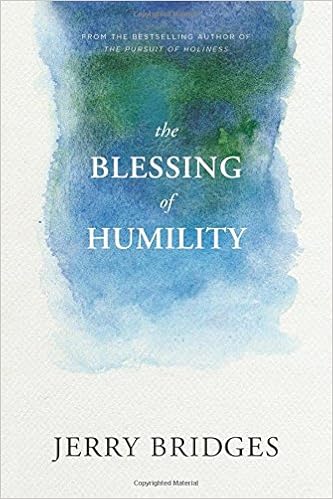
At a short 95 pages, The Blessing of Humility uses the beatitudes as a launch-pad for exploring humility. Quite honestly, I would never have made the connections between the beatitudes and humility that Bridges did, but I believe he is correct. He describes them as "humility in action."
There are several good books on humility (and, of course, CS Lewis' chapter in Mere Christianity) and this is a welcome addition. If you are interested, may I humbly recommend this excellent little book.
03 April 2016
Practice Humility, Not Haughtiness
Pride goes before destruction, and a haughty spirit before a fall.-Proverbs 16:18
If someone is described as haughty, it means that they are arrogantly proud and in ways feel superior to others. The Bible warns against treating others with haughtiness and arrogance, but too often Christians do. In light of God's graciousness toward us, we should be amongst the most humble and loving people, but we are not. We look down upon nonbelievers who don't really understand the way the world works. We also feel smugly superior to other believers who don't understand the depths and the nuances of the faith quite like we do. I recently scanned a couple of articles criticizing a popular Christian movie that was recently released. One was titled "I'm a Christian and I hate Christian movies."
In some ways, I understand the sentiment. The longer I am a Christian, the more I desire to see beauty expressed artistically, including through movies. Christian fiction often lacks grit, is too black and white, and is subpar entertainment. I am glad for conversations that explore truth through various fields, not the least of which is art. I am glad for conversations that explore the redemptive themes of "secular" movies, books, and music.
However, as believers, I think we need to be thoughtful, humble, and cautious about how we respond to how other believers who do things differently than we do. When we look down our noses at other believers, it has the potential of showing the non-believing world that we are much more interested in squabbling than in loving other-centeredness.
1 Peter 3:15 tells us to be prepared to give an answer to anyone who asks, but to do so with gentleness and respect. Haughtiness towards others--believers or not--lacks gentleness and respect. We need to think humbly and lovingly about how to discuss these concerns when they arise. Christ told his disciples that the world has the right to judge Christians based upon how we love one another (see Francis Schaeffer's Mark of the Christian).
So when you differ, make sure to check your pride at the door.
If someone is described as haughty, it means that they are arrogantly proud and in ways feel superior to others. The Bible warns against treating others with haughtiness and arrogance, but too often Christians do. In light of God's graciousness toward us, we should be amongst the most humble and loving people, but we are not. We look down upon nonbelievers who don't really understand the way the world works. We also feel smugly superior to other believers who don't understand the depths and the nuances of the faith quite like we do. I recently scanned a couple of articles criticizing a popular Christian movie that was recently released. One was titled "I'm a Christian and I hate Christian movies."
In some ways, I understand the sentiment. The longer I am a Christian, the more I desire to see beauty expressed artistically, including through movies. Christian fiction often lacks grit, is too black and white, and is subpar entertainment. I am glad for conversations that explore truth through various fields, not the least of which is art. I am glad for conversations that explore the redemptive themes of "secular" movies, books, and music.
However, as believers, I think we need to be thoughtful, humble, and cautious about how we respond to how other believers who do things differently than we do. When we look down our noses at other believers, it has the potential of showing the non-believing world that we are much more interested in squabbling than in loving other-centeredness.
1 Peter 3:15 tells us to be prepared to give an answer to anyone who asks, but to do so with gentleness and respect. Haughtiness towards others--believers or not--lacks gentleness and respect. We need to think humbly and lovingly about how to discuss these concerns when they arise. Christ told his disciples that the world has the right to judge Christians based upon how we love one another (see Francis Schaeffer's Mark of the Christian).
So when you differ, make sure to check your pride at the door.
04 June 2015
One of my Favorite Sermons:Blessed Self-Forgetfulness
 One of my favorite books is a short little book called The Freedom of Self-Forgetfulness by Tim Keller. At just 46 pages, I can read it through in a half-hour or so and usually read it a couple of times per year. Earlier today, I was looking into buying copies of this book to give out to as many people as I could. I found that if I bought 100, I could get them for 1 pound each, but shipping was about half of that again. So, to get 100 shipped here would be $222, which is more than I want to spend.
But today, I came across the sermon that this little book is based upon. In fact, it is almost word for word and you get to hear Tim Keller's inflections and humor come through. If you want to buy a copy, great. If not, I would strongly recommend the sermon. It will only take you about 35 minutes.
14 August 2014
Foundational Ideas: Self-Denial/Humility
One of the more bothersome things that I see both inside and
outside of the church is our self-centeredness. I am not sure if it is due to
the culture in which we were raised, but it seems to me that many of us are
quite certain we are the center of the world. The world exists to serve us. Our
thoughts are self-serving. Not only are we self-centered, but as Larry Crabb
talks about in his book Men and Women, we justify our self-centeredness. We find ways to make it okay for us to act
like our own needs are preeminent.
However, we are called to forget ourselves. Jesus reminded us
to take up our crosses, deny ourselves daily, and follow him. In his book
Christless Christianity, Michael Horton is quick to remind us that God is not a
player in our story, we are players in His.
We exist for him and his glory. God is the creator of all things and the
only one worthy of devotion. The person who helped me to see this most clearly
was John Piper. His book Desiring God was profoundly influential in my life,
though the glory of God drips from much of what he writes or says. As he says, God is most glorified in us, when
we are most satisfied in him. Indeed, he
is our supreme treasure, and worthy of glory.
Beyond that, however, our lives are to be offered in service to others,
which involves setting aside ourselves (humility) and willingly giving of
ourselves for others.
One of the most useful little books I have found
in this regard is Timothy Keller’s The Freedom of Self-Forgetfulness, though
there have been some other good books on humility written as well.
17 June 2014
Mutual Humility
Peter said to him, "you shall never wash my feet." Jesus answered him, "If I do not wash you, you have no share with me." -John 13:8
In the final hours of his life, Jesus shared a meal and fellowship with his closest disciples. After they ate, he rose from dinner, tied a towel around his waist, filled a basin with water, and proceeded to wash the feet of his twelve dinner companions. When he came to Peter, he resisted Jesus. He was not about to allow his Lord to do something as disgusting as washing his feet. That was a job for servants, not saviors.
In response, Jesus said, "If I do not wash you, you have no share with me." He could have honored Peter's request and skipped over him, but he did not. There was a lesson his disciples needed to hear. Theirs was to be a life of service to one another regardless of their station in life.
We often hear the words "mutual submission" as a model for how to relate to one another. That is a useful term, but as I was meditating on this story today, the words that stirred in me were "mutual humility." Jesus' incarnation was the ultimate act of God humbling himself for the benefit of mankind, yet his earthly life was also one of humble servanthood. He was eager to meet the needs of the hopeless and the downtrodden.
In this story, I was struck by the interaction between Jesus and Peter. The incarnate Lord was serving, just as he always did, but Peter did not want to be served and so he resisted. In response, Jesus firmly told Peter that humbling himself and allowing himself to be served was a part of the Christian life and that would require humility.
I think it is much easier for Christians to accept the call to serve others (though we often fail at that too) than it is to be served. Allowing others to meet our needs feels weak, perhaps even humiliating. Yet what Christ is calling his people to is not just that we serve, but also a humble willingness to be served by one another.
The Christian life is not an individualistic life; it requires mutual humility.
In the final hours of his life, Jesus shared a meal and fellowship with his closest disciples. After they ate, he rose from dinner, tied a towel around his waist, filled a basin with water, and proceeded to wash the feet of his twelve dinner companions. When he came to Peter, he resisted Jesus. He was not about to allow his Lord to do something as disgusting as washing his feet. That was a job for servants, not saviors.
We often hear the words "mutual submission" as a model for how to relate to one another. That is a useful term, but as I was meditating on this story today, the words that stirred in me were "mutual humility." Jesus' incarnation was the ultimate act of God humbling himself for the benefit of mankind, yet his earthly life was also one of humble servanthood. He was eager to meet the needs of the hopeless and the downtrodden.
In this story, I was struck by the interaction between Jesus and Peter. The incarnate Lord was serving, just as he always did, but Peter did not want to be served and so he resisted. In response, Jesus firmly told Peter that humbling himself and allowing himself to be served was a part of the Christian life and that would require humility.
I think it is much easier for Christians to accept the call to serve others (though we often fail at that too) than it is to be served. Allowing others to meet our needs feels weak, perhaps even humiliating. Yet what Christ is calling his people to is not just that we serve, but also a humble willingness to be served by one another.
The Christian life is not an individualistic life; it requires mutual humility.
13 April 2013
Book Review: Humble Orthodoxy

Having said that, the words that fill these 61 pages are important for many Christians today, particularly those of us who seem to enjoy living in the subculture of reformed theology and the Christian blogosphere where humility is often seemingly absent.
Early on in the book, Harris writes "it seems like a lot of the people who care about orthodoxy are jerks" (p. 3). Reading his words bites a little bit for me because I am someone who does care about orthodoxy (=right thinking/right beliefs) a great deal. I also recognize in myself a tendency to be arrogant about those beliefs; however, I think my year spent in the Centurions Program has helped me to slow down in how I respond to others.
Micah 6:8 reminds us to do justly, love mercy and walk humbly. In other words, truth matters, but we must present it mercifully and humbly.
25 January 2012
CJ Mahaney's reinstatement
I am sharing this story not because I expect you all to know or care who CJ Mahaney is, but rather, because of the way this situation was handled, I thought it worth mentioning. Several months ago, CJ Mahaney, the then president of Sovereign Grace Ministries, faced accusations from a former SGM leader. He stepped out of his role and the board convened a panel to review the evidence against Mahaney. Their report back today reveals a board that sought to approach a very difficult decision biblically, took their time, and admitted their own faults. CJ has been restored to the presidency of the organization, but he writes that he expects this to be a temporary move as he hopes to get back into pastoral ministry. You can read a synopsis here.
From my perspective, as a far outsider, Mahaney appeared to handle this well, both during this trial and now afterward. He wrote a book on humility, which I commend to everyone, and he appears to have practiced what he wrote during this time. I do hope he will resume sharing his wisdom with the rest of us in the cheap seats.
From my perspective, as a far outsider, Mahaney appeared to handle this well, both during this trial and now afterward. He wrote a book on humility, which I commend to everyone, and he appears to have practiced what he wrote during this time. I do hope he will resume sharing his wisdom with the rest of us in the cheap seats.
28 November 2009
Samson's Weakness
 As a young boy, I found great joy listening to the story of Samson and Delilah at my grandmother's side. She would read me tales of kings, and large fish, and a perfect garden, but none intrigued me like the story of Samson. In my memory, Samson was the strongest of the strong, informed partly from the Bible story, but also, I assume from the caricatures presented through Hanna-Barbera renditions of Samson & Delilah or their short-lived series, Young Samson and Goliath. Samson was a long-haired, ultra-masculine body builder type who never backed down from a challenge. He was, in my understanding, without weakness.
As an adult, I have developed a richer appreciation of the story of Samson. His physical strength was indeed without equal. He tore apart a lion with his bare hands (Judges 14:6). He killed 30 men and took their garments (Judges 14:19). He even killed 1000 men with the jawbone of a donkey (Judges 15:15).
Story after story in Judges 14-16 testify to Samson's physical prowess. Intermixed, however, we also read of Samson's prominent weaknesses, which I missed as a child. As I have pondered these two stories, Samson was beset by two significant sins that face many men today--lust and pride.
When Samson first to be married, he saw a Philistine woman and requested her for his wife. His parents asked that he consider someone from his own tribe. Samson is unrelenting, saying "Get her for me, for she is right in my eyes." He appeared to lust for her, which affected his ability to accept wise counsel. Although this experience allowed opportunity for Samson to exercise God's judgment against the Philistines, in the meantime, he was taken advantage of and his wife was given to another man. Later, Samson goes in to a prostitute in Gaza and is nearly ambushed by the Gazites.
"After this he loved a woman in the valley of Sorek, whose name was Delilah" (Judges 16:4), again a woman not of his tribe. This woman, Delilah, was to be his downfall--first because of lust and later because of pride. Delilah continually pesters Samson about the source of his strength and he continually lies to her. When he finally does reveal to her the source, she cuts his hair and calls in the Philistines. He attempts to rise against them, not knowing that God had left him. They gouge out his eyes and set him as a slave.
His prayer in 16:28 finally reveals a sense of humility, "O Lord God, please remember me and please strengthen me only this once, O God, that I may be avenged on the Philistines for my two eyes" and God once again strengthens him because he acknowledged that his strength was from God and from no other source.
I pray that men today would learn lessons from Samson. Not that Samson was an Ultimate Fighting Champion, but that lust and pride led to his blindness and enslavement, and ultimately to his death. Samson's strength, and ours, comes through our weakness and the Lord's strength and good favor.
05 October 2009
Positions of worship
Recently at church, we were singing a popular worship song that included the lines:
We stand and lift up our hands, for the joy of the Lord is our strength
We bow down and worship him now, how great how awesome is He.
People often lift their hands as they sing this song (and many other worship songs). Admittedly, it may difficult to continue to sing a lively worship number while genuflecting, but I cannot recall the last time when I saw someone bow down in [a Protestant] church, even during prayer. I suppose I personally don't bow down for fear of embarrassment.
Throughout both Testaments, there is evidence of both raising hands (Psalm 63:4, Psalm 141:2, Lamentations 3:41) and bowing low (Isaiah 51:14, Psalm 95:6), but what I find interesting is what the two positions suggest. From my perspective, in our society at least, raising hands suggests an offering of loving praise whereas bowing low suggests a brokenness of spirit--an acknowledgement of unworthiness--such as we see from the tax collector in Luke 18 who averted his eyes from heaven.
I believe that both positions can demonstrate worship, but to me, happily singing "we bow down and worship him now" seems out of place. The song is joyful, bowing down is contrite. They don't easily fit together.
As we worship God individually and corporately, let us not forget the One we worship is perfectly holy and worthy of our fear (Isaiah 6, Revelation 15). I think that too often we lose sight of His glory in our worship and it simply becomes about singing happy songs to Jesus. God loves us and He sent His son to die for us, but He is also glorious.
John knew this better than anyone. He was the "beloved" disciple (John 21) and wrote effusively about the love of Christ but when he encountered Christ in his Glory, he "fell at as His feet as if dead" (Revelation 1:12-18). For John, it was no stretch to see Christ as both perfectly loving and deserving of fear. We should seek the same.
Phillipians 2:9 Therefore God has highly exalted him and bestowed on him the name that is above every name, so that at the name of Jesus every knee should bow, in heaven and on earth and under the earth, and every tongue confess that Jesus Christ is Lord, to the glory of God the Father.
We stand and lift up our hands, for the joy of the Lord is our strength
We bow down and worship him now, how great how awesome is He.
People often lift their hands as they sing this song (and many other worship songs). Admittedly, it may difficult to continue to sing a lively worship number while genuflecting, but I cannot recall the last time when I saw someone bow down in [a Protestant] church, even during prayer. I suppose I personally don't bow down for fear of embarrassment.
Throughout both Testaments, there is evidence of both raising hands (Psalm 63:4, Psalm 141:2, Lamentations 3:41) and bowing low (Isaiah 51:14, Psalm 95:6), but what I find interesting is what the two positions suggest. From my perspective, in our society at least, raising hands suggests an offering of loving praise whereas bowing low suggests a brokenness of spirit--an acknowledgement of unworthiness--such as we see from the tax collector in Luke 18 who averted his eyes from heaven.
I believe that both positions can demonstrate worship, but to me, happily singing "we bow down and worship him now" seems out of place. The song is joyful, bowing down is contrite. They don't easily fit together.
As we worship God individually and corporately, let us not forget the One we worship is perfectly holy and worthy of our fear (Isaiah 6, Revelation 15). I think that too often we lose sight of His glory in our worship and it simply becomes about singing happy songs to Jesus. God loves us and He sent His son to die for us, but He is also glorious.
John knew this better than anyone. He was the "beloved" disciple (John 21) and wrote effusively about the love of Christ but when he encountered Christ in his Glory, he "fell at as His feet as if dead" (Revelation 1:12-18). For John, it was no stretch to see Christ as both perfectly loving and deserving of fear. We should seek the same.
Phillipians 2:9 Therefore God has highly exalted him and bestowed on him the name that is above every name, so that at the name of Jesus every knee should bow, in heaven and on earth and under the earth, and every tongue confess that Jesus Christ is Lord, to the glory of God the Father.
06 September 2009
Judge one another?
Over the past several weeks, I have struggled with understanding Christian judgment or perhaps more accurately, loving correction. There are reasonably clear admonitions against judging one another, most memorably (to me anyway) in Matthew 7:4 "Or how can you say to your brother, ‘Let me take the speck out of your eye,’ when there is the log in your own eye?" and Luke 6:37 "Judge not, and you will not be judged; condemn not, and you will not be condemned." I understand this admonition. What I have trouble figuring out is when, and how, are Christians to lovingly correct one another. Here are some things to keep in mind:
God is our Judge. He loves His people, but make no mistake, He will pass judgment on all. Ecclesiastes 12:14 tells us that "For God will bring every deed into judgment, with every secret thing, whether good or evil." In fact, in reading through the Old Testament, we frequently see evidence of God's judgment. It is only through Jesus' sacrifice that we are washed of our sins. So God the father is a righteous judge, but what about Jesus?
Considering that the Father and the Son are one, Jesus clearly has a role in judgment, which is evident in Revelation. During His earthly ministry, though, He stated that His role was not to judge, but to save. John 12:47-48 "If anyone hears my words and does not keep them, I do not judge him; for I did not come to judge the world but to save the world. The one who rejects me and does not receive my words has a judge; the word that I have spoken will judge him on the last day." With that said, He did not encourage people to sin freely. Consider the woman at the well. After all of her accusers left, "Jesus stood up and said to her, “Woman, where are they? Has no one condemned you?” She said, “No one, Lord.” And Jesus said, 'Neither do I condemn you; go, and from now on sin no more'" (John 8:10-11). He acts with incredible mercy, but does not let her off the hook to continue in a sinful lifestyle.
But what about us? Admittedly, that whole plank-eye thing is pretty convicting, yet we are also called to sharpen, confront, even rebuke, one another (e.g., Proverbs 27:17, James 5:16, Titus 1:13). Jesus instructed His followers "Do not judge by appearances, but judge with right judgment" (John 7:24). So we are called to "judge", but how do we do that? I think Jared Wilson provides two worthwhile recommendations (p. 134):
(I liberally consulted the chapter "Jesus the Judge" from Jared Wilson's Your Jesus is Too Safe in writing this post. I would highly commend the book).
God is our Judge. He loves His people, but make no mistake, He will pass judgment on all. Ecclesiastes 12:14 tells us that "For God will bring every deed into judgment, with every secret thing, whether good or evil." In fact, in reading through the Old Testament, we frequently see evidence of God's judgment. It is only through Jesus' sacrifice that we are washed of our sins. So God the father is a righteous judge, but what about Jesus?
Considering that the Father and the Son are one, Jesus clearly has a role in judgment, which is evident in Revelation. During His earthly ministry, though, He stated that His role was not to judge, but to save. John 12:47-48 "If anyone hears my words and does not keep them, I do not judge him; for I did not come to judge the world but to save the world. The one who rejects me and does not receive my words has a judge; the word that I have spoken will judge him on the last day." With that said, He did not encourage people to sin freely. Consider the woman at the well. After all of her accusers left, "Jesus stood up and said to her, “Woman, where are they? Has no one condemned you?” She said, “No one, Lord.” And Jesus said, 'Neither do I condemn you; go, and from now on sin no more'" (John 8:10-11). He acts with incredible mercy, but does not let her off the hook to continue in a sinful lifestyle.
But what about us? Admittedly, that whole plank-eye thing is pretty convicting, yet we are also called to sharpen, confront, even rebuke, one another (e.g., Proverbs 27:17, James 5:16, Titus 1:13). Jesus instructed His followers "Do not judge by appearances, but judge with right judgment" (John 7:24). So we are called to "judge", but how do we do that? I think Jared Wilson provides two worthwhile recommendations (p. 134):
- We're responsible for our brothers in Christ, to bring discipline and conviction to each other in the hopes of making the body of Christ holy as God is holy.
- We have no business judging people who are not Christians.
(I liberally consulted the chapter "Jesus the Judge" from Jared Wilson's Your Jesus is Too Safe in writing this post. I would highly commend the book).
28 July 2009
Responding to man's praise
"Thus says the Lord: 'Let not the wise man boast in his wisdom, let not the mighty man boast in his might, let not the rich man boast in his riches, but let him who boasts boast in this, that he understands and knows me, that I am the Lord who practices steadfast love, justice, and righteousness in the earth. For in these things I delight, declares the Lord.”-Jeremiah 9:23-24.
As I talk with others about our call to adopt, I often hear, "you are such a good person" or "I am so proud of you." When I hear these accolades, I do not know how to respond. No matter what I say, it somehow becomes about me. Replying with a simple "thank you" sends the message, "I appreciate your recognition that I am a good person." But adoption is not about me as a parent. Rather, adoption is about providing a loving home for a child and, ultimately, glorifying Christ and living out the Great Commission.
The irony is that even responding truthfully somehow becomes about me. If, instead of "thank you," I said "I feel God has called our family to adopt and I am just following His direction for my life," I appear self-righteous, because it implies "I am more in tune with God than you are." So I am left searching for a response that directs the attention away from me and onto Christ.
If I falter or fail to respond when you bestow unjust accolades, please forgive me. If I seem arrogant or self-righteous, grant me forgiveness in that too. I am still learning how to divert the focus away from me and to instead boast in the Lord.
As I talk with others about our call to adopt, I often hear, "you are such a good person" or "I am so proud of you." When I hear these accolades, I do not know how to respond. No matter what I say, it somehow becomes about me. Replying with a simple "thank you" sends the message, "I appreciate your recognition that I am a good person." But adoption is not about me as a parent. Rather, adoption is about providing a loving home for a child and, ultimately, glorifying Christ and living out the Great Commission.
The irony is that even responding truthfully somehow becomes about me. If, instead of "thank you," I said "I feel God has called our family to adopt and I am just following His direction for my life," I appear self-righteous, because it implies "I am more in tune with God than you are." So I am left searching for a response that directs the attention away from me and onto Christ.
If I falter or fail to respond when you bestow unjust accolades, please forgive me. If I seem arrogant or self-righteous, grant me forgiveness in that too. I am still learning how to divert the focus away from me and to instead boast in the Lord.
Subscribe to:
Posts (Atom)