When the days drew near for him to be taken up, he set his face to go to Jerusalem. And he sent messengers ahead of him, who went and entered a vilate of the Samaritans, to make preparations for him. But the people did not receive him, because his face was set toward Jerusalem. And when his disciples James and John saw it, they said, "Lord, do you want us to tell fire to come down from heaven and consume them?" But he turned and rebuked them. And they went on to another village.--Luke 9:51-56
I was struck by this passage this morning. Jesus and his disciples are not received in a Samaritan village and James and John, the "Sons of Thunder," offered to call fire down. They wanted to seem some action. Imagine this scene.
Weary from a long day on a hot, dusty road, Jesus and his disciples entered the village as the sky was growing dusky. A band of rag-tag men, unfamiliar to the townsfolk, aroused suspicion. Jesus asked his disciples to inquire if there might be a place for them to rest for the night. At each door, they faced hard stares and firm nos. Some of the disciples were disappointed, some anxious, and some angry. All of the were tired. James and John were once again riding the waves of their feelings. With fire in their eyes, they asked their teacher, "Do you remember the story of Sodom and Gomorrah? Do you want us to call down fire like that?"
Jesus turned and caught both of their eyes. Looking back and forth between them with a mix of conviction and compassion, he rebuked them. "Guys, you are going to face disappointments and even downright attack if you follow me, but mine is not the way of retaliation, but the way of love. If you want to be my disciples, you must move beyond your desire for retribution and power and instead begin to practice compassion and peace."
Something shifted in John that day. He had always been sure that the Messiah would be a man of might, come to set things right by his power, but it was dawning on him that perhaps his understanding of power was all mixed up. What if ultimate power resided not in destruction but in love? As he continued to learn to live the Jesus way, he embraced love as the way to live.
When we pay attention, the stories in the Bible show us that people change because of Jesus. If we listen to him, we can change too, from angry, retributive victims, to loving, peaceful servants.

Showing posts with label love. Show all posts
Showing posts with label love. Show all posts
05 August 2017

29 February 2016
Flying into the sunshine
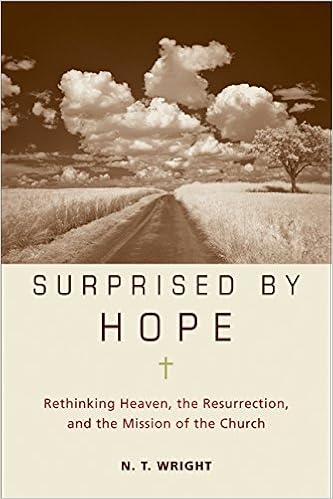
I just finished NT Wright's book, Surprised by Hope. His final paragraph is worth reproducing here.
In our incomplete world God's gentle offer and demand press upon us as fearful things, almost threatening. God in his gentle love longs to set us free from the prison we have stumbled into--the loveless prison where we refuse both the offer and the demand of forgiveness. We are like a frightened bird before him, shrinking away lest this demand crush us completely. But when we eventually yield--when he corners us and finally takes us in his hand--we find to our astonishment that he is infinitely gentle and that his only aim is to release us from our prison, to set us free to be the people he made us to be. But when we fly out into the sunshine, how can we not then offer the same gentle gift of freedom, of forgiveness, to those around us? That is the truth of the resurrection, turned into prayer, turned into forgiveness and remission of debts, turned into love. It is constantly surprising, constantly full of hope, constantly coming back to us from God's future to shape us into the people through whom God can carry out the work in the world.--NT Wright, Surprised by Hope, page 289.
This also calls to mind a verse upon which I have been meditating today: "As a prisoner of the Lord, I urge you: Live a life that is worthy of the calling He has graciously extended to you. Be humble. Be gentle. Be patient. Tolerate one another in an atmosphere thick with love.-Ephesians 4:1-2 (The Voice)

In our incomplete world God's gentle offer and demand press upon us as fearful things, almost threatening. God in his gentle love longs to set us free from the prison we have stumbled into--the loveless prison where we refuse both the offer and the demand of forgiveness. We are like a frightened bird before him, shrinking away lest this demand crush us completely. But when we eventually yield--when he corners us and finally takes us in his hand--we find to our astonishment that he is infinitely gentle and that his only aim is to release us from our prison, to set us free to be the people he made us to be. But when we fly out into the sunshine, how can we not then offer the same gentle gift of freedom, of forgiveness, to those around us? That is the truth of the resurrection, turned into prayer, turned into forgiveness and remission of debts, turned into love. It is constantly surprising, constantly full of hope, constantly coming back to us from God's future to shape us into the people through whom God can carry out the work in the world.--NT Wright, Surprised by Hope, page 289.
This also calls to mind a verse upon which I have been meditating today: "As a prisoner of the Lord, I urge you: Live a life that is worthy of the calling He has graciously extended to you. Be humble. Be gentle. Be patient. Tolerate one another in an atmosphere thick with love.-Ephesians 4:1-2 (The Voice)
08 August 2015
You Matter
Here were some words I shared today from the roof of the Living Room.
About a week
ago, Mark Halvorsen emailed me and told me about this event and asked if I
would be interested in saying a few words as the Spirit led. I immediately
jumped at the chance. You see my passion, my burden, is to get the word out
that Jesus loves sinners. But then, as
the week went on, I began to doubt. I began to think, I don’t have anything to
offer. I’m just going to get in the way. So, I texted Mark and said, are you
sure you want me there? Are you sure Ron wants me there? I’m willing to speak, but I don’t want to be
there just to take up space.
Mark said, “I am going to speak truth to you. Your worry that you
are just here to fill space is a lie from Satan.” Immediately, I felt unburdened. I felt the conviction to speak
and the fire to speak rekindled. You see, Mark is right. Satan does not like people to hear that Jesus
loves sinners. So, let me say a few
words before Mark comes up.
02 August 2015
Becoming a Both/And Christian
Over the years, one of the topics that I have given the most thought to has been the balance of truth and love. In my experience, most Christians don't do it well. On the one hand, there are those who are crusaders for truth. They know their Bibles well--at least parts of it. They are prophetic voices, speaking with conviction and clarity about issues facing the church and the world--abortion, sanctity of marriage, and religious freedom, to name a few. The church, the world, needs these prophets.
But too often, they fail to recognize that the Bible tells us that we should let everything we do be done in love (1 Corinthians 16:14). They use their words as weapons. Their primary goal is to win the argument, not love the person. And in so doing, they become clanging cymbals.
On the other hand, there are those who fail to take a stand for seemingly hard biblical truths. They know their Bibles well--at least parts of it. They assume that to be loving, they should not speak difficult truths to people and so they say nothing. Their desire is to bring comfort and hope to a hurting world. They promote a feet on the ground ministry of mercy, binding up wounds and feeding the hungry.
But too often, in their desire to be loving, they promote a soft, convictionless tolerance. They are content when the church conforms to culture, so long as they don't take hard stands.
But, the church needs more both/and Christians. We need the truth crusaders to continue to speak prophetically, but who recognize that words can harm. They need to act with gentleness and respect. They need to understand that a failure to control the tongue can ultimately harm the cause of Christ.
We need the other group to understand that failure to speak is ultimately a failure to love. They need to know that truth matters in real, tangible ways in the lives of every person they seek to love. They need to learn that a failure to use the tongue can ultimately harm the cause of Christ.
We need both/and Christians. Truth and love. Prophets and priests. We need Christians to do what is right (stand for truth), to do so with mercy, all with a spirit of godly humility.
No, O people, the Lord has told you what is good,
and this is what he requires of you:
to do what is right, to love mercy,
and to walk humbly with your God.
-Micah 6:8 (NLT)
But too often, they fail to recognize that the Bible tells us that we should let everything we do be done in love (1 Corinthians 16:14). They use their words as weapons. Their primary goal is to win the argument, not love the person. And in so doing, they become clanging cymbals.
On the other hand, there are those who fail to take a stand for seemingly hard biblical truths. They know their Bibles well--at least parts of it. They assume that to be loving, they should not speak difficult truths to people and so they say nothing. Their desire is to bring comfort and hope to a hurting world. They promote a feet on the ground ministry of mercy, binding up wounds and feeding the hungry.
But too often, in their desire to be loving, they promote a soft, convictionless tolerance. They are content when the church conforms to culture, so long as they don't take hard stands.
But, the church needs more both/and Christians. We need the truth crusaders to continue to speak prophetically, but who recognize that words can harm. They need to act with gentleness and respect. They need to understand that a failure to control the tongue can ultimately harm the cause of Christ.
We need the other group to understand that failure to speak is ultimately a failure to love. They need to know that truth matters in real, tangible ways in the lives of every person they seek to love. They need to learn that a failure to use the tongue can ultimately harm the cause of Christ.
We need both/and Christians. Truth and love. Prophets and priests. We need Christians to do what is right (stand for truth), to do so with mercy, all with a spirit of godly humility.
No, O people, the Lord has told you what is good,
and this is what he requires of you:
to do what is right, to love mercy,
and to walk humbly with your God.
-Micah 6:8 (NLT)
27 May 2015
My Top 10 Favorite Sermon Jams Plus One
Are you needing encouragement? Check these out? In fact, bookmark this page and visit it often.
28 March 2015
Without Objection
And he said to them, “You yourselves know how unlawful it is for a Jew to associate with or to visit anyone of another nation, but God has shown me that I should not call any person common or unclean. So when I was sent for, I came without objection. I ask then why you sent for me.-Acts 10:28-29
Peter, an apostle of Jesus and a Jew by birth, had a hard time shedding his Old Covenant clothes. He had spent 3 years in the physical presence of Jesus, watching him love in a way that was unexpected. After Jesus' ascension, Peter was foundational to the growth of the early church, just as Jesus had said he would be, yet it was difficult for him to set aside his old ways.
Acts 10 tells the story of a Roman Centurion, Cornelius, who gave alms and prayed to God daily. An angel appeared to him and told him that his prayers had been answered and that he should seek out Peter, so he sent men to seek him.
 At the time, Peter was living in Joppa, presenting the gospel of grace to the Jewish people, and otherwise seeking to uphold the law. Before the arrival of Cornelius's men, Peter was given a vision, repeated 3 times. He was hungry and God told him to kill and eat a host of unclean animals. Peter resisted, but God insisted that Peter should not call common or unclean what God has called clean.
After seeing this vision, men arrive and Peter accompanies them to the home of Cornelius, where he had gathered many of his friends. And Peter said to them, "You yourselves know how unlawful it is for a Jew to associate with or to visit with anyone of another nation, but God has shown me that I should not call any person common or unclean" (Acts 10:28).
Pay attention to the time course. Peter had already spent years with Jesus. He had heard the gospel of grace. Yet, he clung to his old ways. God continued to challenge him to grow and develop gospel lenses. In this case, he was challenged to set aside the law that said he should not associate with those outside of his club and to love without objection.
Do you ever find yourself acting like Peter? Do you ever find yourself reluctant to approach certain people because they are "common or unclean"? Do you tend to focus on the people who are like you but avoid showing love to those who are not? Like Peter, Christ's love challenges us to move toward others with his love, even if we don't think they fit the mold.
Peter, an apostle of Jesus and a Jew by birth, had a hard time shedding his Old Covenant clothes. He had spent 3 years in the physical presence of Jesus, watching him love in a way that was unexpected. After Jesus' ascension, Peter was foundational to the growth of the early church, just as Jesus had said he would be, yet it was difficult for him to set aside his old ways.
Acts 10 tells the story of a Roman Centurion, Cornelius, who gave alms and prayed to God daily. An angel appeared to him and told him that his prayers had been answered and that he should seek out Peter, so he sent men to seek him.
 At the time, Peter was living in Joppa, presenting the gospel of grace to the Jewish people, and otherwise seeking to uphold the law. Before the arrival of Cornelius's men, Peter was given a vision, repeated 3 times. He was hungry and God told him to kill and eat a host of unclean animals. Peter resisted, but God insisted that Peter should not call common or unclean what God has called clean.
 After seeing this vision, men arrive and Peter accompanies them to the home of Cornelius, where he had gathered many of his friends. And Peter said to them, "You yourselves know how unlawful it is for a Jew to associate with or to visit with anyone of another nation, but God has shown me that I should not call any person common or unclean" (Acts 10:28).
Pay attention to the time course. Peter had already spent years with Jesus. He had heard the gospel of grace. Yet, he clung to his old ways. God continued to challenge him to grow and develop gospel lenses. In this case, he was challenged to set aside the law that said he should not associate with those outside of his club and to love without objection.
Do you ever find yourself acting like Peter? Do you ever find yourself reluctant to approach certain people because they are "common or unclean"? Do you tend to focus on the people who are like you but avoid showing love to those who are not? Like Peter, Christ's love challenges us to move toward others with his love, even if we don't think they fit the mold.
12 March 2015
Book Review: Bold Love

Bold Love is a bold book about forgiveness, relationship, and deep love. The authors open the book by discussing what seems to be the unreasonableness of love. Love is a great ideal, but often it just does not make sense. The authors then enter into an exploration of bold, biblical love--the kind that is other centered, desires redeemed relationships, and honors God. Love is not tolerance; it is a much higher ethic.
This book was a bit of a slow starter for me. If I am honest, I initially was unsure why my friends were so taken with it, but as I proceeded, I could see why. There is much to commend here.
Here are a few tidbits that really struck me:
*Love is a sacrifice for the undeserving that opens the door to restoration of relationship with the Father, with others, and with ourselves.
*The greatest gift this life offers is the joy of forming Christ in others.
*Forgiveness is inviting the one who harmed you to a banquet of fine food and wine that you have prepared so that he might have a taste of life.
*In many cases, love will unnerve, offend, hurt, disturb, and compel the one who is loved to deal with the internal disease that is robbing him and others of joy.
*When someone gives love, it should be with a strength that does not fear the loss of the relationship.
*The powerful voice is one that falters but perseveres.
Weaving together powerful stories, biblical wisdom, and a knowledge of the human condition, Bold Love is a winner.
02 October 2014
Book Review: Unshockable Love

On the whole, I think this book gives an important message. Too often, we look like Pharisees, not Christ, in terms of how we relate to others. We are called first to love, and this book helps show the way.
I received a complementary copy of this book from Baker Books for purposes of review. I was not required to submit a positive review of this book.
02 September 2014
The Way of Self Centeredness
The "love chapter", 1 Corinthians 13, is familiar to many of us. Perhaps too familiar. It is a classic wedding reading and its words fill many greeting cards. I was reading it again this morning and was reminded what a dynamite chapter it really is. Most of us casually handle these few verses like some comfortable trinket, tossing them into a junk drawer until we happen to be rummaging around and happen back upon it when we think, "oh, I used to love this chapter." We must guard against that mistake.
As I was pondering the words of 1 Corinthians 13 this morning, I began to think about love's opposite. Elie Wiesel has said that "the opposite of love is not hate, but indifference." I am not sure that is exactly right, but it begins to get at truth. I also think that the opposite of love, at least a part of it, is self-centeredness.
I learned from David Powlison that sometimes writing passages out as their opposite adds new clarity to the intended meaning. I know that for me it did. I tried to come at this passage with no pre-conceived ideas about what might emerge by rendering its opposite. I am grieved to see myself in so many elements here.
The Way of Self Centeredness
Self-centeredness is demanding and rude. Self-centeredness wants what other people have. It draws attention to itself, bragging in its accomplishments and abilities, embellishing stories and puffing itself up. It is mean-spirited and unkind. It demands that others follow its protocol--its way or the highway. Self-centeredness is set-off easily, irritation rising to the surface at the slightest provocation, particularly when it observes others getting what it believes it deserves. Self-centeredness accepts wrongdoing when it improves its position and it rejects the truth when it does not. Self-centeredness quits when relationships are hard, it is chronically suspicious, it expects things to get worse. Self-centeredness drops out of the race of life as soon as it develops a stitch in its side.
Self-centeredness is a quitter.
May these words help you to understand the way of self-centeredness and the way of love more deeply.

O merciful Father,
Forgive us for our self-centeredness and the many ways in which we justify it,
Make us more loving and other-centered, as you have steadfastly loved us.
Apart from your mercy and grace, we are undone.
May we glorify you in love.
As I was pondering the words of 1 Corinthians 13 this morning, I began to think about love's opposite. Elie Wiesel has said that "the opposite of love is not hate, but indifference." I am not sure that is exactly right, but it begins to get at truth. I also think that the opposite of love, at least a part of it, is self-centeredness.
I learned from David Powlison that sometimes writing passages out as their opposite adds new clarity to the intended meaning. I know that for me it did. I tried to come at this passage with no pre-conceived ideas about what might emerge by rendering its opposite. I am grieved to see myself in so many elements here.
The Way of Self Centeredness
Self-centeredness is demanding and rude. Self-centeredness wants what other people have. It draws attention to itself, bragging in its accomplishments and abilities, embellishing stories and puffing itself up. It is mean-spirited and unkind. It demands that others follow its protocol--its way or the highway. Self-centeredness is set-off easily, irritation rising to the surface at the slightest provocation, particularly when it observes others getting what it believes it deserves. Self-centeredness accepts wrongdoing when it improves its position and it rejects the truth when it does not. Self-centeredness quits when relationships are hard, it is chronically suspicious, it expects things to get worse. Self-centeredness drops out of the race of life as soon as it develops a stitch in its side.
Self-centeredness is a quitter.
May these words help you to understand the way of self-centeredness and the way of love more deeply.
O merciful Father,
Forgive us for our self-centeredness and the many ways in which we justify it,
Make us more loving and other-centered, as you have steadfastly loved us.
Apart from your mercy and grace, we are undone.
May we glorify you in love.
27 November 2013
How He Loves
"That God, in eternity, looked upon me, forseeing my fallenness, my pride, my sin and said 'I want that man in my family. I would do anything to get him in my family. I will pay for him to be in my family with my son's life.' That's love folks. That is mega, off-the-charts love!"-John Piper
23 October 2013
Remembering Clady
When my mom and I moved to the house across from the church, he and his wife Dorothy already lived next door, in the house to the East. Neither of those homes are there anymore. Its a parking lot now. Clayton (aka, Clady) Voskuil is also gone. He was 82 years old when he died in 1994.
I was reading my Bible this morning and talking with God when He brought Clady to mind. I cannot really say why. I haven't thought about him in well over a decade. I spent some time reminiscing about the years I got to spend with him and thanking God for him.
My mother and I moved to Superior Avenue just before I was to begin the first grade. The home we rented was owned by Clady's younger brother Hunk, a kind and generous man in his own right. My grandmother, cut from the same generational cloth, lived a block to the East. The senior pastor and his family lived directly across the street. We lived there until the year before I began the eighth grade and it was the place we lived the longest when I was a boy.
To my recollection, I wasn't a particularly ill-mannered boy and generally respected my elders. Still, I was busy. I was generally outside from the morning until dusk engaging in fantastical adventures, taking stuff apart, or riding my bike around the block for hours on end. No doubt, I was probably a disturber of the peace, especially to those whose children were long departed from the home.
Clady loved this rambunctious boy. I would find him tinkering in his garage and I would go over and visit with him. My mom got me a t-shirt around that time that said "Motomouth", so I suspect that I talked his ear off, yet I don't ever recall him asking me to be quiet. He listened to me with interest, regardless of the topic.
He not only listened, he taught. He would show me things in his garage or in his home and tell me about them. He had the most beautiful raspberries in his garden. They were large and plump, which in hindsight strikes me as odd because he had diverticulitis and would find it impossible to ingest the seeds. Nevertheless, he would teach me about his garden, about how it required attention and a loving hand over the long haul.
One of my fondest memories of him was that he took me for a walk along the railroad tracks. He had an old single shot 20 gauge shotgun he brought along for me to shoot. He seemed frail to me by that time, but we walked slow. It was not the pace, but the time together that was important.
Looking back, I realize what a blessing Clady was to me. He loved me right where I was in life. He showed me grace and patience. As I was thinking about him this morning, it struck me how kind and gentle he was. I hope that when I am older I can love another as well as he loved me.
I was reading my Bible this morning and talking with God when He brought Clady to mind. I cannot really say why. I haven't thought about him in well over a decade. I spent some time reminiscing about the years I got to spend with him and thanking God for him.
My mother and I moved to Superior Avenue just before I was to begin the first grade. The home we rented was owned by Clady's younger brother Hunk, a kind and generous man in his own right. My grandmother, cut from the same generational cloth, lived a block to the East. The senior pastor and his family lived directly across the street. We lived there until the year before I began the eighth grade and it was the place we lived the longest when I was a boy.
To my recollection, I wasn't a particularly ill-mannered boy and generally respected my elders. Still, I was busy. I was generally outside from the morning until dusk engaging in fantastical adventures, taking stuff apart, or riding my bike around the block for hours on end. No doubt, I was probably a disturber of the peace, especially to those whose children were long departed from the home.
Clady loved this rambunctious boy. I would find him tinkering in his garage and I would go over and visit with him. My mom got me a t-shirt around that time that said "Motomouth", so I suspect that I talked his ear off, yet I don't ever recall him asking me to be quiet. He listened to me with interest, regardless of the topic.
He not only listened, he taught. He would show me things in his garage or in his home and tell me about them. He had the most beautiful raspberries in his garden. They were large and plump, which in hindsight strikes me as odd because he had diverticulitis and would find it impossible to ingest the seeds. Nevertheless, he would teach me about his garden, about how it required attention and a loving hand over the long haul.
One of my fondest memories of him was that he took me for a walk along the railroad tracks. He had an old single shot 20 gauge shotgun he brought along for me to shoot. He seemed frail to me by that time, but we walked slow. It was not the pace, but the time together that was important.
Looking back, I realize what a blessing Clady was to me. He loved me right where I was in life. He showed me grace and patience. As I was thinking about him this morning, it struck me how kind and gentle he was. I hope that when I am older I can love another as well as he loved me.
05 July 2013
First Knight: Themes of Islam and Christianity

Yesterday, I was listening to a lecture from Ravi Zacharias, the excellent apologist and evangelist. He was sharing a discussion he had with a Muslim individual who pointed out that Islam was the fastest growing religion in the world. Zacharias responded to the effect that it was the fastest growing forced religion in the world and that if the leaders would take their feet off the neck of their people, its growth would cease. Indeed, in many countries, compliance with Islam is the law and failure to comply results in death. Indeed, if someone converts to another religion they are killed if they do not manage escape.
As I thought about this teaching on my walk this morning, I began thinking about the 1995 movie, First Knight, starring Richard Gere, Sean Connery, and Julia Ormond. The movie is based upon the legend of Arthur of Camelot and essentially focuses on the love triangle between King Arthur, Sir Lancelot, and Lady Guinevere. However, there is also an important back story that involves another character by the name of Malagant. Malagant is a former member of the round table who has left Camelot to lead his own band of rebels, wreaking havoc on the countryside.
Malagant has gathered to himself a band of submissive followers who do exactly as he commands. In one scene, to demonstrate his power, he punches one of his right and men in the face and the man apologizes to him for having done wrong though he was blameless in the situation. Eventually, Malagant makes a move and briefly takes over Camelot through a strong show of power. He insists that might makes right. Out of love for their fallen king, however, the people of Camelot surge and oust Malagant.
 The essence of Islam is submission--indeed the word Islam means submission. Many "converts" are added through forced compliance. In Islamic countries, failure to comply with Islam results in death. Conversely, Christianity is a religion of freedom. Christianity does not force converts. Indeed, we know that it cannot. Christianity is a religion of love. John 13:34-35 says "A new commandment I give to you, that you love one another: just as I have loved you, you also are to love one another. By this all people will know that you are my disciples, if you have love for one another."
 In the movie, freedom and love triumph over forced submission and control. Arthur, in his sacrificial death for his people, defeats Malegant.
The same will prove true for Christianity and Islam.
03 November 2012
Uncaused, Undeserved Love
Thoughts from AW Tozer, from The Knowledge of the Holy: "We are sure that there is in us nothing that could attract the love of One as holy and as just as Thou art. Yet Thou hast declared Thine unchanging love for us in Christ Jesus. If nothing in us can win Thy love, nothing in the universe can prevent Thee from loving us. Thy love is uncaused and undeserved. Thou art Thyself the reason for the love wherewith we are loved. Help us to believe the intensity, the eternity of the love that has found us. Then love will cast out fear; and our troubled hearts will be at peace, trusting not in what we are but in what Thou hast declared Thyself to be."
08 June 2012
Tolerance, Acceptance, and Love
"Jesus was all about acceptance, not hate."
"We are supposed to be tolerant of others' beliefs."
Tolerance and acceptance have been cultural buzzwords for a years. People often ascribe to Jesus the "virtues" of tolerance and acceptance. Whenever I see that, the first question I want to ask is "what do you mean by that?" In this case, in many cases, definitions matter. If we fail to understand what someone is trying to communicate, we run the risk of misinterpreting them.
In my experience, when people describe Jesus as tolerant, they often mean that he would approve of any choice, lifestyle, or behavior. This is often accompanied by the statement "the Bible says don't judge", which also requires clarification of definitions, but that is a discussion for a different time. The same trends are often seen with the idea of acceptance.
Because I have heard these terms so often, I decided to look them up in the Bible. The word tolerance is never mentioned in the Bible. Its root word, "tolerate" is mentioned twice in the ESV. The first one in Esther 3:8 has little to do with the idea of tolerance alluded to above. In Revelation 2:20, the concept seems to be the opposite. In the letter to the church at Thyatira, "the words of the son of God" condemn the church's tolerance for Jezebel who seduced and taught people to engage in idolatry and sexual immorality. The NIV also translates Habakkuk 1:13 using the word tolerate; it reads "your eyes are too pure to look on evil, you cannot tolerate wrong." Acceptance and its variants have more entries. Searching accept, acceptance, and accepting, I came up with 63 entries. None of these are consistent with the concept of God accepting sinfulness.
Conversely, the word "love" appears 506 times in the Bible. When Jesus was asked what was the greatest command, he told the people that they were to love God with all their heart, soul, and mind and love their neighbors as themselves. (Matthew 22:36-38). But I think we need to be careful to understand what biblical love means. Here are some things I do not think it means:
I do not think it means "tolerance". In other words, I see no biblical evidence suggesting that God is willing to overlook sin. Indeed, tolerance for sin was held against the church at Thyatira. If we are to make disciples (Matthew 28), that means we teach them what God's word says. God hates sin. God loves people. The only way those things are reconciled is through the blood of Christ.
I do not think it means "judgment". A common criticism of many Christians is that they are judgmental. I think that is a fair, albeit painful critique. Too often, Christians walk the beaches of humanity with a "sin detector". When we discover little scraps of sin, we say "a-ha! I got you!" I do not believe that is loving either.
Ephesians 4:15 tells us to speak truth in love. Micah 6:8 says to do justice, love kindness, and walk humbly with God. We are not to neglect truth and justice. We are all sinners. We will all one day face God's judgment. We cannot downplay that message. Yet, we must not neglect love and kindness. We must weep with those who weep and mourn with those who mourn. We must take a long view of sanctification. David Powlison described progressive sanctification is often like a yo-yo going up a flight up steps. There will be ups and downs, but there is a general trend toward growth in Christlikeness. We must love people fully where they are at, but not neglect holding up the mirror of Scripture.
I have been wrestling with these concepts for a long time. I expect to continue to do so for the rest of my life. If you find yourself equating tolerance with love, or judgment with love, I would encourage you to dig into the scriptures as well, praying that God will reveal to us the true meaning of love.
"We are supposed to be tolerant of others' beliefs."
Tolerance and acceptance have been cultural buzzwords for a years. People often ascribe to Jesus the "virtues" of tolerance and acceptance. Whenever I see that, the first question I want to ask is "what do you mean by that?" In this case, in many cases, definitions matter. If we fail to understand what someone is trying to communicate, we run the risk of misinterpreting them.
In my experience, when people describe Jesus as tolerant, they often mean that he would approve of any choice, lifestyle, or behavior. This is often accompanied by the statement "the Bible says don't judge", which also requires clarification of definitions, but that is a discussion for a different time. The same trends are often seen with the idea of acceptance.
Because I have heard these terms so often, I decided to look them up in the Bible. The word tolerance is never mentioned in the Bible. Its root word, "tolerate" is mentioned twice in the ESV. The first one in Esther 3:8 has little to do with the idea of tolerance alluded to above. In Revelation 2:20, the concept seems to be the opposite. In the letter to the church at Thyatira, "the words of the son of God" condemn the church's tolerance for Jezebel who seduced and taught people to engage in idolatry and sexual immorality. The NIV also translates Habakkuk 1:13 using the word tolerate; it reads "your eyes are too pure to look on evil, you cannot tolerate wrong." Acceptance and its variants have more entries. Searching accept, acceptance, and accepting, I came up with 63 entries. None of these are consistent with the concept of God accepting sinfulness.
Conversely, the word "love" appears 506 times in the Bible. When Jesus was asked what was the greatest command, he told the people that they were to love God with all their heart, soul, and mind and love their neighbors as themselves. (Matthew 22:36-38). But I think we need to be careful to understand what biblical love means. Here are some things I do not think it means:
I do not think it means "tolerance". In other words, I see no biblical evidence suggesting that God is willing to overlook sin. Indeed, tolerance for sin was held against the church at Thyatira. If we are to make disciples (Matthew 28), that means we teach them what God's word says. God hates sin. God loves people. The only way those things are reconciled is through the blood of Christ.
I do not think it means "judgment". A common criticism of many Christians is that they are judgmental. I think that is a fair, albeit painful critique. Too often, Christians walk the beaches of humanity with a "sin detector". When we discover little scraps of sin, we say "a-ha! I got you!" I do not believe that is loving either.
Ephesians 4:15 tells us to speak truth in love. Micah 6:8 says to do justice, love kindness, and walk humbly with God. We are not to neglect truth and justice. We are all sinners. We will all one day face God's judgment. We cannot downplay that message. Yet, we must not neglect love and kindness. We must weep with those who weep and mourn with those who mourn. We must take a long view of sanctification. David Powlison described progressive sanctification is often like a yo-yo going up a flight up steps. There will be ups and downs, but there is a general trend toward growth in Christlikeness. We must love people fully where they are at, but not neglect holding up the mirror of Scripture.
I have been wrestling with these concepts for a long time. I expect to continue to do so for the rest of my life. If you find yourself equating tolerance with love, or judgment with love, I would encourage you to dig into the scriptures as well, praying that God will reveal to us the true meaning of love.
04 January 2012
Use your strength on your people
Last night, we had the singles group at our house and we talked about marriage together with the members of our small group. One of the questions they asked had to do with fostering friendships once married. I communicated to them that I have seen my relationships change since married and that it is often difficult to maintain them in the same way. But that doesn't mean they aren't worth fighting for.
A dear friend of mine is very good at intentionally fostering relationships with friends and loving them well. I explained that for me, it is much easier to fall into the rut of not calling others, not pursuing them. This morning, I was struck by 1 John 4:20 says, "if anyone says, 'I love God,' and hates his brother, he is a liar, for he who does not love his brother whom he has seen cannot love God whom he has not seen." This leads me to ask myself, am I loving my brothers and sisters well or am I, like the writer of Proverbs says isolating myself so as to seek out my own desires (Proverbs 18:1).
I am challenged to do a better job of intentionally pursuing relationships with others whom I do not normally interact with at church. I specifically need to pray that God enables me to love well those whom I would not normally seek out. 1 Chronicles 19:13 says, "be strong, and let us use our strength for our people and for the cities of God, and may the Lord do what seems good to him."
Let us use our strength for our people.
Daily Reading: Matthew 12, Numbers 15, Hebrews 12, 1 John 4, Ecclesiastes 10, Psalm 137, Proverbs 18, 1 Chronicles 19, Ezekiel 45, Romans 13
A dear friend of mine is very good at intentionally fostering relationships with friends and loving them well. I explained that for me, it is much easier to fall into the rut of not calling others, not pursuing them. This morning, I was struck by 1 John 4:20 says, "if anyone says, 'I love God,' and hates his brother, he is a liar, for he who does not love his brother whom he has seen cannot love God whom he has not seen." This leads me to ask myself, am I loving my brothers and sisters well or am I, like the writer of Proverbs says isolating myself so as to seek out my own desires (Proverbs 18:1).
I am challenged to do a better job of intentionally pursuing relationships with others whom I do not normally interact with at church. I specifically need to pray that God enables me to love well those whom I would not normally seek out. 1 Chronicles 19:13 says, "be strong, and let us use our strength for our people and for the cities of God, and may the Lord do what seems good to him."
Let us use our strength for our people.
Daily Reading: Matthew 12, Numbers 15, Hebrews 12, 1 John 4, Ecclesiastes 10, Psalm 137, Proverbs 18, 1 Chronicles 19, Ezekiel 45, Romans 13
12 September 2011
Closed Ears and Open Mouths
Do not let any unwholesome talk come out of your mouths, but only what
is helpful for building others up according to their needs, that it may
benefit those who listen.-Ephesians 4:29
I read with great interest the blog post "Ask a Calvinist" on Rachel Held Evans blog on September 8. Ms Held-Evans has been featuring a series of posts where her readers pose questions to individuals representing various positions, within and outside of Christianity. She chose Justin Taylor to answer the questions about Calvinism. Mr Taylor was certainly a good choice. He has a handle upon the current climate within Calvinism, having previously worked as John Piper's personal assistant and now as a vice president at Crossway Books. He also authors the popular blog, Between Two Worlds. Taylor fielded many of the common objections to Calvinism, providing what I read to be gracious informative responses, though admittedly, I consider myself inside his camp theologically.
Held-Evans's initial post generated significant interest as demonstrated by the comments provided by her readership. Before public commenting was closed, 223 responses were generated. Although the comments started amicably enough, they seemed to devolve rather quickly into ad hominem attacks and straw man arguments. There was also a lack of awareness of church history (e.g., Calvin's role in the burning of Michael Servetus), which is not necessarily a fault of the commenter, though seemed to reveal an attitude of animosity toward John Calvin and Calvinism. One commenter compared the Calvinist God to Satan. To her credit, Ms Held-Evans attempted to reign in the particularly egregious commenters.
Justin Taylor provided a link to Held-Evans post on his blog as well. Given their differing theological opinions, I expected the background, viewpoints, and stated theology of the commenters to differ from those commenting upon Held-Evans blog. Indeed that was the case. Taylor's commenters, at least early on, tended toward reformed doctrines. Like the commenters on Held-Evans blog, the comments here also began civilly enough, but unfortunately, they did not stay that way. Commenters were questioning Held-Evans's salvation early on and the com-box again devolved into casting dispersions and emotional attacks. In the effort toward one-upsmanship, no one was listening to anyone else. Everyone was blathering on (using their keyboards, of course) but not really listening.
Admittedly, I disagree Held-Evans on many issues (e.g., complementarism vs. egalitarianism), but I really struggle when people go so far as to call her a false teacher. I am not sure that is my determination to make. Although she can be unduly provocative from time to time, she proved to be a gracious moderator on this post.
Taylor is consistently full of grace and I believe his blog posts regularly demonstrate that. Like Held-Evans, he also did not engage in the attacks that were taking place. Even though each of them clearly hold different perspectives, they were gracious and kind to one another. I wish the same could be said for their readers.
To me, it is little wonder why those outside of Christianity want nothing to do with Christianity when they see such fighting on "Christian" blogs. There is no grace, no love in this type of commenting. We often forget that blog comments are public; not only do Christians read them, so do non-Christians. We need to do a better job of speaking truth in love to one another. Disagreements can be handled with more grace than we handle them.
Today, Justin Taylor posted a fitting follow up. He shared some notes from John Newton in a post entitled "How Calvinists Should Engage in Controversy." It is worthwhile reading for all Christians.
Let your speech always be gracious, seasoned with salt, so that you may know how you ought to answer each person.-Colossians 4:6
I read with great interest the blog post "Ask a Calvinist" on Rachel Held Evans blog on September 8. Ms Held-Evans has been featuring a series of posts where her readers pose questions to individuals representing various positions, within and outside of Christianity. She chose Justin Taylor to answer the questions about Calvinism. Mr Taylor was certainly a good choice. He has a handle upon the current climate within Calvinism, having previously worked as John Piper's personal assistant and now as a vice president at Crossway Books. He also authors the popular blog, Between Two Worlds. Taylor fielded many of the common objections to Calvinism, providing what I read to be gracious informative responses, though admittedly, I consider myself inside his camp theologically.
Held-Evans's initial post generated significant interest as demonstrated by the comments provided by her readership. Before public commenting was closed, 223 responses were generated. Although the comments started amicably enough, they seemed to devolve rather quickly into ad hominem attacks and straw man arguments. There was also a lack of awareness of church history (e.g., Calvin's role in the burning of Michael Servetus), which is not necessarily a fault of the commenter, though seemed to reveal an attitude of animosity toward John Calvin and Calvinism. One commenter compared the Calvinist God to Satan. To her credit, Ms Held-Evans attempted to reign in the particularly egregious commenters.
Justin Taylor provided a link to Held-Evans post on his blog as well. Given their differing theological opinions, I expected the background, viewpoints, and stated theology of the commenters to differ from those commenting upon Held-Evans blog. Indeed that was the case. Taylor's commenters, at least early on, tended toward reformed doctrines. Like the commenters on Held-Evans blog, the comments here also began civilly enough, but unfortunately, they did not stay that way. Commenters were questioning Held-Evans's salvation early on and the com-box again devolved into casting dispersions and emotional attacks. In the effort toward one-upsmanship, no one was listening to anyone else. Everyone was blathering on (using their keyboards, of course) but not really listening.
Admittedly, I disagree Held-Evans on many issues (e.g., complementarism vs. egalitarianism), but I really struggle when people go so far as to call her a false teacher. I am not sure that is my determination to make. Although she can be unduly provocative from time to time, she proved to be a gracious moderator on this post.
Taylor is consistently full of grace and I believe his blog posts regularly demonstrate that. Like Held-Evans, he also did not engage in the attacks that were taking place. Even though each of them clearly hold different perspectives, they were gracious and kind to one another. I wish the same could be said for their readers.
To me, it is little wonder why those outside of Christianity want nothing to do with Christianity when they see such fighting on "Christian" blogs. There is no grace, no love in this type of commenting. We often forget that blog comments are public; not only do Christians read them, so do non-Christians. We need to do a better job of speaking truth in love to one another. Disagreements can be handled with more grace than we handle them.
Today, Justin Taylor posted a fitting follow up. He shared some notes from John Newton in a post entitled "How Calvinists Should Engage in Controversy." It is worthwhile reading for all Christians.
Let your speech always be gracious, seasoned with salt, so that you may know how you ought to answer each person.-Colossians 4:6
23 October 2010
Francis Schaeffer on Christian Love
"We must remember that the person to whom we are talking, however far from the Christian faith he may be, is an image-bearer of God. He has great value, and our communication to him must be in genuine love. Love is not an easy thing; it is not just an emotional urge, but an attempt to move over and sit in the other person's place and see how his problems look to him. Love is a genuine concern for the individual "as ourselves." This is the place to begin. Therefore, to be engaged in personal "witness" as a duty or because our Christian circle exerts a social pressure on us, is to miss the whole point. The reason we do it is that the person before us is an image-bearer of God, and he is an individual who is unique to the world. This kind of communication is not cheap. To understand and speak to sincere, but utterly confused twentieth-century people is costly. It is tiring; it will open you to temptations and pressures. Genuine love, in the last analysis, means a willingness to be entirely exposed to be the person to whom we are talking. "
Francis Schaeffer, The God Who is There.
Francis Schaeffer, The God Who is There.
09 June 2010
Loving the Least of These
There are people in my life who I find it a chore to be around. They crimp my style. I feel exhausted when I speak with them. Often, I avoid interacting altogether. I screen my calls. I cut conversations short. By my actions, my unspoken prayer would seem to be, "God, send me to Africa, but please don't make me spend any more time with that person."
God doesn't treat us this way; quite the opposite. Ezekiel 34:11 reads, "For thus says the Lord God: Behold, I, I myself will search for my sheep and will seek them out." He pursues people who others ignore or avoid.
John 5 tells the story of Jesus' interaction with a man at Bethesda, a pool at the Sheep Gate in Jerusalem. We can gather that there must have been healing properties when the water was stirred up because in John 5:3, "a multitude of invalids—blind, lame, and paralyzed" lay in the colonnades. When the water was stirred, people would go down into the water.
The story, however, is not about Bethesda. It is about Jesus seeking out one of his sheep at the Sheep Gate. Jesus was in Jerusalem during a feast of the Jews (v. 1), but rather than hobnobbing with the well-to-dos, he was with the "blind, lame and paralyzed." Despite the crowd of broken people, Jesus' focus seems to have been on one man, "who had been an invalid for thirty-eight years" (v. 5). He was a reject among rejects. When Jesus asked him if he wanted to be healed, he responded, "Sir, I have no one to put me into the pool when the water is stirred up, and while I am going another steps down before me" (v. 7). Life was a struggle for this man; it had been for 38 years. He was forced to face life alone. Rather than lending a hand, people brushed him aside, stepped over him on their own way. Not only was he broken and alone, he had no hope of anything better. Then, with a simple command from Jesus, "get up, take your bed, and walk" (v. 8), the man without hope was given a renewed hope--he passed from sickness to health, from death to life.
It would have been easy for Jesus to step over this man just like everyone else had. He had disciples to teach, prayers to offer, and Pharisees to rebuke. I suspect the man would not have taken any notice. So many people had ignored him in the past, what was one more? But Jesus didn't ignore him. He saw instead a man who was ignored even by society's weakest members and he offered healing.
We are called to do the same. Matthew 25:40-46 reads "'Truly, I say to you, as you did it to one of the least of these my brothers, you did it to me.’ Then he will say to those on his left,‘Depart from me, you cursed, into the eternal fire prepared for the devil and his angels. For I was hungry and you gave me no food, I was thirsty and you gave me no drink, I was a stranger and you did not welcome me, naked and you did not clothe me, sick and in prison and you did not visit me.’ Then they also will answer, saying, ‘Lord, when did we see you hungry or thirsty or a stranger or naked or sick or in prison, and did not minister to you?’ Then he will answer them, saying, ‘Truly, I say to you, as you did not do it to one of the least of these, you did not do it to me.’ And these will go away into eternal punishment, but the righteous into eternal life."
How do we start loving the least of these?
We are the difficult people. We do not fit in. We stand out, awkwardly. And we annoy you, perplex you, vex you. We try your patience. We loathe being this way, but we cannot help it. We raise the bar of love. We call forth new patience, new kindness. "Love never fails," but many fail us. We are too damned hard to deal with We stand out by falling down. We raise the bar of love. Our hurt hurts you. Let that hurt help Let that aching pain raise the bar of love So high So high That only grace can raise it. The shape of our Cross is sharp; it cuts away life. What is the shape of your Cross before our Cross?
-Doug Groothuis
God doesn't treat us this way; quite the opposite. Ezekiel 34:11 reads, "For thus says the Lord God: Behold, I, I myself will search for my sheep and will seek them out." He pursues people who others ignore or avoid.
John 5 tells the story of Jesus' interaction with a man at Bethesda, a pool at the Sheep Gate in Jerusalem. We can gather that there must have been healing properties when the water was stirred up because in John 5:3, "a multitude of invalids—blind, lame, and paralyzed" lay in the colonnades. When the water was stirred, people would go down into the water.
The story, however, is not about Bethesda. It is about Jesus seeking out one of his sheep at the Sheep Gate. Jesus was in Jerusalem during a feast of the Jews (v. 1), but rather than hobnobbing with the well-to-dos, he was with the "blind, lame and paralyzed." Despite the crowd of broken people, Jesus' focus seems to have been on one man, "who had been an invalid for thirty-eight years" (v. 5). He was a reject among rejects. When Jesus asked him if he wanted to be healed, he responded, "Sir, I have no one to put me into the pool when the water is stirred up, and while I am going another steps down before me" (v. 7). Life was a struggle for this man; it had been for 38 years. He was forced to face life alone. Rather than lending a hand, people brushed him aside, stepped over him on their own way. Not only was he broken and alone, he had no hope of anything better. Then, with a simple command from Jesus, "get up, take your bed, and walk" (v. 8), the man without hope was given a renewed hope--he passed from sickness to health, from death to life.
It would have been easy for Jesus to step over this man just like everyone else had. He had disciples to teach, prayers to offer, and Pharisees to rebuke. I suspect the man would not have taken any notice. So many people had ignored him in the past, what was one more? But Jesus didn't ignore him. He saw instead a man who was ignored even by society's weakest members and he offered healing.
We are called to do the same. Matthew 25:40-46 reads "'Truly, I say to you, as you did it to one of the least of these my brothers, you did it to me.’ Then he will say to those on his left,‘Depart from me, you cursed, into the eternal fire prepared for the devil and his angels. For I was hungry and you gave me no food, I was thirsty and you gave me no drink, I was a stranger and you did not welcome me, naked and you did not clothe me, sick and in prison and you did not visit me.’ Then they also will answer, saying, ‘Lord, when did we see you hungry or thirsty or a stranger or naked or sick or in prison, and did not minister to you?’ Then he will answer them, saying, ‘Truly, I say to you, as you did not do it to one of the least of these, you did not do it to me.’ And these will go away into eternal punishment, but the righteous into eternal life."
How do we start loving the least of these?
- Pray for wisdom--in knowing how to approach people that make you uncomfortable. Pray for forgiveness--for not loving others as Christ loved you. Pray for revelation--for eyes that see hurting people as Christ would see them.
- Actively seek out difficult people. Ed Welch, of the Christian Counseling and Education Foundation calls this “Moving Toward” others. There are people, in the church and outside of it, who actively send the message to stay away. He suggests that you lovingly move toward them anyway.
- In the midst of your interactions with others, remember that you are a forgiven child of God. He drew you out of the mire when you too were undesirable (Psalm 40).
- Remember that Christ is the source of ultimate satisfaction. He quenches your soul. He gives you streams of living water (John 4) which can refresh even in the midst of difficult circumstances.
- Don’t love people only because you expect them to change. They may not. That doesn’t change your call to love them.
- Pray again.
We are the difficult people. We do not fit in. We stand out, awkwardly. And we annoy you, perplex you, vex you. We try your patience. We loathe being this way, but we cannot help it. We raise the bar of love. We call forth new patience, new kindness. "Love never fails," but many fail us. We are too damned hard to deal with We stand out by falling down. We raise the bar of love. Our hurt hurts you. Let that hurt help Let that aching pain raise the bar of love So high So high That only grace can raise it. The shape of our Cross is sharp; it cuts away life. What is the shape of your Cross before our Cross?
-Doug Groothuis
10 March 2010
Oostburg, Islam, and the Woman at the Well
This is a hard post for me to write. I want to share some recent observations about my hometown, Oostburg, a place I still love and cherish. Much of my family lives there and so do many fond memories. The people of that town love one another fiercely.
Oostburg is a small town on the Western shore of Lake Michigan that was established by Dutch settlers in the 1840s. The community retains its Dutch identity and with that identity comes a strong Calvinistic base. Indeed, all of the churches within the village limits represent various branches of Calvinism. No Catholic churches. No Baptist. No Methodist. It has been this way as long as I remember.
From my perspective, the lack of diversity has often led to suspicion about outsiders. There seems to be a sense that people who do not fit the mold will ruin utopia. People different from the norm have felt marginalized and often judged. As a child growing up there, I was one of the few kids whose parents were divorced. After she divorced my dad, my mom was given the message in no uncertain terms, that she was no longer welcome in the church. She needed compassion... she got judgment. She needed Jesus...she got the Pharisees.
While I was completing my residency, Heather, Grace, and I moved to Oostburg. I was one of Oostburg's sons returning home and was welcomed with open arms. Heather, on the other hand, was an outsider. People looked at her with suspicion. Where did she come from? Who was she? With whom was she connected? Once the connection with me was made, she too was welcomed.
I share these back stories because I want to write about some recent developments in Oostburg. There have been discussions in the works to establish a mosque near Oostburg and the response has been unfortunate, if not predictable. In a story from the Sheboygan Press, they quoted a local pastor from his church's website:
I think that the story of the woman at the well has much application here (John 4). Jesus was passing through Samaria and stopped at Jacob's well. A Samaritan woman approached and Jesus said to her, "Give me a drink." She was taken aback because Jews did not talk to Samaritans--it was simply not done. She was also a woman, which was another strike against her. It turns out she had been married 5 times and was now living with a man who was not her husband. Another strike. She said to Jesus, "How is it that you, a Jew, ask for a drink from me, a woman of Samaria?"
Then Jesus switched from asking to offering. He told her, "Everyone who drinks of this water will be thirsty again, but whoever drinks of the water that I will give him will never be thirsty again. The water that I will give him will become in him a spring of water welling up to eternal life." In the next paragraph, he revealed himself as the Messiah and offered her salvation. She ran off to tell her people about Christ, leaving behind her water jar in the process. Verse 39 reads, "Many Samaritans from that town believed in him because of the woman's testimony". Jesus broke tradition. He loved the marginalized.
When Jesus called us to go and make disciples of all nations, he didn't mean countries, he meant people groups. That includes Dutch settlers in Wisconsin and Islamic doctors working in the US. We all need Jesus. Do not refuse a drink to others because of fear. I John 4:18 says, "There is no fear in love, but perfect love casts out fear."
If you get a chance, read these passages in their entirety:
John 4
I John 4
Take some time and watch this video as well.
Oostburg is a small town on the Western shore of Lake Michigan that was established by Dutch settlers in the 1840s. The community retains its Dutch identity and with that identity comes a strong Calvinistic base. Indeed, all of the churches within the village limits represent various branches of Calvinism. No Catholic churches. No Baptist. No Methodist. It has been this way as long as I remember.
From my perspective, the lack of diversity has often led to suspicion about outsiders. There seems to be a sense that people who do not fit the mold will ruin utopia. People different from the norm have felt marginalized and often judged. As a child growing up there, I was one of the few kids whose parents were divorced. After she divorced my dad, my mom was given the message in no uncertain terms, that she was no longer welcome in the church. She needed compassion... she got judgment. She needed Jesus...she got the Pharisees.
While I was completing my residency, Heather, Grace, and I moved to Oostburg. I was one of Oostburg's sons returning home and was welcomed with open arms. Heather, on the other hand, was an outsider. People looked at her with suspicion. Where did she come from? Who was she? With whom was she connected? Once the connection with me was made, she too was welcomed.
I share these back stories because I want to write about some recent developments in Oostburg. There have been discussions in the works to establish a mosque near Oostburg and the response has been unfortunate, if not predictable. In a story from the Sheboygan Press, they quoted a local pastor from his church's website:
- "Does this group of Muslims denounce violence against Jews, Christians, and other non-Muslims? If so, how much of a paper trail in English and Arabic has the group already written about such matters as 9-11 or the treatment of Jews and Christians in Muslim-majority countries? How much is presently written about these issues on their website? Even more importantly, what kind of accountability will be in place? Will there be a non-Muslim county or village official (that fluently reads and speaks Arabic) who will certify annually that this group is not teaching fundamentalist /terrorist ideologies? If so, who will be paying for this service? Will they seek to have legal exemptions for or special treatment because of their Muslim faith?"
I think that the story of the woman at the well has much application here (John 4). Jesus was passing through Samaria and stopped at Jacob's well. A Samaritan woman approached and Jesus said to her, "Give me a drink." She was taken aback because Jews did not talk to Samaritans--it was simply not done. She was also a woman, which was another strike against her. It turns out she had been married 5 times and was now living with a man who was not her husband. Another strike. She said to Jesus, "How is it that you, a Jew, ask for a drink from me, a woman of Samaria?"
Then Jesus switched from asking to offering. He told her, "Everyone who drinks of this water will be thirsty again, but whoever drinks of the water that I will give him will never be thirsty again. The water that I will give him will become in him a spring of water welling up to eternal life." In the next paragraph, he revealed himself as the Messiah and offered her salvation. She ran off to tell her people about Christ, leaving behind her water jar in the process. Verse 39 reads, "Many Samaritans from that town believed in him because of the woman's testimony". Jesus broke tradition. He loved the marginalized.
When Jesus called us to go and make disciples of all nations, he didn't mean countries, he meant people groups. That includes Dutch settlers in Wisconsin and Islamic doctors working in the US. We all need Jesus. Do not refuse a drink to others because of fear. I John 4:18 says, "There is no fear in love, but perfect love casts out fear."
If you get a chance, read these passages in their entirety:
John 4
I John 4
Take some time and watch this video as well.
02 March 2010
I Corinthians 13-remixed
Elyse Fitzpatrick and Dennis Johnson have written what is turning out to be an excellent book entitled, Counsel from the Cross: Connecting Broken People to the Love of Christ (2009). I am quite certain that I will have more to say about this book in upcoming days and weeks, but today I read a few paragraphs of theirs that I wanted to reproduce here. The authors suggest that we view the very familiar love passage from I Corinthian 13 from a different perspective. Rather than seeing it as a template for how we can be more loving, we should view it as a "sneak preview of what we'll see when we finally gaze upon him 'face-to-face'" (p. 62).
"As the author of language and as God’s Living Word, Jesus can speak in the tongues of men and angels, and yet he condescends to speak simple words that nourish, soothe, and delight our souls. He knows the past and the future, understands all mysteries and knowledge; has all faith and reigns as Ruler over all; and yet, his love caused him to humble himself and remove our mountain of sin. Because of his love, we who are nothing have become “beloved.” He gave away what was rightfully his, humbled himself, and delivered up his body to be burned in the scorching furnace of the wrath of his Father.
"Jesus is patient and kind; he doesn’t envy or boast. When faced with Satan’s temptation to prove his Godhood in the wilderness and on the cross, he never showed off his power. He was utterly humble. He wasn’t arrogant or rude, railing on the disciples, deserting them because of their selfish ambition. He isn’t arrogant or rude with us either. When standing before his accusers he didn’t insist that they treat him with respect, nor did he proudly demand their accolades. He was silent, like a lamb before the shearers. The humble King of heaven wore a crown of thorns and a purple cloak. He is never irritable or resentful, picking away at every little foible he sees. In love, his blood covers our multitudinous sins.
"He doesn’t gleefully rejoice when you sin, glad to finally have an opportunity to give you your comeuppance. He rejoices when you believe the truth, not simply the truth about you—that you are sinful and flawed—but also the truth about him—that he loves you and welcomes you. Out of love for you, he bears all things. He has unflinching faith and hope in your transformation because he knows the power of his love. He knows that one day he will bring you to be with himself. He has endured and continues to endure all things out of love for you. His love never ends. Never.
"Ten zillion years from now, when he has had time to really see what sort of person you are, his love won’t have worn out. In fact, he knows you through and through right now and loves you all the same. Your shameful secrets cannot shock or repel him. His love never ends. One day we will see him face-to-face and then we will fully understand, for the first time, what real love looks like." (p. 63).
"As the author of language and as God’s Living Word, Jesus can speak in the tongues of men and angels, and yet he condescends to speak simple words that nourish, soothe, and delight our souls. He knows the past and the future, understands all mysteries and knowledge; has all faith and reigns as Ruler over all; and yet, his love caused him to humble himself and remove our mountain of sin. Because of his love, we who are nothing have become “beloved.” He gave away what was rightfully his, humbled himself, and delivered up his body to be burned in the scorching furnace of the wrath of his Father.
"Jesus is patient and kind; he doesn’t envy or boast. When faced with Satan’s temptation to prove his Godhood in the wilderness and on the cross, he never showed off his power. He was utterly humble. He wasn’t arrogant or rude, railing on the disciples, deserting them because of their selfish ambition. He isn’t arrogant or rude with us either. When standing before his accusers he didn’t insist that they treat him with respect, nor did he proudly demand their accolades. He was silent, like a lamb before the shearers. The humble King of heaven wore a crown of thorns and a purple cloak. He is never irritable or resentful, picking away at every little foible he sees. In love, his blood covers our multitudinous sins.
"He doesn’t gleefully rejoice when you sin, glad to finally have an opportunity to give you your comeuppance. He rejoices when you believe the truth, not simply the truth about you—that you are sinful and flawed—but also the truth about him—that he loves you and welcomes you. Out of love for you, he bears all things. He has unflinching faith and hope in your transformation because he knows the power of his love. He knows that one day he will bring you to be with himself. He has endured and continues to endure all things out of love for you. His love never ends. Never.
"Ten zillion years from now, when he has had time to really see what sort of person you are, his love won’t have worn out. In fact, he knows you through and through right now and loves you all the same. Your shameful secrets cannot shock or repel him. His love never ends. One day we will see him face-to-face and then we will fully understand, for the first time, what real love looks like." (p. 63).
Subscribe to:
Posts (Atom)