When many people hear the word theology, they often think of old, white men pontificating about God. Often they are right. Unfortunately, theology has earned the reputation as a stale, uninteresting discipline for ivory tower academics. May it not be so.
Theology should not ultimately be analyzing a flower petal under a microscope,
it should be lying in a field of purple and yellow and white flowers, feeling the breeze on your face.
Theology should not ultimately be carefully analyzing a person's gait,
it should be dancing in time with the music, flowing fluidly across the floor.
Theology should not ultimately be theories about meter and chord progression,
it should be coming to tears as Handel's Messiah washes over you.
Theology should not ultimately be about Doppler radar and rising barometric pressures,
it should be about listening to the rain splashing against the windows, just a little scared at the crashing thunder.
Theology is the study of God, but it is a study that should drive us to worship. Theology should not ultimately be accumulating information about God, but an aid to help us bask in the presence of God.

14 November 2013

05 November 2013
Wine Cooler Christianity
 I must have been in grade school when wine coolers really became popular.
The commercials featuring the old pair, Bartles and Jaymes signing off with
"and we thank you for your support" were deeply memorable. Wine
coolers were made by combining cheap wine with fruit juice,
carbonated water, and sugar to make something that tasted better. It was tough
to get people to drink cheap wine, but when Seagram's and others sweetened it up, repackaged it
and sold it, then people were eager to buy in. It also weakened the potency
of the wine.
I must have been in grade school when wine coolers really became popular.
The commercials featuring the old pair, Bartles and Jaymes signing off with
"and we thank you for your support" were deeply memorable. Wine
coolers were made by combining cheap wine with fruit juice,
carbonated water, and sugar to make something that tasted better. It was tough
to get people to drink cheap wine, but when Seagram's and others sweetened it up, repackaged it
and sold it, then people were eager to buy in. It also weakened the potency
of the wine.
American Christianity
is too often wine cooler Christianity. The branded version of Christianity that
makes up much of the evangelical landscape is a watered down version of the
true gospel. The Christianity that is packaged for most American
consumers is too often weakened. God is presented as a kindly old man in
the sky who is interested in our morality, but never wrathful. The Ten
Commandments are reformulated as the ten suggestions for a better life.
Christianity becomes about moral improvement for the already pretty good. The
Holy Spirit becomes a help line you can call if you ever get to the point that you cannot handle things on
your own. Psalm 42:1, which reads "As a deer pants for flowing streams, so pants my soul for you" becomes a slogan to be plastered on the side of a mug, rather than an anguished
cry from a man who is desperately longing for God. Wine cooler Christianity, which
so often thrives on slogans, never keeps reading. Once the good tasting spiritual morsel is extracted, there is no need to move on. Psalm 42:3 reads,
"My tears have been my food day and night,while they say to me all the day
long, 'Where is your God?'" These words do not suggest a peaceful
stream with a majestic buck; they suggest a man who is so thirsty he will die
if God does not intervene.

If Christianity is
only about man and him improved through suggestions for successful living,
there was no need for the cross. Reinhold Niebuhr wrote, "A God without
wrath brought men without sin into a Kingdom without judgment through the
ministrations of a Christ without a Cross."
But Christianity-lite
will not suffice. The Bible teaches that God's standard is perfection in
thought and deed. None of us, even at the height of our righteousness, can hope to meet that standard. God hates sin and sin deserves His wrath. Still,
God is not only holy, he is also benevolent and gracious. The whole Bible tells
a story of God pursuing sinners who continue to rebel and, at the hingepoint of
time, Christ came not ultimately as a model to be emulated, but as a Savior to
bear the wrath for undeserving sinners. 2 Corinthians 5:21 reads, "He [God] made
him [Jesus] who knew no sin to be sin so that in him, we might become the
righteousness of God." The great exchange--our sin for his
righteousness.
Don't drink the
watered down version. You will stay thirsty.
In honor of Reformation Day just a few days ago and a faith not watered, down, I want to finish with this quote from Robert Farrar Capon:
The Reformation
was a time when people went blind-staggering drunk because they had discovered,
in the dusty basement of late medievalism, a whole cellarful of
fifteen-hundred-year-old, 200-proof grace–of bottle after bottle of pure
distillate of Scripture that would convince anyone that God saves us
single-handed.
The Word of
the Gospel, after all those centuries . . . suddenly turned out to be a flat
announcement that the saved were home free even before they started. How
foolish, then, they said, how reprehensibly misleading, they said, to take the
ministers of that Word of free, unqualified acceptance and slap enforced
celibacy on them–to make their lives bear a sticker that said they had gone an
extra mile and paid an extra toll. It was simply to hide the light of grace
under a bushel of pseudo-law. . . .
And for the
Reformers, that was a crime. Grace was to be drunk neat: no water, no ice, and
certainly no ginger ale; neither goodness, nor badness, nor the flowers that
bloom in the spring of super-spirituality could be allowed to enter that
case.
02 November 2013
He did it all perfectly
John Dink writes, "Cheap law weakens God’s demand for perfection, and in doing so, breaths
life into the old creature and his quest for a righteousness of his own
making. And what I’m telling you is this: what doesn’t kill him, makes
him stronger. Lowering the bar lets the Old Adam peek into the Promised
Land. It allows the flesh to survive by rebelling in a form of external
piety. And – it’s a perfect hiding place for the Old Being. We don’t
think to rebuke such a moral, well-mannered creature. But cheap law
offers mercy in the wrong place. It offers mercy to those who are
offended by the gift. It creates a people of great zeal, but they lack
knowledge concerning the question 'What Would Jesus Do?' Here is the
costly answer: Jesus would do it all perfectly. And that’s game over for
you. The Father is not grooming you to be a replacement for his Beloved
Son. He is announcing that there is blessing for those who take shelter
in his Beloved Son."
Read the rest here.
Read the rest here.
23 October 2013
Remembering Clady
When my mom and I moved to the house across from the church, he and his wife Dorothy already lived next door, in the house to the East. Neither of those homes are there anymore. Its a parking lot now. Clayton (aka, Clady) Voskuil is also gone. He was 82 years old when he died in 1994.
I was reading my Bible this morning and talking with God when He brought Clady to mind. I cannot really say why. I haven't thought about him in well over a decade. I spent some time reminiscing about the years I got to spend with him and thanking God for him.
My mother and I moved to Superior Avenue just before I was to begin the first grade. The home we rented was owned by Clady's younger brother Hunk, a kind and generous man in his own right. My grandmother, cut from the same generational cloth, lived a block to the East. The senior pastor and his family lived directly across the street. We lived there until the year before I began the eighth grade and it was the place we lived the longest when I was a boy.
To my recollection, I wasn't a particularly ill-mannered boy and generally respected my elders. Still, I was busy. I was generally outside from the morning until dusk engaging in fantastical adventures, taking stuff apart, or riding my bike around the block for hours on end. No doubt, I was probably a disturber of the peace, especially to those whose children were long departed from the home.
Clady loved this rambunctious boy. I would find him tinkering in his garage and I would go over and visit with him. My mom got me a t-shirt around that time that said "Motomouth", so I suspect that I talked his ear off, yet I don't ever recall him asking me to be quiet. He listened to me with interest, regardless of the topic.
He not only listened, he taught. He would show me things in his garage or in his home and tell me about them. He had the most beautiful raspberries in his garden. They were large and plump, which in hindsight strikes me as odd because he had diverticulitis and would find it impossible to ingest the seeds. Nevertheless, he would teach me about his garden, about how it required attention and a loving hand over the long haul.
One of my fondest memories of him was that he took me for a walk along the railroad tracks. He had an old single shot 20 gauge shotgun he brought along for me to shoot. He seemed frail to me by that time, but we walked slow. It was not the pace, but the time together that was important.
Looking back, I realize what a blessing Clady was to me. He loved me right where I was in life. He showed me grace and patience. As I was thinking about him this morning, it struck me how kind and gentle he was. I hope that when I am older I can love another as well as he loved me.
I was reading my Bible this morning and talking with God when He brought Clady to mind. I cannot really say why. I haven't thought about him in well over a decade. I spent some time reminiscing about the years I got to spend with him and thanking God for him.
My mother and I moved to Superior Avenue just before I was to begin the first grade. The home we rented was owned by Clady's younger brother Hunk, a kind and generous man in his own right. My grandmother, cut from the same generational cloth, lived a block to the East. The senior pastor and his family lived directly across the street. We lived there until the year before I began the eighth grade and it was the place we lived the longest when I was a boy.
To my recollection, I wasn't a particularly ill-mannered boy and generally respected my elders. Still, I was busy. I was generally outside from the morning until dusk engaging in fantastical adventures, taking stuff apart, or riding my bike around the block for hours on end. No doubt, I was probably a disturber of the peace, especially to those whose children were long departed from the home.
Clady loved this rambunctious boy. I would find him tinkering in his garage and I would go over and visit with him. My mom got me a t-shirt around that time that said "Motomouth", so I suspect that I talked his ear off, yet I don't ever recall him asking me to be quiet. He listened to me with interest, regardless of the topic.
He not only listened, he taught. He would show me things in his garage or in his home and tell me about them. He had the most beautiful raspberries in his garden. They were large and plump, which in hindsight strikes me as odd because he had diverticulitis and would find it impossible to ingest the seeds. Nevertheless, he would teach me about his garden, about how it required attention and a loving hand over the long haul.
One of my fondest memories of him was that he took me for a walk along the railroad tracks. He had an old single shot 20 gauge shotgun he brought along for me to shoot. He seemed frail to me by that time, but we walked slow. It was not the pace, but the time together that was important.
Looking back, I realize what a blessing Clady was to me. He loved me right where I was in life. He showed me grace and patience. As I was thinking about him this morning, it struck me how kind and gentle he was. I hope that when I am older I can love another as well as he loved me.
22 October 2013
Book Review: Becoming a True Spiritual Community
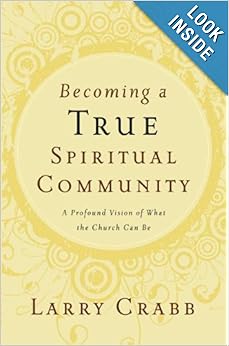
As a psychologist, I think one of the things I most appreciated about this book was his vision for what Christian psychology, or soul care, may look like. He believes that the community of the church should be the primary place for healing to take place and I think he is exactly right.
On page 178, he wrote, "In the middle of the wild ocean of shattered dreams and broken lives, the community of Christ celebrates God's forgiveness: they believe in what each other could become, they never minimize sin but they love to maximize grace. They are carriers of Christ to each other. That's what spiritual friends do when they act together to journey to God."
I would highly recommend this book. I know that there are those who have had negative reviews of this book, but I have a hard time seeing why. If you are one of those people, I would hope that you would be able to dialog about it in spiritual community.
Devil's Snare

Sometimes, I am amazed when I haven't seen something before. This morning, I was driving to Rice Lake, listening to a teaching and appreciating the beauty of God's paintbrush on the hillsides surrounding the highway. For some reason, I thought of the plant Devil's Snare in the first Harry Potter installment. Devil's Snare is a plant that rapidly envelops those who come too near. It immobilizes the person, squeezing the life out of them. Devil's Snare is a plant that only grows in the dark and is destroyed by exposure to the light.
This is such an accurate description of the life of sin. Sin is the devil's snare and he, the father of darkness, knows that our sin will grow best where no light exists. When we leave our sin in the dark, trying to keep it from the light of the gospel, it will immobilize and envelop us.
John opened his gospel with these words: "In the beginning was the Word, and the Word was with God, and the Word was God. He was in the beginning with God. All things were made through him, and without him was not any thing made that was made. In him was life, and the life was the light of men. The light shines in the darkness, and the darkness has not overcome it."-John 1:1-5. Jesus is the Light who destroys the devil's snare. He alone is able to shine His light into the dark corners of our lives and release us from the bondage to our sin.
21 October 2013
Interrupting the Cycle of Titillation
For many years, pornography was a struggle for me. I found myself gripped by it. I hated looking at it, but I kept looking anyway, loathing myself afterward. I would seem to escape from its grip for a time and then would plunge back in. Over the years, I began to recognize a cycle that would occur. The cycle would often begin with seemingly innocent things, but would progress to much more explicit material.
By God's grace, I can recognize this pattern earlier now than I used to and put the brakes on, seeking the Spirit's deliverance. Just the other day, I was reading the news. There were a variety of stories--some about politics, some about good Samaritan acts, some about sports. But what I found was that when I would come across stories with a "titillating" title, the desire to read the story would be much stronger. I knew, in my heart, that I was not interested in these stories to be informed. Rather, material in these stories can provide fodder to begin the cycle of lust for me. Even very popular, and seemingly innocent, websites (for example, one where people can pin pictures) can prove titillating and so I find it best not to look at them at all.
For now, God uses these experiences to draw me to Him. When I sense these seeds being planted, I turn to Him and pray for whomever was the subject of the story. We are to seek first His kingdom and His righteousness.
I guess in some ways, sexual addiction remains a struggle for me. Not that I look, but that I know the temptation and how it affects me. I know that if I were to walk into an adult bookstore, it would be like playing with matches in a gunpowder factory. The result wouldn't be good. But God goes with me in the struggle and now helps me to see His Spirit at work much earlier.
Ephesians 5:3-4 reads, "But sexual immorality and all impurity or covetousness must not even be named among you, as is proper among saints. Let there be no filthiness nor foolish talk nor crude joking, which are out of place, but instead let there be thanksgiving."
Be careful little eyes what you see. Become aware of your triggers. Seek God and thank Him for His grace.
By God's grace, I can recognize this pattern earlier now than I used to and put the brakes on, seeking the Spirit's deliverance. Just the other day, I was reading the news. There were a variety of stories--some about politics, some about good Samaritan acts, some about sports. But what I found was that when I would come across stories with a "titillating" title, the desire to read the story would be much stronger. I knew, in my heart, that I was not interested in these stories to be informed. Rather, material in these stories can provide fodder to begin the cycle of lust for me. Even very popular, and seemingly innocent, websites (for example, one where people can pin pictures) can prove titillating and so I find it best not to look at them at all.
For now, God uses these experiences to draw me to Him. When I sense these seeds being planted, I turn to Him and pray for whomever was the subject of the story. We are to seek first His kingdom and His righteousness.
I guess in some ways, sexual addiction remains a struggle for me. Not that I look, but that I know the temptation and how it affects me. I know that if I were to walk into an adult bookstore, it would be like playing with matches in a gunpowder factory. The result wouldn't be good. But God goes with me in the struggle and now helps me to see His Spirit at work much earlier.
Ephesians 5:3-4 reads, "But sexual immorality and all impurity or covetousness must not even be named among you, as is proper among saints. Let there be no filthiness nor foolish talk nor crude joking, which are out of place, but instead let there be thanksgiving."
Be careful little eyes what you see. Become aware of your triggers. Seek God and thank Him for His grace.
12 October 2013
Review: He Has Spoken

A few weeks ago, I received a copy of their latest study curriculum, He Has Spoken: The Worldview of Scripture (2013). According to the cover from the DVD, John Stonestreet and TM Moore seek to answer the questions, "What regard is there for God's Word today? Do we rightly handle the Holy Scriptures? How ought we to respond to its authority?"
The materials consist of a 98 minute DVD and an associated study guide. If recollection serves me, the other Colson Center materials I have used are centered around the DVD with an associated discussion guide. I assumed this set would be the same way with the DVD being the primary driver. I soon discovered, however, that in the case of He Has Spoken, the DVD supports the study guide rather than vice versa. Once I realized this switch, I appreciated how well it was done. There are three basic sections.
Five Clips of John Stonestreet
On the DVD, although there are ten video clips, the first five videos include John Stonestreet addressing the following issues:
- The Idea of Revelation: Clarifying the Proper Place of Scripture
- Being Biblical: How We Miss the Point of Scripture
- The Big Picture: Grasping the Purposes of Scripture
- Not Ashamed: Trusting the Power of the Scripture
- Under the Word: Assuming a Posture Worthy of the Scripture.
Stonestreet seeks to establish that the Bible is God's revealed word to His people through both the Old and New Testaments. He makes the point that as God's revealed word, it cannot be incidental to our lives and cannot be simply a book. He commented "It has to be the ground on which we stand."
I really appreciated how Stonestreet talked about what the Bible is not, because there is a lot of confusion about this not only outside of the church, but inside as well. He suggests that we cannot see the Bible simply as a book of fragmented nuggets, love letters, or a series of stories about heroes, but rather as one story that centers on Jesus. Consistent with the mission of the Colson Center, Scripture is not only true Truth, as Francis Schaeffer would say, but should shape our entire lives as Kingdom people. Consequently, we approach the scripture with humility, obedience, expectation, repentance, and in community.
Study Guide-TM Moore
The second part consists of a study guide prepared by theologian and Dean of the Centurion program, TM Moore. Having completed the Centurion Program, I know the quality of study materials that he writes. This study guide is no exception. It contains 35 separate lessons divided into five parts of seven lessons each. The five parts are:
- The Word Which is Able to Save
- Let God Be True
- Threads in the Tapestry of Truth
- The Sword of the Spirit
- Receiving God's Word
Five Conversations--TM Moore and John Stonestreet
Finally, the conversations between Moore and Stonestreet were a real highlight for me. I have a deep respect for both of these men and to watch them interact about the materials was a blessing. I have had the chance to talk with them on a personal level and they are effective, clear communicators of the Word and Christian worldview. Essentially, in these conversations, Stonestreet would ask Moore about the materials and they would talk over them. In many regards, these conversations were also immensely practical to the Christian. They discuss issues such as how to choose a Bible without an obvious nod to one translation versus another. They suggest that you choose one you will read. After choosing a Bible, we must come to know what it says because Christians are involved in a war and this Word is our primary weapon. If we come to know the Word, we can start where people are and, using reason and the Word, we can share with them the love of God. However, they make the point that we must approach Scripture humbly, prayerfully, and with an eye to the grand story that it presents, being careful not to over-"metaphoricalize", a word I learned from Mr Stonestreet in the final conversation.
In summary, this is an excellent resource for the church. It could certainly be employed as an individual Bible study, but I believe it may be used even more effectively as a small group resource because, as we learned in this video, Scripture is meant to be studied communally. In my own church, we have made a concerted effort to help people get into the Word on a consistent basis. He Has Spoken would be of great use for Christians to deepen their own understanding of Scripture and understand its importance in their lives and in the culture. Ideally, many churches would avail themselves of this excellent set of materials which may help the Christian church reclaim their biblical literacy and subsequently improve their capacity to have an influence upon culture to the glory of God.
The Colson Center has allowed me to give away one copy of this DVD and study guide. If you are interested in being considered you can: 1) comment on this post, though I will need your email, 2) share this post on your Facebook page or Twitter (and let me know you did), or 3) retweet this post. I am sure these materials will be a blessing to you. I will do the drawing next Saturday, October 19th.
02 October 2013
A Most Wicked Addiction
Our image of addicts is often of those who are gaunt and pale, bearing a vacant expression. Sunken eyes, missing teeth, unkempt hair. They seem dodgy and untrustworthy. We just know that they will do whatever it takes to get their next fix--betray their families, steal from their neighbors, lie to their employers. If their drug of choice is a "harder" drug, we know that they probably began with a gateway drug sometime in the past. Smoking leads to alcohol leads to Marijuana leads to ecstasy leads to cocaine leads to heroin. School children hear this message beginning in Kindergarten. Movies and television programs may provide narrative flesh to the skeletal facts. Having said that, about 7% of Americans use marijuana. Less than 1% of Americans are regular users of methamphetamine, cocaine, hallucinogens, or heroin.
In contrast, 50% of Christian men and 20% of Christian women say they are addicted to pornography. 64% of college men and 18% of college women say they spend time online for Internet sex every week. Nine out ten boys have been exposed to online porn by age 18. Six out of ten girls.
The highest rate of illicit drug use is seven percent, which is for marijuana
. In contrast, pornography affects nearly everyone to some degree and it enslaves about half of Christian men and one in five Christian women. This is an epidemic the likes of which we have never seen.
No one would be surprised that drugs affect the brain. Indeed, a primary purpose of drugs is that they affect our brain chemistry and subsequently the way we think and feel. What might be more surprising is that pornography is an equally efficient engine for altering brain chemistry. The work of neuroscientist Dr William Struthers demonstrates that, as he puts it, "pornography hijacks the brain." He documents the euphoric similarities between sexual release and the use of cocaine or heroin. Pornography, with its never ending novelty and easy accessibility, provides the ultimate vehicle for rewiring the brain's reward center. Pornography is then desired more frequently while "normal" sexuality provides diminishing returns in terms of the neurochemical reward.
 The effects upon families are legion. Pornography use is a frequent contributor to marital infidelity, family breakdown, and symptoms of post-traumatic stress disorder in the spouse of the sex addict. Work productivity may diminish and people even lose jobs because of pornography usage. Much like drug use, it can have broad-ranging effects.
Unfortunately, the issue is even more egregious. In the abuse of drugs, the vehicle for intoxication is a substance--a plant, a plant derivative, or a manufactured chemical. With pornography, the intoxicating agent is a person--a divine image bearer. Sex addicts are willing to abuse real living people--even if they are not directly present--to get their next high. What's worse is that because of the constant drive for novelty, images of many different men and women are required to achieve the same "high". Furthermore, pornography also has gateway drugs. Rated R movies give way to soft-core pornography, which in turn gives way to hard-core pornography featuring all manner of deviance. For some, even this isn't enough. Too many stories exist about men and women engaging in illicit sexual encounters, adultery, prostitution, and even child pornography and child sexual abuse.
The majority of pornographic actors abuse illicit drugs, have sexually transmitted diseases, and deep emotional wounds. Consumers and performers alike become like the Nazgul, or perhaps Gollum, in Tolkien's Lord of the Rings, shells of their former selves rather than fully functioning, authentic image bearers.
The spread of pornography is one of the most significant societal concerns facing us today. Pornography affects all aspects of a person's life and the physiological and emotional addiction is often harder to break than some illicit drugs. In addition, children at their most impressionable from a developmental perspective and their greatest risk from a neurological perspective are prime targets to become addicted. And yet pornography marches on undeterred flowing into homes and smart phones at an alarming rate. Even so, schools celebrate the sexual awakening of our children and churches too often ignore it.
Neither celebration nor ignorance will be of any benefit in turning the tide of this moral crisis. Parents, schools, and churches must step up and address this issue with a multipronged attack. We must speak with our children about healthy sexuality and the dangers of pornography. We must be aware of what images are coming into our homes, careful not to give an implicit nod to things portrayed on screen that we would be uncomfortable viewing if it were happening in our living rooms. We must address these concerns on a societal level. Churches must speak out, but also must love those caught as either consumers or producers. We must also address this issue societally, speaking to the media and to our representatives. We must shed light on this issue that is too often left in the dark.
References
Struthers, W.M. (2009). Wired for intimacy: How pornography hijacks the male brain.
Pornography stats gathered from: Covenant Eyes
Want to get involved? She's Somebody's Daughter
In contrast, 50% of Christian men and 20% of Christian women say they are addicted to pornography. 64% of college men and 18% of college women say they spend time online for Internet sex every week. Nine out ten boys have been exposed to online porn by age 18. Six out of ten girls.
The highest rate of illicit drug use is seven percent, which is for marijuana
. In contrast, pornography affects nearly everyone to some degree and it enslaves about half of Christian men and one in five Christian women. This is an epidemic the likes of which we have never seen.
No one would be surprised that drugs affect the brain. Indeed, a primary purpose of drugs is that they affect our brain chemistry and subsequently the way we think and feel. What might be more surprising is that pornography is an equally efficient engine for altering brain chemistry. The work of neuroscientist Dr William Struthers demonstrates that, as he puts it, "pornography hijacks the brain." He documents the euphoric similarities between sexual release and the use of cocaine or heroin. Pornography, with its never ending novelty and easy accessibility, provides the ultimate vehicle for rewiring the brain's reward center. Pornography is then desired more frequently while "normal" sexuality provides diminishing returns in terms of the neurochemical reward.
 The effects upon families are legion. Pornography use is a frequent contributor to marital infidelity, family breakdown, and symptoms of post-traumatic stress disorder in the spouse of the sex addict. Work productivity may diminish and people even lose jobs because of pornography usage. Much like drug use, it can have broad-ranging effects.
 Unfortunately, the issue is even more egregious. In the abuse of drugs, the vehicle for intoxication is a substance--a plant, a plant derivative, or a manufactured chemical. With pornography, the intoxicating agent is a person--a divine image bearer. Sex addicts are willing to abuse real living people--even if they are not directly present--to get their next high. What's worse is that because of the constant drive for novelty, images of many different men and women are required to achieve the same "high". Furthermore, pornography also has gateway drugs. Rated R movies give way to soft-core pornography, which in turn gives way to hard-core pornography featuring all manner of deviance. For some, even this isn't enough. Too many stories exist about men and women engaging in illicit sexual encounters, adultery, prostitution, and even child pornography and child sexual abuse.
The majority of pornographic actors abuse illicit drugs, have sexually transmitted diseases, and deep emotional wounds. Consumers and performers alike become like the Nazgul, or perhaps Gollum, in Tolkien's Lord of the Rings, shells of their former selves rather than fully functioning, authentic image bearers.
The spread of pornography is one of the most significant societal concerns facing us today. Pornography affects all aspects of a person's life and the physiological and emotional addiction is often harder to break than some illicit drugs. In addition, children at their most impressionable from a developmental perspective and their greatest risk from a neurological perspective are prime targets to become addicted. And yet pornography marches on undeterred flowing into homes and smart phones at an alarming rate. Even so, schools celebrate the sexual awakening of our children and churches too often ignore it.
Neither celebration nor ignorance will be of any benefit in turning the tide of this moral crisis. Parents, schools, and churches must step up and address this issue with a multipronged attack. We must speak with our children about healthy sexuality and the dangers of pornography. We must be aware of what images are coming into our homes, careful not to give an implicit nod to things portrayed on screen that we would be uncomfortable viewing if it were happening in our living rooms. We must address these concerns on a societal level. Churches must speak out, but also must love those caught as either consumers or producers. We must also address this issue societally, speaking to the media and to our representatives. We must shed light on this issue that is too often left in the dark.
References
Struthers, W.M. (2009). Wired for intimacy: How pornography hijacks the male brain.
Pornography stats gathered from: Covenant Eyes
Want to get involved? She's Somebody's Daughter
Subscribe to:
Posts (Atom)