I wrote about being flawed saints just a few days ago, and I do not need to repeat my words. However, because the idea is so central to my thinking, I wanted to mention it again.

13 August 2014
Foundational Ideas: Flawed Saints
I wrote about being flawed saints just a few days ago, and I do not need to repeat my words. However, because the idea is so central to my thinking, I wanted to mention it again.

12 August 2014
Foundational Ideas: Relationality
As I continue to explore what I consider ideas foundational to my thinking, the second is relationality. The importance of relationship is a cardinal belief in my
worldview. As a Christian, I believe that God exists as a trinity. Three persons, one God. From eternity past,
God has existed in perfect, Trinitarian relationship. The three of them have
engaged in a beautiful dance forever—what some have called perichoresis. They
are mutually serving and other focused, always joyful and always loving.
Humans were also created to relate. I think one big part of
bearing the image of God is that we are relational beings. We exist to function
in relationship. It is in our DNA. In the garden of Eden, Adam and Eve lived
together harmoniously with one another and with God, who walked with them in
the garden. There was no shame, no hiddenness. But at the fall in Genesis 3,
man hid himself from God and he covered himself up. Shame had entered the picture which carried
with it a drawing back in relationship, an isolation.
Nevertheless, the need for relational connection continues.
As humans, we require accepting, loving, gracious relationships with other
people. Unfortunately, those are often broken. Some of the psychological
literature on the importance of early attachment and how it can become broken
is profound in its implications and it is supported by the Bible, which reminds
us that we were made to relate.
Perhaps the person who helped me to see this best was Larry
Crabb. Essentially all of Dr Crabb’s books deal with the importance of relating
with one another, though I would happily recommend Becoming a True Spiritual Community and Connecting. Furthermore,
through Dr Crabb, I heard about the works of Darryl Johnson (Experiencing theTrinity) and Michael Reeves (Delighting in the Trinity). Yet the most important thing you can do is
begin to live in relationship with one another. Practice moving toward people
in the middle of their mess, a concept I learned from Ed Welch. Failure to address our poor relating will be detrimental
to Christ’s church.
"A new commandment I give to you, that you love one another: just as I have loved you, you are to love one another. By this all people will know you are my disciples, if you love one another."-John 13:34-35
"A new commandment I give to you, that you love one another: just as I have loved you, you are to love one another. By this all people will know you are my disciples, if you love one another."-John 13:34-35
The Invisibility Cloak
 Hopelessness is a terrible thing. It is dark. Oppressive. Under the heavy cloak of hopelessness, there is no apparent relief. Just pain. The news of Robin Williams' apparent suicide yesterday was just one more story of many lives affected by depression. Mr Williams, one of the funniest men who ever lived, struggled with depression. When most of us think of his career, we remember Mrs Doubtfire, Mork from Ork, or the Genie from Aladdin, but I wonder if the opening scene from Patch Adams better captured his reality. If you cannot recall the scene, he admitted himself to a psychiatric hospital in the midst of a significant depression. He "acted" depressed really well, perhaps because he understood.
 11 August 2014
Foundational Ideas: Worldview Matters
Since
returning from the School of Spiritual Direction and on the heels of the
Centurions program, I have been pondering my framework of belief. In other
words, what is my worldview. Over the next few days, I hope to share what I consider to be several ideas that are currently foundational to how I think about the world.
Perhaps the most important place to start a multipart
discussion like is with a review of worldview and how it matters to what we do.
I like to think of worldview as our operating system. It often runs in the
background and colors, or informs, how we see the world and what assumptions we
make about the world.
Stand To Reason
Breakpoint
The Francis Schaeffer Trilogy
Total Truth by Nancy Pearcy
How Now Shall We Live by Chuck Colson and Nancy Pearcey
09 August 2014
Book Review: Blue Like Jazz
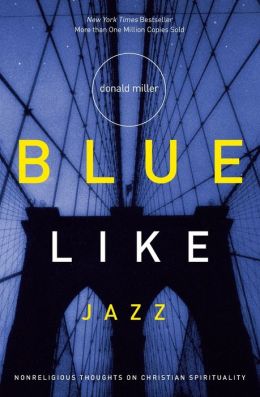
Blue Like Jazz is a memoir of sorts, Miller's wrestlings with the fundamentalist tradition in which he was raised and the Christian Spirituality to which he was drawn. His focus was primarily upon the years of early adulthood, which are formative for all of us. With paper and ink, he poignantly described his journey.
There were many things I liked about this book. Miller appears to write with transparency, authenticity, and honesty. He puts into print questions that many Christians ask of themselves and others. And then he wades through them.
His commitment to the Gospel message and to following Jesus come through on nearly every page, yet he willingly admits his stumbling on the journey. For example, on page 111, he wrote "Tony asked me one time if there was anything I would die for. I had to think about it for a long time, even after thinking about it for a couple of days, I had a short list. In the end there weren't very many principles I would die for. I would die for the gospel because I think it is the only revolutionary idea known to man." However, he also admits that it is difficult for him to evangelize. He is a man of apparent contrasts.
He also wrote a lot about spending time with sinners. Sinners! As a student at Reed College in Portland, apparently one of the most liberal colleges in the the United States, and afterwords living in the woods, he had friends who were pot-smoking, promiscuous hippies. And yet, he still hung around with them. What would Jesus say about someone who hung around with non-religious sinners?
I also appreciated his stance on the importance of community. He admits that he can be somewhat of a recluse, describing himself as a battery for a power tool that needs 20 hours to recharge for 10 minutes of use. And yet, he was intentional about community. (If I recall, he has more recently gone on record saying he doesn't really need church and I would like to ask him how this new stance fits with his previous thoughts).
I can also see where people have had concerns. For one thing, it appears that he is comfortable with faith being based upon feeling and downplaying the importance of cognition/logic. I am someone who believes that Christian theism is intellectually defensible, yet I agree with him that rarely will an intellectual defense get someone to the cross. Ravi Zacharias, a speaker Miller really appears to like, has described an intellectual defense of the faith as "brush clearing", getting arguments out of the way so that people can see the cross. For me personally, I do think feeling is important, but so is cognition and volition.
There also seemed to be glimpses of intellectual superiority. Miller would write about Republicans or fundamentalists with some veiled derision. I found myself wondering if he was aware of this tendency in himself. I suspect he is, and if I were to point it out to him, I suspect he would look at me and say, "Jason, you are right on."
In sum, I liked this book. As Tim Challies wrote on his review 9 years ago, "Despite my misgivings, I found that I enjoyed this book more than I thought I might." For me, this book is a good reminder of why it is often beneficial for us to grapple with other people's works for ourselves rather than simply rely exclusively upon the insights of those who think like us. Despite some points of disagreement, Miller appears to love the Jesus of the Bible and shows him to us through this book.
07 August 2014
Book Review: Encouragement

If you want to learn how to have godly, meaningful conversations, may this book be an encouragement to you. I would like to loan my copy to all of my friends, but I will likely want to read my own again first.
Subscribe to:
Posts (Atom)