15 August 2015

Book Review: hand in Hand

I grew up attending a Reformed church (RCA) and went to an RCA college, so Calvinism, which is often seen to stress God's sovereignty, is a part of my religious DNA. As I moved around for school, I subsequently attended Baptist, Evangelical Free, Lutheran, and non-denominational churches who each placed different levels of stress on God's sovereignty and human choice, respectively.

A few years ago, I more fully embraced a Calvinistic identity. I frequented reformed blogs (e.g., Challies, Desiring God), read books by reformed writers (e.g., John Piper, John MacArthur, RC Sproul), and even attended reformed conferences. In fact, I would go so far as to say everyone else (e.g., Arminians) were wrong, though admittedly, I never bothered to actually read what they were writing.

 In fact, the Internet breeds a religious subculture of people who spend innumerable hours debating Calvinism versus Arminianism. A year or two ago, I began to recognize the ugliness Christian brethren can have for one another when they hold different theological viewpoints. I stopped actively referring to myself as "reformed" in my thinking because I think the terms "Calvinist", "reformed", and "Arminian" carry too much baggage.

I suspect Randy Alcorn had similar feelings, so he wrote hand in Hand: The beauty of God's sovereignty and meaningful human choice (2014) to attempt to explore this difficult topic. Alcorn grew up in an Arminian church but now has more Calvinist leanings and he recognizes that in each camp, there are God fearing, Bible believing Christians though their sense of balance may be different. He argues that the Bible teaches both God's sovereignty and what he calls meaningful human choice and we cannot sacrifice one at the cause of another.

Although the whole book was well researched, humble, and engaging, I particularly enjoyed his chapter "Voices from the past share timeless truths." In this chapter, he references numerous theologians through the history of the church, identifying their common ground--Arminians talking about God's sovereignty, and Calvinists talking about human choice. 

hand in Hand is an important book regardless of your theological frame of reference. It is a call to faith grounded in God's Word rather than a theological system. It is also a call to unity between believers. Regardless of your viewpoint, I would strongly recommend this book.

13 August 2015

Why Do We Bypass Each Other?

This morning, my good friend Mark shared this devotion on his radio show on WWIB. I asked him to send it to me because I wanted to think about it more.

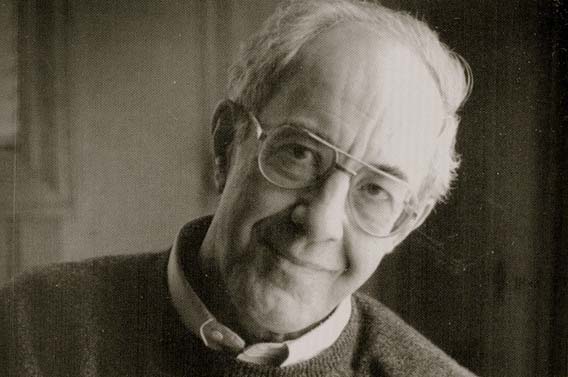
"Why is it that we keep that great gift of care so deeply hidden? Why is it that we keep giving dimes without daring to look into the face of the beggar? Why is it that we do not join the lonely eater in the dining hall but look for those we know so well? Why is it that we so seldom knock on a door or grab a phone, just to say hello, just to show that we have been thinking about each other? Why are smiles still hard to get and words of comfort so difficult to come by? Why is it so hard to express thanks to a teacher, admiration to a student, and appreciation to the men and women who cook, clean, and garden? Why do we keep bypassing each other always on the way to something or someone more important?

"Maybe simply because we ourselves are so concerned to be different from the others that we do not even allow ourselves to lay down our heavy armor and come together in a mutual vulnerability. Maybe we are so full of our own opinions, ideas and convictions that we have no space left to listen to the other and learn from him or her."-Henri Nouwen

08 August 2015

You Matter


Here were some words I shared today from the roof of the Living Room. 
 
About a week ago, Mark Halvorsen emailed me and told me about this event and asked if I would be interested in saying a few words as the Spirit led. I immediately jumped at the chance. You see my passion, my burden, is to get the word out that Jesus loves sinners.  But then, as the week went on, I began to doubt. I began to think, I don’t have anything to offer. I’m just going to get in the way. So, I texted Mark and said, are you sure you want me there? Are you sure Ron wants me there?  I’m willing to speak, but I don’t want to be there just to take up space. 

Mark said, “I am going to speak truth to you. Your worry that you are just here to fill space is a lie from Satan.”  Immediately, I felt unburdened. I felt the conviction to speak and the fire to speak rekindled. You see, Mark is right.  Satan does not like people to hear that Jesus loves sinners.  So, let me say a few words before Mark comes up.

02 August 2015

Becoming a Both/And Christian

Over the years, one of the topics that I have given the most thought to has been the balance of truth and love. In my experience, most Christians don't do it well. On the one hand, there are those who are crusaders for truth. They know their Bibles well--at least parts of it.  They are prophetic voices, speaking with conviction and clarity about issues facing the church and the world--abortion, sanctity of marriage, and religious freedom, to name a few. The church, the world, needs these prophets.

But too often, they fail to recognize that the Bible tells us that we should let everything we do be done in love (1 Corinthians 16:14). They use their words as weapons. Their primary goal is to win the argument, not love the person. And in so doing, they become clanging cymbals.

On the other hand, there are those who fail to take a stand for seemingly hard biblical truths. They know their Bibles well--at least parts of it. They assume that to be loving, they should not speak difficult truths to people and so they say nothing. Their desire is to bring comfort and hope to a hurting world. They promote a feet on the ground ministry of mercy, binding up wounds and feeding the hungry. 

But too often, in their desire to be loving, they promote a soft, convictionless tolerance. They are content when the church conforms to culture, so long as they don't take hard stands.

But, the church needs more both/and Christians. We need the truth crusaders to continue to speak prophetically, but who recognize that words can harm. They need to act with gentleness and respect. They need to understand that a failure to control the tongue can ultimately harm the cause of Christ.

We need the other group to understand that failure to speak is ultimately a failure to love. They need to know that truth matters in real, tangible ways in the lives of every person they seek to love. They need to learn that a failure to use the tongue can ultimately harm the cause of Christ.

We need both/and Christians. Truth and love. Prophets and priests. We need Christians to do what is right (stand for truth), to do so with mercy, all with a spirit of godly humility.

No, O people, the Lord has told you what is good,
    and this is what he requires of you:
to do what is right, to love mercy,
    and to walk humbly with your God.

-Micah 6:8 (NLT)

31 July 2015

First Be Reconciled

So if you are offering your gift at the altar and there remember that your brother has something against you, leave your gift there before the altar and go. First, be reconciled to your brother, then come and offer your gift.--Matthew 5:23-24

I have meditating on these words from Jesus a lot over the past week or so. I think a part of what Jesus was telling his disciples was that, more important than the activities of the church, or temple worship, or sacrifice, or tithing, were people. Jesus was telling his hearers that it is relationships that really matter. The whole Bible is about relationship--God with us, and us with one another.

Relationships are messy. Broken people loving broken people. Forgiveness and reconciliation need to be a part of the fabric of what marks us as Christians. It will likely be required of us often (In Matthew 18, Jesus mentioned something about 7x70 times). Yet, more than any other act of worship that we may be involved in--singing, tithing, service--Christ calls us to relationship. 

28 July 2015

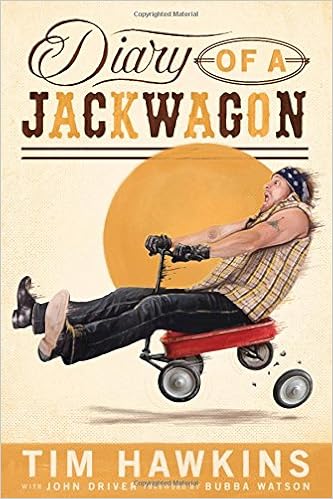
Book Review: Diary of a Jackwagon

I am a huge fan of Tim Hawkins. I saw him for the first time at a counseling convention a few years ago and I became an immediate fan. Since then, I think I have purchased every DVD he has made. My son shares my affection for Hawkins's comedy; at this point, he can do many of the lines along with Hawkins because he has watched them so often. I not only think he is the funniest Christian comedian working today, I think he may be the funniest all around comedian. Certainly top three.

Needless to say, when I saw that he would be releasing a book, Diary of a Jackwagon (2015, Thomas Nelson), I was excited. When the package arrived, I set to reading it right away, eager for the inevitable stomach cramps and shortness of breath brought on by uncontrollable fits of laughter. 

On the positive side, this book represents Tim Hawkins's brand of humor, which is what I had hoped for. Reading through, I could actually hear him making some of the jokes. He has a humorous, engaging perspective that butts up against real life. He's not afraid to poke fun of himself. His comedy is born out of his life experiences.

However, I had higher hopes for this book. Most of the chapters are repackaged versions of the author's existing stand up routines. Although that can sometimes be done to great effect, it seemed to fall flat here.  I tried to think about why that was my perception. I think one reason is that I am so familiar with his comedy routines that reading them didn't really generate the laughter that I had hoped for. I think a bigger contributing factor is that Hawkins's comedy is very physical. He makes use of vocal inflection, music, and movement to enhance--to a remarkable degree--his product. By nature of the medium, that is lost in the book. There were places where the authors tried to explain the physical aspects miss the mark.  

On the whole, I want to say that I think every person would be better off if they were exposed to the comedy of Tim Hawkins. In the realm of comedy, he is a true genius. However, I believe in general you would be better served by getting a copy of his videos than reading the book because it doesn't do him justice.

I was provided a free copy of this book by Thomas Nelson and the BookLook Bloggers program in exchange for a written review. I was not required to write a positive review and the opinions above are my own.

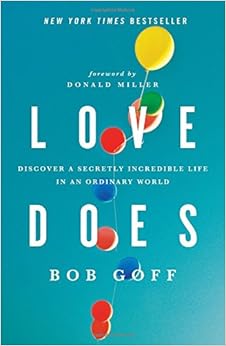
Book Review: Love Does

A couple of weeks ago, my good friend Mark placed Bob Goff's Love Does (2012, Thomas Nelson) in my hands, telling me he thought I would really enjoy it. He was right. I wasn't disappointed.

I read a lot of books and I enjoy many of them. A select few I would even describe as amazing. Every once in a while, I read a book and think, "if I ever write a book, that is the kind of book I want to write."  Love Does is one those books, a book where real life meets humor and wisdom and a deep love for God and others.

Essentially, Love Does contains a series of short narratives from Goff's life that he routinely connects to the love of Christ and the Christian faith. Through the 31 chapters, he writes about things like treating a flesh wound with bubble gum and Scope mouthwash, courting his wife with peanut butter sandwiches, and hitchhiking with Satan, I would share more than teasers with you, but I really want you to read this book.

If I had to boil down the book to one word, it would be "whimsy", a word repeatedly used by Goff throughout the book. You see, Goff wants his readers to see that Christians can be fun-loving, joyous, and playful.  He encourages us to live in the moment with reckless love toward others and to worship from the top of a mountain or perhaps while riding a skateboard in a business suit.

I don't know that Goff and I would agree on everything. In reality, there is no one I would agree with fully. What I do suspect is that I would enjoy spending time with him. I think you will too.

14 July 2015

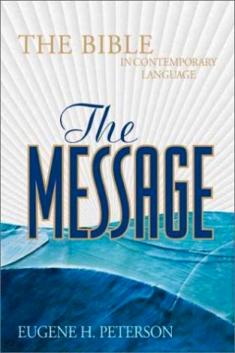
Book Review: The Message


Normally, for off the shelf, I talk about one of the books that I read in the previous week. This week’s review may seem a little bit different—because I am reviewing the Bible. Specifically, I want to talk a little bit about Eugene Peterson’s paraphrase of the Bible called the Message. Over the last 4 weeks, I set aside my other typical reading and read straight through the pages of The Message. 

 Typically, I am ESV guy. I do the majority of my reading from the English Standard Version, which tries to retain the richness of the biblical language while translating word for word. Other faithful translations employ what might be described as thought for thought translations, like the New International Version or the New Living Translation. In fact, if you are ever bored on a Saturday afternoon, spend some time reading about translation philosophies and the histories of the dozens of translations available.

The Message is at the other end of the spectrum from the ESV in that it is a paraphrase of the Bible. In fact, Peterson never really started out with the goal of translating the whole Bible in to contemporary language. It began because when he was a pastor he was leading his church through Bible studies and they seemed bored, so beginning with Paul’s letter to the Galatians, he began to rework the language in a way that was faithful to the text, but engaging to modern hearers. In his book “Eat this Book” he actually spends several chapters describing how it came about. 

Though I am an ESV guy, I wanted to read through The Message because I have a great respect for Eugene Peterson. He is one of my favorite authors, one who appreciates the beauty of language. I also wanted to see God’s word with fresh eyes. The decision to read straight through also allowed me to see God’s redemptive story in a glorious panorama. 

I would definitely recommend The Message, perhaps not as your primary translation, but as a way to see God’s word with fresh eyes.

28 June 2015

Joining others in protest and prayer

In our compassion, we don't like to see people suffer. And so our instincts are aimed at preventing and alleviating suffering. No doubt that is a good impulse. But if we really want to reach out to others who are suffering, we should be careful not to be like Job's friends, not to do our "helping" with the presumption that we can fix things, get rid of them, or make them "better." We may look at our suffering friends and imagine how they could have better marriages better-behaved children, better mental and emotional health. But when we rush in to fix suffering, we need to keep in mind several things.

First, no matter how insightful we may be, we don't really understand the full nature of our friends' problems. Second, our friends may not want our advice. Third, the ironic fact of the matter is that more often than not, people do not suffer less when they are committed to following God, but more. When these people go through suffering, their lives are often transformed, deepened, marked with beauty and holiness, in remarkable ways that could never have been anticipated before the suffering.

So, instead of continuing to focus on preventing suffering--which we simply won't be very successful at anyway--perhaps we should begin entering the suffering, participating insofar as we are able--entering the mystery and looking around for God. In other words, we need to quit feeling sorry for people who suffer and instead look up to them, learn from them and--if they will let us--join them in protest and prayer. Pity can be nearsighted and condescending; shared suffering can be dignifying and life changing. As we look at Job's suffering and praying and worshiping, we see that he has already blazed a trail of courage and integrity for us to follow.

From Eugene Peterson's introduction to Job in The Message.

22 June 2015

Move deeper in: some thoughts on Tullian

What if some were unfaithful? Does their faithlessness nullify the faithfulness of God? By no means! Let God be true though every one were a liar.-Romans 3:3-4

Yesterday, the news came down that one of my spiritual heroes, Tullian Tchvidjian, stepped down from his pastorate at Coral Ridge Presbyterian Church after admitting an "inappropriate relationship." I grieve for him. I grieve for his family. I grieve for Coral Ridge. I grieve for all of the people whose lives have been radically transformed by the message of God's one way love.

Here's the thing: lots of naysayers are going to come out of the woodwork now, not only condemning Tullian's actions, which are condemnable, but also the gospel banner he has carried proudly for many years. After not too much time, I suspect that we will hear people say, "see, you have to be careful with this message of grace. Don't get overbalanced. It's too dangerous."

NO! Jesus' one way love toward sinners--like me, like you, like Tullian--remains in full force! God loved me so much that in spite of my ongoing sinfulness he gave his only son, Jesus, to bear the penalty that I deserve so that I might live forever in restored relationship with him. If you are a believer, that is true for you too.  No exceptions. 

If you, like me, have been utterly wrecked and rebuilt by this message of profound grace for undeserving sinners, don't shy away from it when you hear of moral failings. Move deeper in.
Grace is our lifeblood.
Grace is the sinew that holds us together.
Grace is the muscle that propels us and the bones that hold us up.
Grace is every breath we draw.