As they headed along the way, Christian and Pliable came upon the Slough of Despond and became hopelessly stuck. Bunyan described this as a bog, though I always thought of it like quicksand, where the more they struggled, the more hopeless they became. Regardless, the leisurely walk they were having was suddenly interrupted. Their ease was no longer.
As I read this section, a few things stuck out to me. First, the Christian journey is not always easy, but is sometimes fraught with great difficulty, as we will most assuredly see as the tale progresses. Second, many people expect that Christianity will be free of suffering.
When they became stuck, it became clear that Pliable was upset with their predicament and that Christian did not have easy answers for him. This burden was not what Pliable expected. He says to Christian, "Is this the happiness you have told me all this while of? If we have such ill speed at our first setting out, what may we expect between this and our journey's end? May I get out again with my life, you shall possess the brave country alone for me!" He does get out and he disappears.
God never promised that the Christian journey would be easy. Certainly Bunyan saw that in his time. He was repeatedly imprisoned for preaching the gospel and refusing to recant. Throughout the world today, Christians also face significant persecution and it will continue to be so if scripture is to be believed. Regrettably, too many preachers throughout the world today preach a health and wealth gospel--if you name it and claim it, it shall be yours. If you believe strongly enough, you can have your best life now. These are damnable lies designed to detract from the true gospel. Bunyan understood this very well. Pray that more Christians would understand it today.
I waited patiently for the LORD;
he inclined to me and heard my cry.
He drew me up from the pit of destruction,
out of the miry bog,
and set my feet upon a rock,
making my steps secure.
He put a new song in my mouth,
a song of praise to our God.
Many will see and fear,
and put their trust in the LORD.
-Psalm 40:1-3
Have you ever found yourself thinking that following Christ must mean that you will be healthy or wealthy?
08 January 2013
07 January 2013
Pilgrim's Progress: Christian Talks With Pliable
After the departure of Obstinate, Christian and Pliable continue on the way. Pliable appears to demonstrate at least some curiosity regarding what drives Christian on. Sharing from the Book, Christian tells pliable about heaven. He tells him that the kingdom will be endless and that in that kingdom, God will comfort His people. Importantly, Christian is working toward becoming an evangelist in his own right, for he tells Pliable, "if we be truly willing to have it, He will bestow it upon us freely" (p. 21).
In His word, God has given us glimpses of what it will be like to be in His presence. We will not cry anymore. We will not fear. We will experience unfiltered joy in His company forever. Like Christian, we should be eager to tell people about this free gift that eclipses all earthly wonders.
He will wipe away every tear from their eyes, and death shall be no more, neither shall there be mourning, nor crying, nor pain anymore, for the former things have passed away.-Revelation 21:4
When was the last time you basked in the promise of living in God's eternal presence?
In His word, God has given us glimpses of what it will be like to be in His presence. We will not cry anymore. We will not fear. We will experience unfiltered joy in His company forever. Like Christian, we should be eager to tell people about this free gift that eclipses all earthly wonders.
He will wipe away every tear from their eyes, and death shall be no more, neither shall there be mourning, nor crying, nor pain anymore, for the former things have passed away.-Revelation 21:4
When was the last time you basked in the promise of living in God's eternal presence?
06 January 2013
Book Review: The Prodigal God
Yesterday I read The Prodigal God by Tim Keller (2011). Centering upon the parable of the prodigal son, Keller seeks to help his reader understand more deeply the meaning of the parable. Too often, he surmises, commentators have focused on the younger son--the prodigal, but that in reality, the story focuses not just on the younger son, but also on the older son and particularly upon the father. Keller rightly points out that this story shows that both the licentiousness of the younger son and the legalism of the older son are ineffective means to salvation. It is only the free grace of the father that can save both the younger son and the older one.
This book was good for me. I struggle with being an elder brother, with being a Pharisee. I think a lot of people in the church do. For those of us who struggle with being Pharisees, Keller has important words for us. Our self-righteousness will never get us anywhere and in fact, may serve as a barrier. You see, when we think that if we are just good enough, we won't depend upon grace and will then refuse to go into the feast.
Noteworthy quotes:
This book was good for me. I struggle with being an elder brother, with being a Pharisee. I think a lot of people in the church do. For those of us who struggle with being Pharisees, Keller has important words for us. Our self-righteousness will never get us anywhere and in fact, may serve as a barrier. You see, when we think that if we are just good enough, we won't depend upon grace and will then refuse to go into the feast.
Noteworthy quotes:
- If the preaching of our ministers and the practice of our parishoners do not have the same effect on people that Jesus had, then we must not be declaring the same message that Jesus did (18-19)
- The father is saying, "I'm not going to wait until you've paid off your debt; I'm not going to wait until you've duly groveled. You are not going to earn your way back into my family, I am going to simply take you back. I will cover your nakedness, poverty, and rags with the robes of my office and honor." (26)
- The prerequisite for receiving the grace of God is to know that you need it. (52).
- Perhaps the clearest symptom of this lack of assurance is a dry prayer life (72).
- Jesus came to bring festival joy (120).
- What makes you faithful or generous is not a redoubled effort to follow moral rules. Rather all change comes from deepening your understanding of the salvation of Christ and living out the changes that understanding creates in your heart (133).
Pilgrim's Progress: A New Name
Shortly after Christian meets Obstinate and Pliable, almost unnoticed, Pilgrim's name changes to Christian. It says, "Yes (said Christian, for that was his name)" (p. 17). Although this name change adds very little to the overall story line, it is a demonstration that Bunyan was careful with each word chosen. Bunyan could have, from the outset, chosen to name him Christian, but Bunyan understands the importance of a name and he wants to draw the readers attention to it. Pilgrim was not just a traveler on the way, he had become a Christian, so named by God.
I can think of several instances in the Bible where people are given new names (Abram becomes Abraham; Jacob becomes Israel; Saul becomes Paul), but Jesus calling Simon "Peter" is the most memorable to me. Peter means "rock" and Jesus tells Simon Peter that he is the rock on which he will build his church (Matthew 16:17-18).
As believers, we need to live in the realization that God has given us a new name as well. Though I am Jason, I am also "Christian" for that is my name.
He who has an ear, let him hear what the Spirit says to the churches. To the one who conquers I will give some of the hidden manna, and I will give him a white stone, with a new name written on the stone that no one knows except the one who receives it.’-Revelation 2:17
How often do you take the opportunity to reflect upon your new identity in Christ?
I can think of several instances in the Bible where people are given new names (Abram becomes Abraham; Jacob becomes Israel; Saul becomes Paul), but Jesus calling Simon "Peter" is the most memorable to me. Peter means "rock" and Jesus tells Simon Peter that he is the rock on which he will build his church (Matthew 16:17-18).
As believers, we need to live in the realization that God has given us a new name as well. Though I am Jason, I am also "Christian" for that is my name.
He who has an ear, let him hear what the Spirit says to the churches. To the one who conquers I will give some of the hidden manna, and I will give him a white stone, with a new name written on the stone that no one knows except the one who receives it.’-Revelation 2:17
How often do you take the opportunity to reflect upon your new identity in Christ?
05 January 2013
Pilgrim's Progress: Obstinate
Having been shown the way to the wicket gate, Pilgrim begins to run toward it. His wife, his children, and his neighbors respond differently to his behavior. Some mock him, some threaten. Two men, Obstinate and Pliable, go after him to bring him back home to the City of Destruction. They tell him, unapologetically, that they want him to come back with them. He tells them he cannot and tries to persuade them to come with him instead. Pilgrim tries to explain to them what he is seeking after, and Obstinate responds agitatedly. He says to Pliable, "Come then, neighbor Pliable, let us turn again, and go home without him. There is a company of these crazy-headed coxcombs, that when they take a fancy by the end are wiser in their own eyes than seven men that can render a reason" (p. 18). Pliable hesitates and Obstinate is more direct still--"Who knows whither such a brain-sick fellow will lead you? Go back, go back, and be wise" (p. 18).
As Christians, we must understand that the world is full of Obstinates. Although there are many people who seem to be indifferent to Christianity, there are some who are much more aggressive in their attacks upon it. The New Atheists represent some of the most vocal critics of the Christian faith. Indeed, they would argue alongside Obstinate that Christianity is comprised of "crazy-headed coxcombs" and "brin-sick fellows". We should not be surprised by these attacks upon the faith. When they occur we, like Pilgrim, must keep our eyes on yonder wicket gate.
Claiming to be wise, they became fools-Romans 1:22
you ever experience open attacks upon your faith? If so, how do you respond?
As Christians, we must understand that the world is full of Obstinates. Although there are many people who seem to be indifferent to Christianity, there are some who are much more aggressive in their attacks upon it. The New Atheists represent some of the most vocal critics of the Christian faith. Indeed, they would argue alongside Obstinate that Christianity is comprised of "crazy-headed coxcombs" and "brin-sick fellows". We should not be surprised by these attacks upon the faith. When they occur we, like Pilgrim, must keep our eyes on yonder wicket gate.
Claiming to be wise, they became fools-Romans 1:22
you ever experience open attacks upon your faith? If so, how do you respond?
04 January 2013
Pilgrim's Progress: What Must I do?
Pilgrim, confronted by the word of God, realizes his predicament. He has been reading the Bible and comes to understand the conviction of his sin. Crying out he says, "what must I do to be saved?" and along comes Evangelist to point the way forward. Pilgrim explains to Evangelist that he cannot bear to face judgment and that even the thought of it brings him to tears because he does not know what to do. Evangelist does what all evangelists must do--pointing out "yonder wicket gate" he tells Pilgrim "go up directly thereto, so shalt thou see the gate; at which, when thou knockest, it shall be told the what thou shalt do" (p. 16).
We Christians sometimes forget that our job, like Evangelist's, is to point the way. Our part in the salvation of the lost is to show them the road, to them about Christ. As the new year kicks off, let me encourage you to seek out the lost and the hurting. Be eager to move toward people and to show them the way to Christ.
So neither he who plants nor he who waters is anything, but only God who gives the growth. He who plants and he who waters are one, and each will receive his wages according to his labor. For we are God's fellow workers. You are God's field, God's building.-1 Corinthians 3:7-9
Who are you specifically seeking to tell about Christ this year?
We Christians sometimes forget that our job, like Evangelist's, is to point the way. Our part in the salvation of the lost is to show them the road, to them about Christ. As the new year kicks off, let me encourage you to seek out the lost and the hurting. Be eager to move toward people and to show them the way to Christ.
So neither he who plants nor he who waters is anything, but only God who gives the growth. He who plants and he who waters are one, and each will receive his wages according to his labor. For we are God's fellow workers. You are God's field, God's building.-1 Corinthians 3:7-9
Who are you specifically seeking to tell about Christ this year?
03 January 2013
Pilgrim's Progress: To Be Considered a Fool
Pilgrim's family is worried about him. He is fearful and trembling, though they know not why. He explains to his wife that they are bound for ruin. They responded not with repentance, but rather with astonishment. "At this, his relations were sore amazed, not for that they believed that what he had said to them was true, but that they thought some frenzy distemper had gotten into his head" (p. 14). Essentially, they thought he was sick and would get over it, yet he persisted. When his troubles did not pass, his family changed from concern to hardening. "Sometimes they would deride, sometimes they would chide, and sometimes they would quite neglect him" (p. 14).
As humans, we are predisposed to desire popularity. We want to be liked, particularly by those close to us. When we become believers, we want to share our joy with our families. We also want to share with them the penalty they face if they do not accept the free gift of salvation. But we are often ignored. If we persist, we are told to shut up, we are told things like "don't ever talk to me about this again." But how are we to respond? How do we react when those we love are walking willingly into eternal suffering? Pilgrim's response was to "retire himself to his chamber to pray for and pity them" (p. 14-15).
I pray for my friends and family who don't know Christ. I want them to see their sin and to see the Savior.
Yet another said, “I will follow you, Lord, but let me first say farewell to those at my home.” Jesus said to him, “No one who puts his hand to the plow and looks back is fit for the kingdom of God.”-Luke 9:61-62
Have you found your family or close friends to ignore or openly criticize your faith? How have you responded? How do you pray for them?
As humans, we are predisposed to desire popularity. We want to be liked, particularly by those close to us. When we become believers, we want to share our joy with our families. We also want to share with them the penalty they face if they do not accept the free gift of salvation. But we are often ignored. If we persist, we are told to shut up, we are told things like "don't ever talk to me about this again." But how are we to respond? How do we react when those we love are walking willingly into eternal suffering? Pilgrim's response was to "retire himself to his chamber to pray for and pity them" (p. 14-15).
I pray for my friends and family who don't know Christ. I want them to see their sin and to see the Savior.
Yet another said, “I will follow you, Lord, but let me first say farewell to those at my home.” Jesus said to him, “No one who puts his hand to the plow and looks back is fit for the kingdom of God.”-Luke 9:61-62
Have you found your family or close friends to ignore or openly criticize your faith? How have you responded? How do you pray for them?
02 January 2013
Book Review: Because He Loves Me
In the last couple of years, I read three of Elyse Fitzpatrick's other books, Counsel from the Cross, Comforts from the Cross, and Give Them Grace (co-authored with her daughter) and was impressed with her love for the gospel. I discovered Because He Loves Me (Paperback Edition): How Christ Transforms Our Daily Life
(2008) on the suggested readings link at the Liberate website.
This is the fourth book of Fitzpatrick's that I have read. I also watched her speak twice on the Liberate 2012 conference DVDs. This sampling of her work convinces me that she rather narrowly focused. Again and again, she goes back to the same topic. One might think that would be a drawback, but its not, because the topic she continually addresses is the gospel of Jesus Christ. She seems to side with the apostle Paul who said that he vowed to know nothing except Christ and him crucified (1 Cor 2:2).
Specifically, Fitzpatrick dedicates 200 pages to helping her readers to understand how the gospel--Christ's "incarnation, sinless life, substitutionary death, burial, bodily resurrection, ascension, and eternal reign" (p. 36)--matter in the every day lives of believers. I know that for me, I am at a time in my life when I cannot read enough books about the gospel. I love how different authors talk about Christ's justifying, sanctifying, adopting love for me. I pray that I never get tired of the gospel. This book was one excellent example of that type of reading. I just pray that Fitzpatrick's one track mind stays on track.
As of this writing, the Kindle version of this book is only $3.99, which is a no-brainer as far as I am concerned.
This is the fourth book of Fitzpatrick's that I have read. I also watched her speak twice on the Liberate 2012 conference DVDs. This sampling of her work convinces me that she rather narrowly focused. Again and again, she goes back to the same topic. One might think that would be a drawback, but its not, because the topic she continually addresses is the gospel of Jesus Christ. She seems to side with the apostle Paul who said that he vowed to know nothing except Christ and him crucified (1 Cor 2:2).
Specifically, Fitzpatrick dedicates 200 pages to helping her readers to understand how the gospel--Christ's "incarnation, sinless life, substitutionary death, burial, bodily resurrection, ascension, and eternal reign" (p. 36)--matter in the every day lives of believers. I know that for me, I am at a time in my life when I cannot read enough books about the gospel. I love how different authors talk about Christ's justifying, sanctifying, adopting love for me. I pray that I never get tired of the gospel. This book was one excellent example of that type of reading. I just pray that Fitzpatrick's one track mind stays on track.
As of this writing, the Kindle version of this book is only $3.99, which is a no-brainer as far as I am concerned.
Pilgrim's Progress: The Lament Over Sin
In the opening section of The Pilgrim’s Progress, we meet
Pilgrim, the main character of the book.
As he reads the word of God, Pilgrim is convicted of his sin and it
weighs heavy upon him. He is burdened
with fear. The book reads, “I looked,
and saw him open the Book and read therein; and as he read and wept and
trembled; and not being able longer to contain, he break out with a lamentable
cry, saying: ‘What shall I do?’” (page 13).
Just a few days ago, I posed the question, “when was the
last time you trembled at the word of God?” (Isaiah 66:2) One person confessed that she is not sure
that she ever has. No one else
responded. I think we have lost a sense
of awe, or perhaps respect, for the holiness of God. We no longer see the offensiveness of our sin
to a wholly pure God. I struggle with this every day. Pilgrim, however,
trembled before His word, convicted of his sin.
We should pray for a sense of awe before the throne of God
(Isaiah 6; Revelation 4). The fear of
the Lord is commended as a good thing in Scripture and we should try to
understand what that means for us as Christians; however, we must also keep in
mind God’s steadfast love and kindness.
The fear of the Lord is the beginning of wisdom,
And the knowledge of the Holy One is insight-Proverbs 9:10
Have you ever trembled at God's word? What does the fear of God mean to you?
01 January 2013
Reflections on Pilgrim's Progress: Introduction
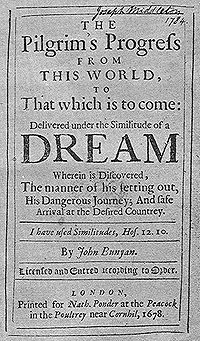
| First edition of The Pilgrim's Progress |
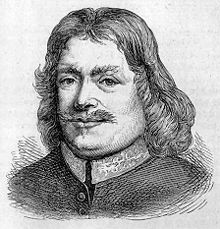
I have read The Pilgrim's Progress by John Bunyan (1678) several times over the past few years. Each time, I find the book more and more endearing and convicting. The Pilgrim's Progress is an allegory of the Christian life written by Bunyan while he was in prison, reportedly for practicing outside of the auspices of the church of England. (Lest you think battles over religious liberty are a new thing, they are not).
I have thought for a long time that I would like to walk slowly through The Pilgrim's Progress, sharing my observations and notes. I initially thought I would try to write a short devotional thought every day, but I know my historical success with such things and it is perhaps better that I just commit to writing as I go. If it happens to be every day, then so be it. If you wish to read along, there are many wonderful versions of the book. As much as I would like a copy of the first edition of the book pictured here, I will be reading primarily from The Pilgrim's Progress (Moody Classics)
Have you ever read The Pilgrim's Progress? If so, what did you think?
Subscribe to:
Posts (Atom)